★★★★★
Heritage Exteriors is beyond exceptional. Very impressed with the timeliness, communication, and reasonable price of the whole project.
Scott Doyen
Sacramento, CA · Google
Sacramento, CA · Google

Modern windows are sold as maintenance-free, and that is close to true for the frames. It is not true for the tracks, weep holes, hardware, weatherstripping, and sealant, and those are the parts that decide whether a window still works well in year twenty.
Get a Free EstimateWindow maintenance is not much work. It is a couple of hours twice a year, and most of it is cleaning. The reason to do it is that the parts that wear out, the tracks, rollers, weatherstripping, and sealant, wear out far faster when they are dirty, dry, or ignored.
This guide covers what to do, how often, and what to keep away from your windows. It draws on the published care instructions from Milgard, Andersen, and Pella. Your own manufacturer's guide always wins where it differs. This page is part of our California window guide.
Do this in spring and again in fall, before the rains.
Each step is explained below.
This is the most important maintenance on a sliding or hung window, and the one most often skipped.
The sill track on these windows is designed to get wet. Rain runs down the glass into the track, and small slots in the outside face of the frame, the weep holes, let it drain. Milgard describes this as a weep drainage system with vented slots on the exterior bottom of the frame, and says it is normal for water to build up on the sill or outside track during rain. Pella says the same, and notes that weep holes may be located both inside and outside the window at the bottom of the frame.
When the track fills with dirt, dead insects, and leaves, the weep holes clog and the water has nowhere to go but inward.
Never caulk over a weep hole, and never let a painter or stucco crew do it. Milgard warns that blocking the weep system can void part or all of the product warranty.
The universal method is the gentle one: brush off loose dirt, wash with mild soap and water, rinse, and dry. What differs by material is what to watch for.
| Frame | Cleaning | Avoid | Inspect for |
|---|---|---|---|
| Vinyl | Mild, nonabrasive soap and water with a soft cloth. Remove grit with a soft brush first. | Abrasive or acidic cleaners, acetone, lacquer thinner, and other solvents (per Milgard's list) | Cracked corner welds, warping on dark colors in full sun, chalking |
| Fiberglass | Mild soap and water | Abrasives that dull the finish | Scratches or wear in the painted finish |
| Wood and clad wood | Damp cloth and mild soap on finished surfaces; dry promptly | Soaking the wood; harsh cleaners on the finish | Peeling or cracked paint, bare wood, soft spots at the sill and lower corners |
| Aluminum | Mild soap and water | Abrasive pads; acidic cleaners | Pitting or white corrosion, especially near the coast; worn rollers and tracks |
Milgard's instructions are to remove large particles with a soft bristle brush, then wash with warm water, mild soap, and a soft absorbent cloth, and wipe dry. It says never to use abrasive or acidic cleaners because they may permanently damage the frame finish, and to test any cleaner in an inconspicuous spot first. Pella warns that cleaning solutions and solvents used on glass may discolor the finish of wood, fiberglass, or vinyl frames, so keep them off the frames. Comparisons with other materials are on our fiberglass versus vinyl page.
Fiberglass frames have a painted or factory-applied finish. Wash them the same way as vinyl. If the finish is scratched, Milgard's advice for paint-finish scratches on vinyl or fiberglass is to consult a painting professional for touch-up or reapplication.
Wood is the one frame material where maintenance is not optional. The finish is what protects it. Pella recommends inspecting the interior finish at least once a year, because UV from the sun breaks down paint and stain, and checking exterior paint on wood products for peeling and cracking. Its instruction is that problem areas be touched up as soon as possible to prevent further damage.
Look hardest at the bottom rail of each sash, the sill, and the lower corners of the frame, where water sits. Press with a fingernail. Sound wood resists. More on wood windows is on our wood windows page. If the home was built before 1978, read about lead paint before sanding or scraping anything: see lead-safe work on pre-1978 homes.
Older aluminum sliders are common across California. The frames are durable, but the tracks and rollers wear and the finish can pit, particularly in salt air. Keep the tracks clean, wash the frames with mild soap and water, and rinse well. Our page on aluminum windows covers their strengths and limits.
Almost every window sold in California now has a low-emissivity coating. In most units the coating is on a glass surface inside the sealed cavity, where you cannot touch it. Some products add a coating on the room-facing surface, which you can.
What the manufacturers say:
Three practical cautions follow from those:
Wash glass on a cloudy day or in the shade so the solution does not dry before you wipe it.
Locks, latches, rollers, hinges, and casement operators need to be clean and lightly lubricated. Milgard recommends lubricating hardware at least once a year, and at least twice a year in areas with high salt air.
Clean first. Milgard and Andersen both say to clean hardware with mild soap and water on a soft cloth, wipe it dry, and avoid harsh or abrasive cleaners. Milgard adds that abrasive or acidic cleaners remove the lubricants and corrosion-resistant coatings from the hardware.
Then lubricate, with the product your manufacturer names. The guidance is not identical across brands:
| Manufacturer | What it says to use | What it says to avoid |
|---|---|---|
| Andersen | A dry lubricant spray on the operator, lock mechanisms, hinges, and other moving hardware | Lubricants containing acetone |
| Pella | Paraffin or another dry lubricant on tracks, jamb liners, and weatherstripping where sashes stick | Oily lubricants, which attract dust and grime |
| Milgard | Says a number of commercially available products can be used, applied sparingly, and offers recommendations by phone for specific hardware | Lists WD-40 among products not to use on vinyl |
The common thread is to keep oily, solvent-based sprays off window frames and tracks. They collect grit, and some attack vinyl and weatherstripping. Apply lubricant sparingly, wipe off the excess, and keep it off wood, which it can stain.
While you are there, check the screws. Andersen recommends inspecting hardware screws, especially hinge screws, and tightening them if needed. Pella notes that a loose set screw on a casement crank handle wears the crank and the operator stud.
Weatherstripping is the flexible seal between the sash and the frame. It is what makes a closed window airtight, and it is a wear item. Milgard's care tips say to check it regularly to ensure windows and doors seal tight.
The bead of sealant where the window frame meets the wall is the outermost water seal, and it is the part of the installation with the shortest life. Pella recommends inspecting the sealant on the exterior perimeter at least once a year and says it is extremely important that it remain intact. It tells owners to pay particular attention to the lower corners of windows and to the joints between windows in a group, and says the sealant should not be cracked, broken, or missing.
When you inspect:
Small failed sections can be cut out and re-sealed with a sealant compatible with the frame and the wall. If the sealant has failed widely, or there is staining on the wall inside, have the installation looked at.
Milgard's method: remove the screen, wash it with mild soap, water, and a soft brush, rinse with clear water, and dry with a lint-free towel. Do not pressure wash them. Check the frame corners, the spline that holds the mesh, and the pull tabs. Replacement and re-screening are covered on our window screen replacement page.
| Condition | Where | What to do |
|---|---|---|
| Dust | Central Valley, especially summer and harvest | Vacuum tracks more often. Grit in a track grinds rollers and scratches frames. |
| Pollen | Statewide in spring; heavy in the Sacramento area | Wash screens and sills after the peak. Pollen mats in screens and weep holes. |
| Salt air and fog | The coast and bay shore | Rinse and wash exteriors and hardware more often. Pella calls for cleaning cladding and hardware with mild detergent and water at least quarterly in salt spray environments. Milgard calls for lubricating hardware at least twice a year. |
| Winter rain | Statewide, October to April | Clear weep holes and inspect sealant before the first storms. |
| Snow and ice | Truckee, Tahoe, the Sierra | Keep snow from piling against low windows and sills. Do not chip ice off frames or glass. Check sealant after the thaw. |
| Wildfire ash | Anywhere downwind in fire season | Rinse ash off gently before wiping. Dry ash is abrasive on glass and finishes. |
| Intense sun | South and west walls inland | Expect sealant, weatherstripping, and wood finishes to age fastest here. Inspect these walls first. |
For coastal homes, see windows for salt air and fog. For mountain homes, see Tahoe and mountain homes.
Ask us to show you where the weep holes are and which care guide applies to your windows when we finish, because new windows only stay good if they are looked after. If yours are past what maintenance can do, we will tell you that plainly. Licensed in California, CSLB #1055919. Call (916) 546-2991.
Can I use WD-40 on my windows?
Check your manufacturer first, and for vinyl windows the answer may be no. Milgard lists WD-40 among the products not to use on vinyl. Pella says not to use oily lubricants because they attract dust and grime that eventually restrict the window's movement. Andersen recommends a dry lubricant spray. A dry lubricant is the safer general choice, but your manufacturer's care guide is the authority.
Can I pressure wash my windows?
No. Milgard lists high-pressure water hoses among the things never to use on its windows, because they can damage the glass surface or the insulating seal. High-pressure water can also drive past weatherstripping and sealant into places a window is not designed to drain. Use a garden hose on a gentle setting, a soft brush, and mild soapy water.
How do I clean low-E glass?
The same way as any glass, but gently. Milgard recommends mild dish soap and water, a clean-water rinse, and a soft cloth. Pella recommends an ammonia-free cleaner or a diluted vinegar solution. Neither allows razor blades or abrasive pads. If your windows have a low-E coating on the room-facing surface, that surface can show marks from metal objects, and your manufacturer's guide has specific instructions for removing them.
How often should exterior caulk around windows be replaced?
There is no fixed interval. It depends on the sealant, the sun exposure, and how much the wall moves. Pella recommends inspecting the exterior sealant at least once a year and says it should not be cracked, broken, or missing. Replace sections when they fail that test. South- and west-facing walls in the Central Valley age sealant fastest.
Why is there water sitting in my window track after rain?
That is normal. Sliding and hung windows are designed to collect rain in the sill track and drain it outside through weep holes. Milgard and Pella both say water in the sill or track is expected. If the water does not drain away, the weep holes are clogged and need clearing with a soft brush.
Does skipping maintenance affect my warranty?
It can. Pella states that deterioration resulting from improper or insufficient maintenance is not covered by its warranty, and Milgard notes that blocking the weep system can void part or all of the product warranty. Read the care section of your own warranty, follow it, and keep a simple record. Call (916) 546-2991 if you want help identifying your windows.
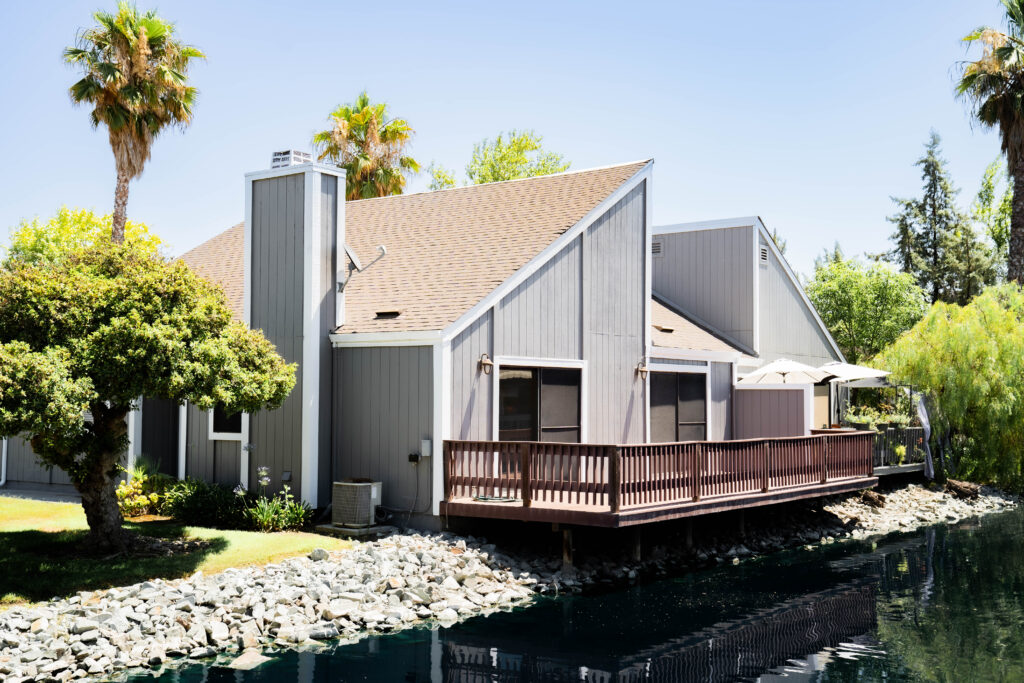
A look at homes we have re-sided and re-glazed across Sacramento, the Bay Area, and Lake Tahoe.







★★★★★ Rated 4.9 from 69 Google reviews
Heritage Exteriors is beyond exceptional. Very impressed with the timeliness, communication, and reasonable price of the whole project.
Heritage replaced my old crumbling wood siding and did a fantastic job. From the first interactions assessing the project and providing a quote, to the project itself, was all exceptional. My home looks brand new.
We recently had our house re-sided with Hardie product. We interviewed 3 companies, one of them being Heritage Exteriors. From our first meeting with David to the last day's work touching up paint, the experience was excellent.