★★★★★
Heritage Exteriors is beyond exceptional. Very impressed with the timeliness, communication, and reasonable price of the whole project.
Scott Doyen
Sacramento, CA · Google
Sacramento, CA · Google

A reserve line for siding and windows is a condition question before it is a money question. The number is only as good as the assessment behind it — and the most common reason a reserve turns out to be badly wrong is that nobody had looked closely at the envelope in years.
Get a Free EstimateHeritage Exteriors is a siding and window contractor, not a reserve analyst, and this guide stays on our side of that line. What follows is how to assess the physical condition of a building envelope, how to think about remaining service life in Northern California conditions, and how to turn that into a scope credible enough to fund. The funding mechanics, disclosure requirements, and legal obligations that sit on top of it belong to your reserve analyst and your association counsel.
Reserve lines for siding and windows go wrong in a predictable way. A figure gets set once, escalated annually by an index, and carried forward for years without anyone looking hard at the building. Then the envelope is opened and the actual condition — rot at the deck junctions, a barrier that was never continuous, windows that have been leaking at the sill for a decade — bears no relation to the line item.
The fix is not a better spreadsheet. It is a real condition assessment on a regular cadence, feeding the number.
These are the ranges commonly used for planning purposes. Treat them as brackets to be confirmed against your own inspection, not as facts about your property — actual service life on any given building depends heavily on exposure, installation quality, and maintenance history.
| Component | Common planning range | What shortens it here |
|---|---|---|
| Fiber cement siding | Long — commonly planned at multiple decades | Poor original flashing; unmaintained sealant at joints and penetrations |
| Vinyl siding | Long, but finish-dependent | Intense west-wall sun and heat; impact damage; fading well before failure |
| Engineered wood siding | Moderate | Moisture at cut ends and grade contact; irrigation overspray |
| Natural wood siding | Highly variable — maintenance decides it | Repaint cycle slipping; UV; pest and rot exposure |
| Stucco | Long, with recurring crack repair | Settlement and seismic cracking; water entry at unsealed cracks |
| Exterior sealant / caulk | Short — the shortest-lived item on the wall | UV and thermal movement; this is the item that, deferred, damages everything behind it |
| Field paint on siding | Short to moderate | Southern and western exposure; substrate moisture pushing paint off |
| Vinyl replacement windows | Moderate to long | Seal failure showing as fogging; hardware wear on high-cycle units |
The single most useful row is sealant. It has the shortest life and the largest downstream consequence: a property that lets its sealant cycle slip converts a modest recurring maintenance line into early replacement of the cladding behind it.
Our page on preventing water damage behind siding covers what the early evidence looks like from the outside.
Once you know the condition, a credible reserve figure needs three things:
A contractor walk-and-assessment is the practical way to get this. It is not a bid, and it should not be presented to a board as one. For context on what drives cost, see our Northern California siding cost guide.
Most associations facing a large envelope number end up weighing a phased multi-year replacement against a single project. The honest comparison includes the costs phasing adds — repeat mobilization, material pricing movement between stages, a longer period during which the un-done buildings keep deteriorating, and a visibly mismatched property in the interim — against the real benefit of spreading the funding. Both are defensible. What is not defensible is assuming phasing is free. Our guide to phasing occupied multifamily work covers the sequencing side.
Everything above is about the physical asset. How much must be held, how it must be funded, what your governing documents require, what must be disclosed, and what California law obliges your association to do are questions for your reserve analyst, your association counsel, and your accountant — and requirements change. Take the condition assessment to them; do not take funding advice from your contractor.
Heritage Exteriors (CSLB #1055919) provides budgetary condition assessments for apartment communities, condominium associations, and commercial properties across Sacramento, the Bay Area, and Northern California — a walk of the property, a written scope narrative, and a planning range with the uncertainty stated plainly. To arrange one, get in touch or call (916) 546-2991.
Reviewed August 2026. Service-life ranges are general planning brackets and should be confirmed against a current inspection of your property.
How often should the exterior envelope be inspected?
A reasonable cadence is a visual walk annually, a detailed condition assessment every three to five years, and an additional inspection after any significant storm or wind event. The annual walk catches sealant failure, staining, and impact damage early, when they are still maintenance. The detailed assessment is what should feed the reserve number, because it looks at flashing, penetrations, and the junctions where problems actually start.
Can we just use the service life from the original reserve study?
Use it as a starting point, not an answer. Published service-life ranges assume typical exposure and typical maintenance. A west-facing elevation in the Sacramento Valley, a building in the fog belt, or a property with irrigation spraying the wall will all age faster than the range suggests, and deferred sealant maintenance shortens the life of everything behind it. The study gives you the bracket; the inspection tells you where in the bracket this property sits.
What is the difference between a maintenance item and a reserve item?
Broadly, maintenance is recurring and small enough to come out of the operating budget — sealant touch-up, cleaning, spot repairs. Reserve items are large, infrequent replacements of a component with a predictable service life, such as re-cladding a building or replacing its windows. The practical trap is that deferred maintenance quietly converts into a reserve item: sealant not renewed on schedule lets water into the assembly, and a maintenance line becomes a replacement line years early.
How do we get a credible cost number without going out to bid?
Ask a contractor for a budgetary assessment rather than a bid. A walk of the property with a written scope narrative and a planning range — with the substrate-repair uncertainty stated explicitly — is enough to fund a reserve line. It is not a fixed price and should not be treated as one, but it is far more reliable than escalating a decade-old figure by an inflation index.
Should we phase the work across budget years or do it at once?
Both are legitimate and the trade-off is real. Doing it at once means a single mobilization, one material price, and a uniform result. Phasing across budget years spreads the funding but means multiple mobilizations and pricing that can move between stages, and it leaves the un-done buildings continuing to deteriorate. Price both and compare them honestly rather than assuming phasing is free.
Who should we be taking financial and legal advice from on this?
Not your contractor. A contractor can tell you the physical condition of the envelope, what the scope would be, and what it would plausibly cost. How much must be held in reserve, how it must be funded, what disclosures apply, and what your governing documents and California law require are questions for your reserve analyst, your association counsel, and your accountant. This guide deliberately stays on the physical side of that line.
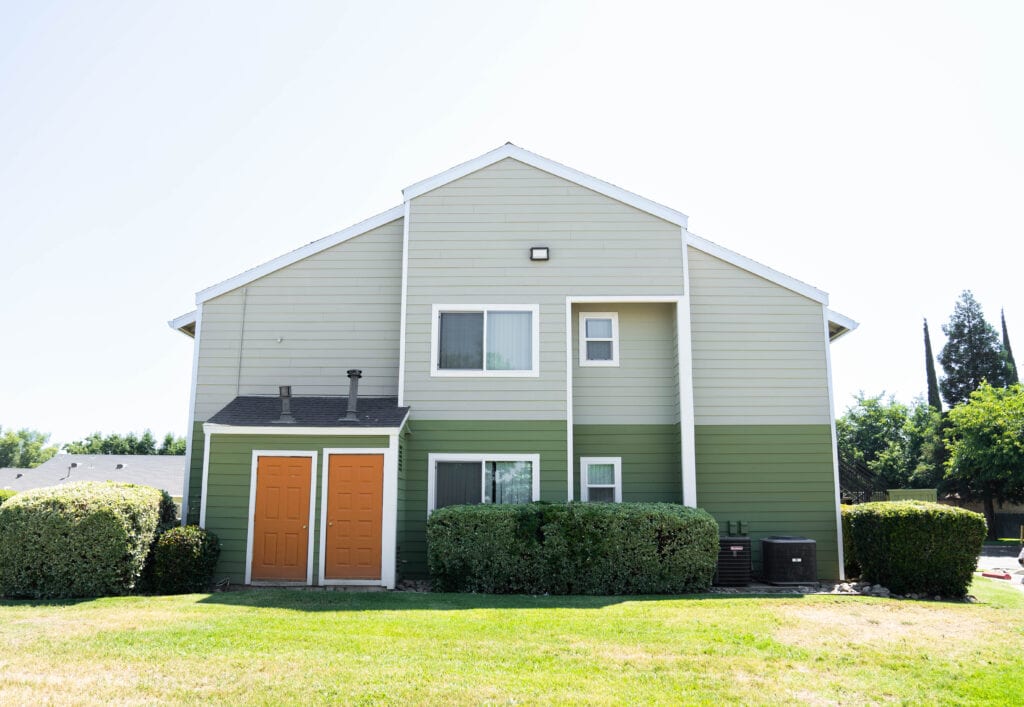
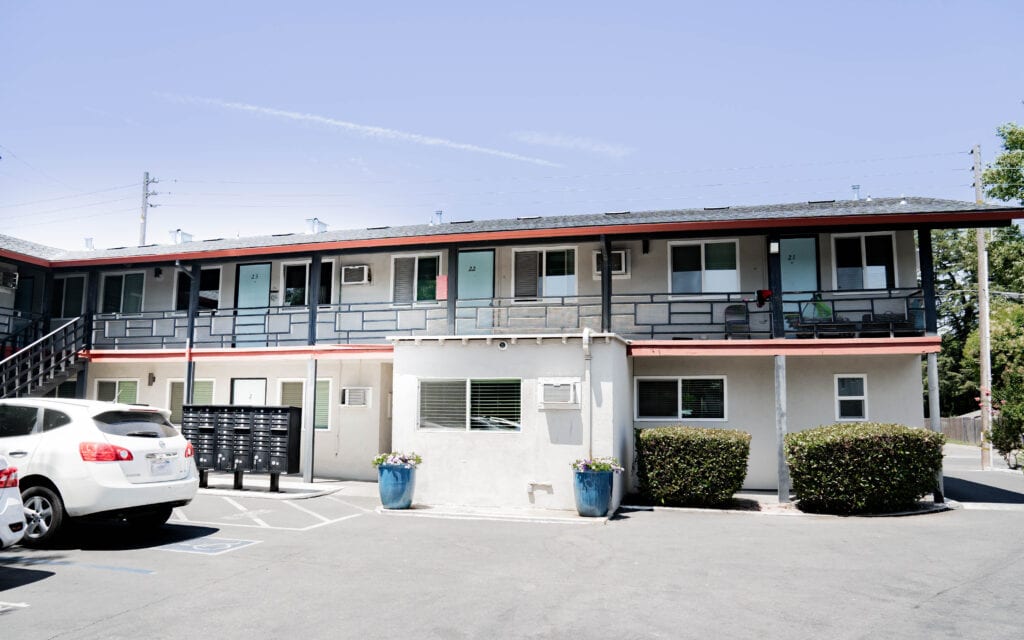
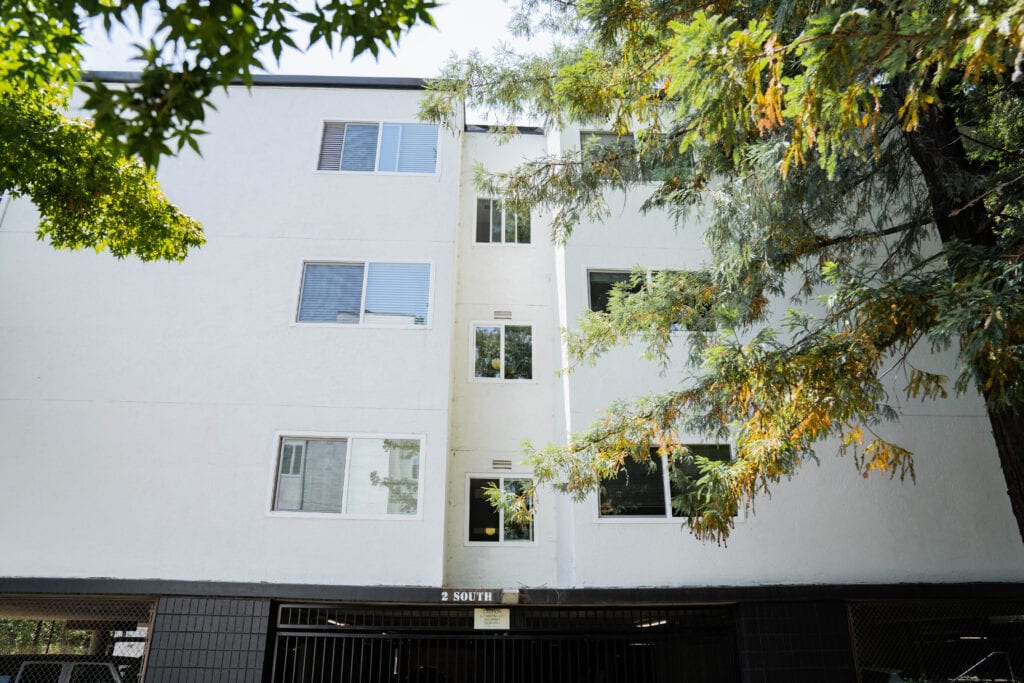
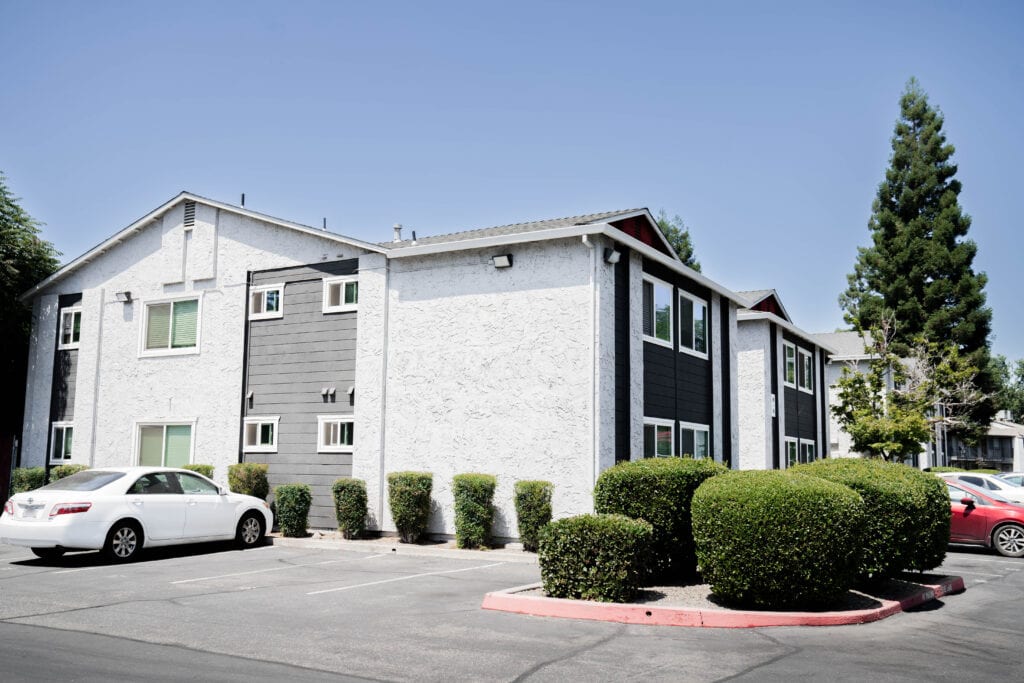
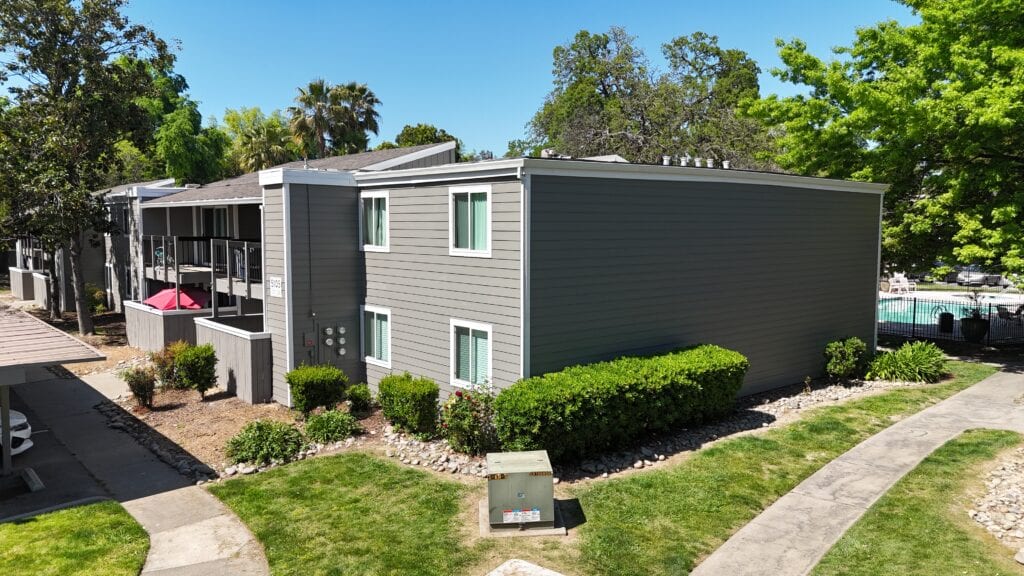
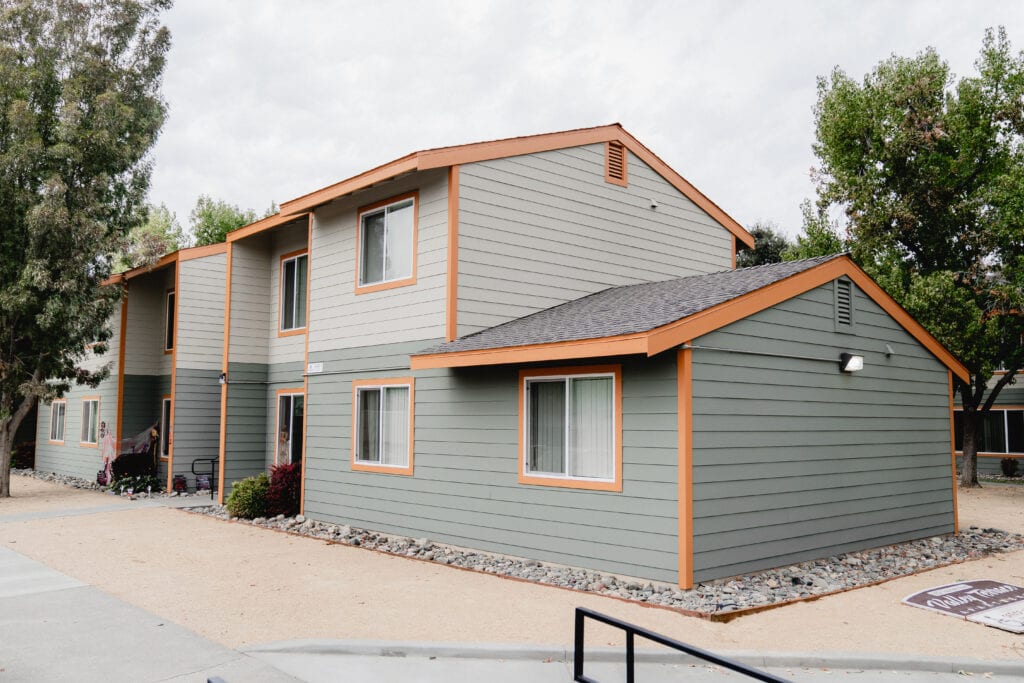
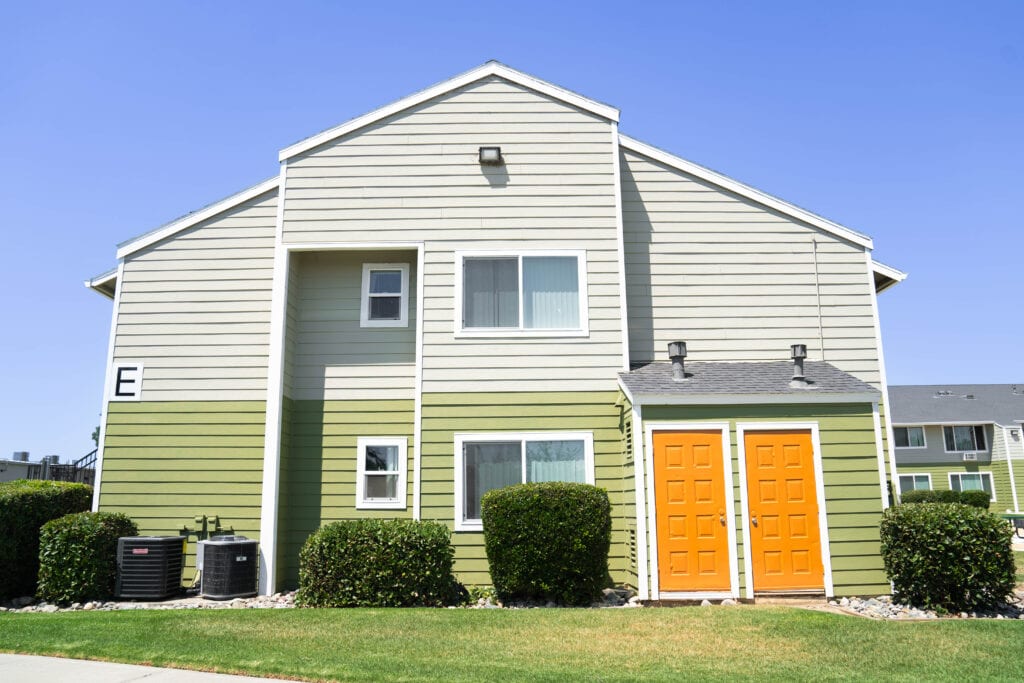
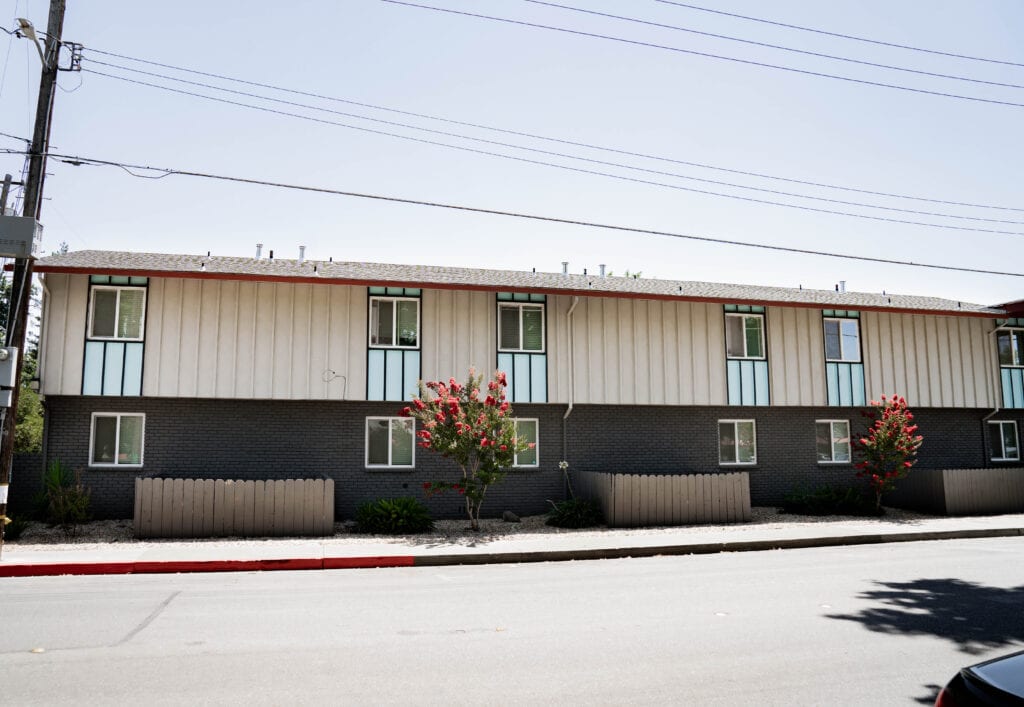
Apartment communities, condominium associations, and commercial buildings we have re-clad across Sacramento, the Bay Area, and Northern California.
★★★★★ Rated 4.9 from 69 Google reviews
Heritage Exteriors is beyond exceptional. Very impressed with the timeliness, communication, and reasonable price of the whole project.
Heritage replaced my old crumbling wood siding and did a fantastic job. From the first interactions assessing the project and providing a quote, to the project itself, was all exceptional. My home looks brand new.
We recently had our house re-sided with Hardie product. We interviewed 3 companies, one of them being Heritage Exteriors. From our first meeting with David to the last day's work touching up paint, the experience was excellent.