★★★★★
Heritage Exteriors is beyond exceptional. Very impressed with the timeliness, communication, and reasonable price of the whole project.
Scott Doyen
Sacramento, CA · Google
Sacramento, CA · Google

Per-unit is the number a board wants and the number a bid cannot honestly start from. A one-bedroom with four windows and a three-bedroom corner unit with eleven are not the same job, and averaging them hides the only variable that matters. Here is how the number is actually built — and what to ask for so the bids you get are comparable.
Get a Free EstimateAsk five contractors what it costs to replace the windows in a 96-unit community and you will get five numbers built five different ways. The spread is rarely about margin. It is about what each bid assumed — how many openings, which installation method, whose crews carry the residents through it, and who repairs the drywall afterwards.
This page is about that build-up. It will not give you a per-unit figure, because a per-unit figure is the thing you should be most suspicious of.
Window count per unit is the single largest driver of cost, and it varies more within a community than most people expect. A studio with three openings and a three-bedroom corner unit with eleven differ by a factor of three or four, and a community with a mixed unit stack will have both. Averaging them produces a number that is wrong for every actual unit and only right for the building as a whole — which is fine for a total, and useless for a phase.
Count openings. Everything else follows from that.
Windows are priced by size as well as by count. Pull the unit mix, count openings by unit type, and note anything oversized, arched, or made up of multiple joined units — those cost disproportionately more and tend to sit in the most visible elevations.
Retrofit and full-frame are materially different prices, because full-frame includes cladding removal, flashing and repair at every opening. On a mixed-condition building the bid should assume a split and price both. If you have not decided this yet, retrofit versus full-frame for apartment buildings covers what determines it.
Frame material and glass package. For a rough order of magnitude before bids, the installed per-window ranges Heritage Exteriors publishes for Northern California — current as of May 2026, per window, installed — run roughly $400 to $800 for vinyl, $500 to $1,000 for aluminum, $700 to $1,200 for fiberglass and $800 to $1,500 for wood. Those figures come from our Northern California window replacement cost page and are residential. Multifamily moves off them in both directions and you should expect a real bid to differ; use them to size a reserve, not to challenge a quote.
Ground-floor units from a ladder and fourth-floor units from a lift are different labor. So is a community with interior corridors versus exterior walkways, and a site where the crew can park next to the building versus one where everything is carried. Access is where two bids on the same building diverge most and explain themselves least.
Notification, scheduling, access coordination, re-visits for units nobody was home for. On an occupied property this is a real line item and a real risk — a phase that stalls because thirty units could not be accessed costs money whoever is at fault. It belongs in the bid, priced, with the responsibilities named. Our guide to phasing a window replacement across an occupied building covers how that plan should look.
Full-frame work disturbs interior casing, stool and apron, and sometimes drywall. Retrofit disturbs less but is not always clean. Whether the bid includes putting it back — and to what standard — is one of the most common differences between a low bid and a complete one.
Replacement windows must meet the California energy standards in force when the permit is applied for, and those tightened on January 1, 2026. This is a specification floor rather than a separate cost, but it does mean a bid built on an older specification is not comparable to one built on the current requirement. See Title 24 compliance for multifamily window replacement.
For a first pass at a building total, the arithmetic every bidder does is:
Doing that yourself before bids arrive is the single most useful hour a property manager can spend, because it tells you which bids have quietly left a line out.
The same discipline applied to cladding is in our multifamily siding scope-of-work guide.
We price multifamily window work from a real opening count, with the assumptions written down, so you can compare it line by line against anyone else. If you want a number you can take to a board, we will walk the property, count the openings, and give you the build-up rather than a total. Call (916) 546-2991 — CSLB #1055919.
Why will nobody give me a straight per-unit price?
Because per-unit is an output, not an input. A bid is built from the opening count, the window sizes, the installation method and the access conditions, and unit types vary enough within one community that a single average is misleading in both directions. A contractor who quotes a flat per-unit number before counting openings is either padding it heavily or is about to discover the difference during construction.
What is the right way to budget before I have bids?
Count openings, not units. Take the unit mix, count windows per unit type from the plans or a sample walk, and multiply out to a building total. An installed per-window range applied to a real opening count gets you far closer than any per-unit figure, and it is the same arithmetic every bidder will do.
What per-window range should I use for a first pass?
Heritage Exteriors publishes installed per-window pricing for Northern California on our residential cost page, current as of May 2026: roughly $400 to $800 for vinyl, $500 to $1,000 for aluminum, $700 to $1,200 for fiberglass and $800 to $1,500 for wood, per window installed. Multifamily work moves off those figures in both directions — volume and repetition pull them down, access and phasing push them up — so treat them as a starting point for a rough order of magnitude, not as a quote.
Does replacing every window at once cost less per window?
Usually yes, and the saving is real but smaller than people expect. What you save is mobilization, staging, and the overhead of repeating a small job many times. What you do not save is the window or the labor to install it, which is most of the cost. The bigger argument for doing it at once is consistency of specification and a single disruption rather than several.
What is most often missing from a multifamily window bid?
Interior finish restoration, resident notification and access management, disposal, and the price of an opening that changes installation method once work starts. All four are real costs. When a bid is cheaper than its rivals, it is worth checking those four before concluding it is better value.
Are there rebates that reduce the cost?
Sometimes. SMUD and PG&E have run rebate programs covering window upgrades, and program terms change from year to year, so it is worth checking what is open before you specify rather than after. We cover what has been available on our SMUD and PG&E rebates page.
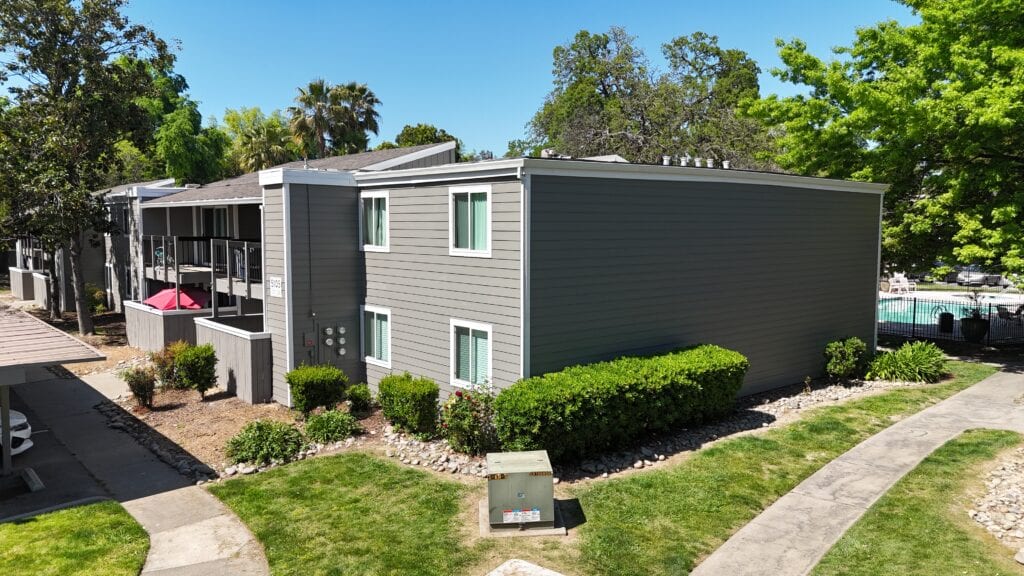
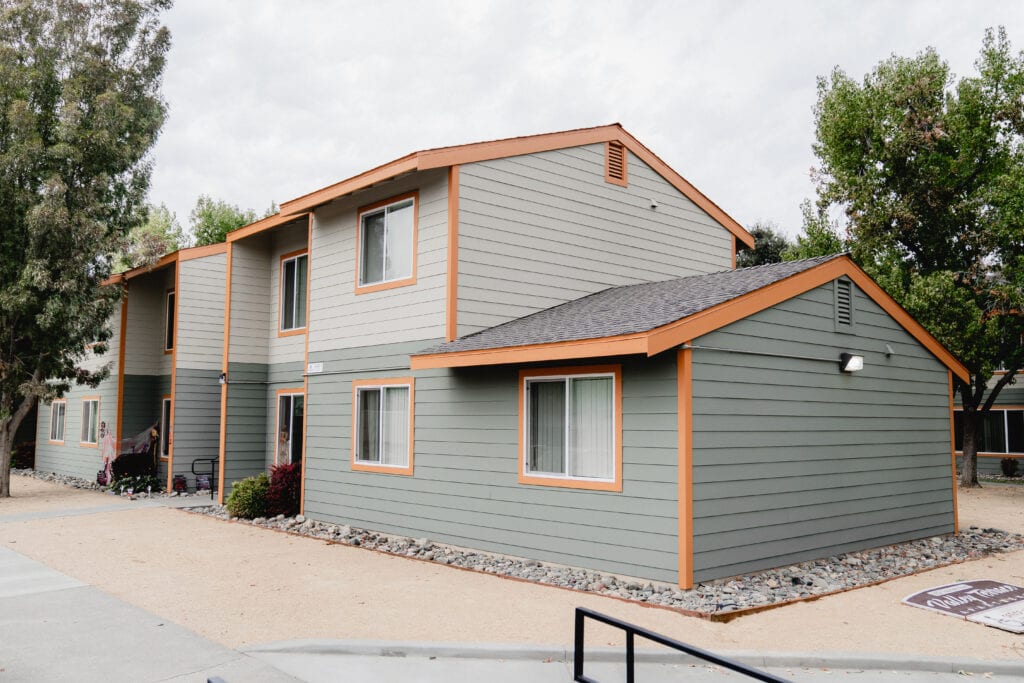
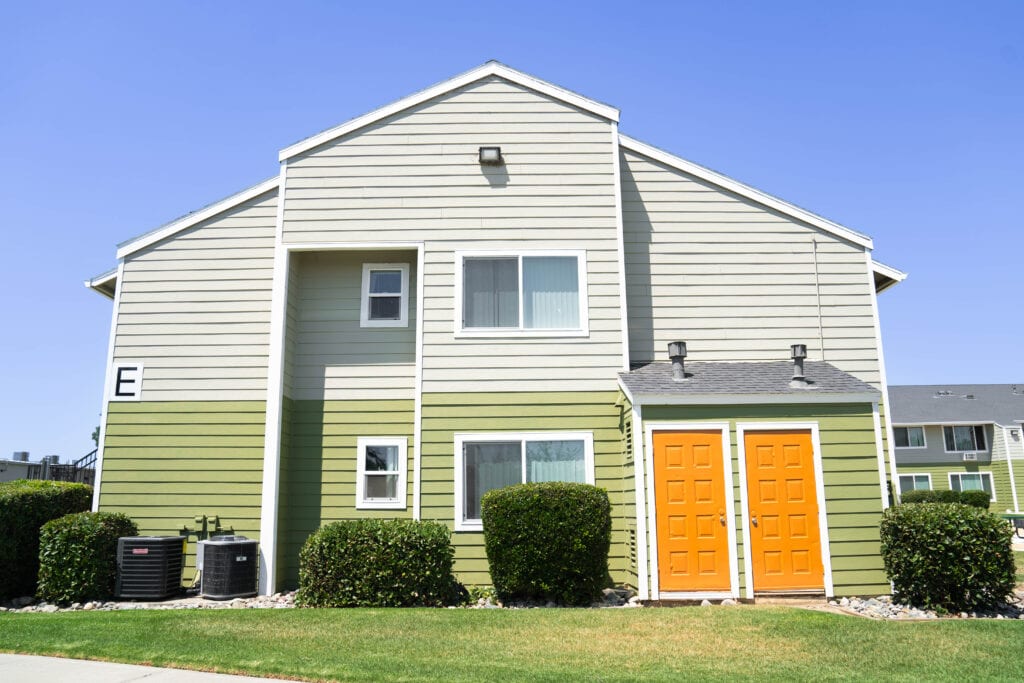
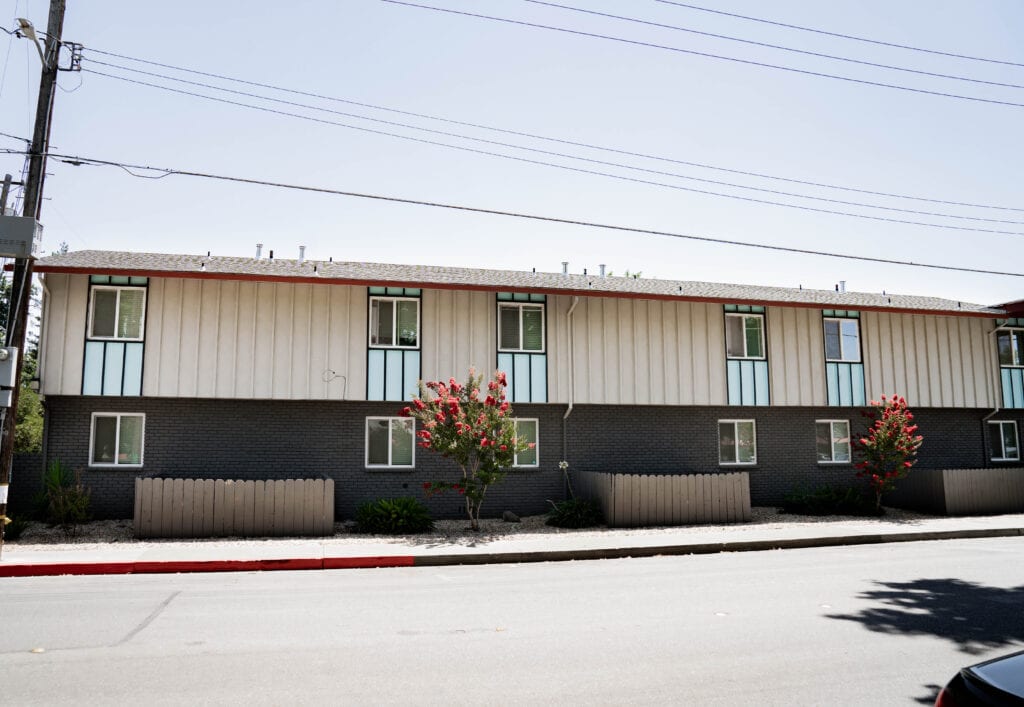
Apartment communities, condominium associations, and commercial buildings we have re-clad across Sacramento, the Bay Area, and Northern California.
★★★★★ Rated 4.9 from 69 Google reviews
Heritage Exteriors is beyond exceptional. Very impressed with the timeliness, communication, and reasonable price of the whole project.
Heritage replaced my old crumbling wood siding and did a fantastic job. From the first interactions assessing the project and providing a quote, to the project itself, was all exceptional. My home looks brand new.
We recently had our house re-sided with Hardie product. We interviewed 3 companies, one of them being Heritage Exteriors. From our first meeting with David to the last day's work touching up paint, the experience was excellent.