★★★★★
Heritage Exteriors is beyond exceptional. Very impressed with the timeliness, communication, and reasonable price of the whole project.
Scott Doyen
Sacramento, CA · Google
Sacramento, CA · Google

When the sky turns orange, the advice is to close the windows. That helps, and it is not the whole answer. Smoke gets into closed houses too, and how much depends partly on the windows and mostly on filtration.
Get a Free EstimateWildfire smoke is now a regular part of late summer and fall across Northern California, including in places far from any fire. The fine particles in smoke are small enough to pass deep into the lungs, and they get indoors. This page looks at one part of the defense, the windows, and is honest about how large that part is. It belongs to our California window guide.
This is not a page about protecting the house from fire. Ember and flame resistance, and the state's Wildland-Urban Interface Code, are covered at wildfire-resistant exteriors.
The U.S. Environmental Protection Agency (EPA) describes three routes:
Windows are involved in the first and the third. Closing them deals with the first. The third is the reason a closed house still smells of smoke.
More than nothing and less than people hope. EPA's training material on wildfire smoke says that with doors and windows closed and no air cleaner running, indoor fine particle levels are typically around 55 to 60 percent of outdoor levels during smoke events, and that the figure ranges from as low as 30 percent to as much as 100 percent depending on the house. With doors and windows left open, indoor and outdoor levels will be similar.
The EPA also notes that newer homes and homes with air conditioning tend to keep outdoor pollution out more effectively than older homes. A study of sensor data from California wildfire events, published in the Proceedings of the National Academy of Sciences in 2021, found the same pattern: lower infiltration in newer buildings and in those using air conditioning or filtration.
Two conclusions follow. A tight house matters. And even a tight house lets a good deal in, so the air inside has to be cleaned as well.
Windows are tested for how much air passes through the assembled unit when closed and locked. The result is the air leakage rating, in cubic feet of air per minute per square foot of window area.
So 0.3 is the pass mark, not a mark of distinction. Many good windows test well below it. Air leakage is not always printed on the label, so if airtightness is a priority, ask for the tested figure for the exact product, and compare numbers rather than adjectives.
How a window closes affects how tightly it can seal.
That is a tendency, not a law: a well-made slider can outperform a poorly made casement. But if you are replacing windows in a bedroom you intend to use as a clean room, it is a reason to consider a casement or to check the slider's tested figure.
A window's air leakage rating is measured in a laboratory frame. It says nothing about the joint between the window and your house. A tight window set in an opening that was never sealed will leak around its perimeter. On a retrofit installation into an existing frame, the seal between the new frame and the old one, and the condition of the old frame's joint with the wall, decide the result. Ask how the perimeter will be sealed, with what, and whether the gap will be insulated.
For some houses the windows are a minor leak among many. For others they are the main one. Yours are likely to matter if:
If several of those are true, replacing the windows will make a real difference to smoke, drafts, dust and noise together. Our pages on moving from single to dual-pane windows and how often windows should be replaced cover the wider case.
If none of them is true, your windows are probably not where the smoke is coming from, and money is better spent on filtration and on sealing elsewhere.
Windows get the blame because you can see them. In most houses a large share of air leakage is elsewhere: exterior doors and their thresholds, the attic hatch, recessed lights, plumbing and wiring holes, the fireplace damper, the dryer vent, bath and kitchen exhaust ducts, and leaky ductwork in an attic or crawlspace. A door with a visible strip of daylight under it leaks more than several tight windows.
Two pieces of equipment common in California deserve a specific warning. The California Air Resources Board (CARB) says not to run swamp coolers or whole-house fans during smoke, because both work by pulling large volumes of outdoor air through the house.
The EPA and CARB give consistent guidance.
Window air conditioners need a note of their own. The EPA says to close the unit's outdoor air damper, to avoid using it if the damper cannot be closed, and to seal the gap between the unit and the window as tightly as possible.
California's worst smoke often arrives during its worst heat, and the two pieces of advice pull against each other: close up against smoke, open up against heat. The EPA's guidance on this is direct. For most people, heat is more immediately dangerous.
That has consequences for windows:
There is a trade-off in making a house airtight. Leaks are how older houses get their fresh air, unplanned and unfiltered. Tighten the house and you remove the smoke pathway, and also some of the dilution of moisture, cooking fumes and other indoor pollutants. On an ordinary day the answer is to open the windows and use the kitchen and bath fans. Many newer homes have mechanical ventilation designed in for this reason.
If new windows leave you with more condensation on the glass in winter than before, that is the house telling you it is tighter. Our page on fighting condensation on the inside of windows covers what to do.
The figures your windows must meet for energy are on our Title 24 page.
We will tell you honestly whether your windows are a real smoke pathway or whether weatherstripping and a better furnace filter would do more for less. When we do replace, we seal the perimeter of every unit and can give you the tested air leakage figure for the product we quote. Licensed in California, CSLB #1055919. Call (916) 546-2991.
Do new windows keep wildfire smoke out?
They reduce one of the ways it gets in. Tight windows cut the air that leaks around sashes and frames, but smoke also enters through doors, vents, ducts, attic hatches and every other gap in the house. New windows help most when the old ones are visibly leaky. They are not a substitute for filtering the air inside.
What window rating tells me how airtight it is?
Air leakage, shown on the NFRC label as a figure of 0.3 or less, where lower is tighter. California’s Energy Code caps manufactured windows at 0.3 cubic feet per minute per square foot. The rating is not always printed, so ask the manufacturer for it if airtightness matters to you.
Which window style seals best?
As a rule, windows that close by pressing the sash against a gasket, such as casements, awnings and fixed windows, seal tighter than windows whose sashes slide past each other, such as sliders and hung windows. Product quality varies more than style does, so compare the tested air leakage figures for the specific products.
Should I tape my windows shut during a smoke event?
If a window is obviously leaky and you have no better option, temporary sealing can help for the duration. Do not seal a window you would need as a fire escape, and do not block any exit. The EPA’s clean room guidance says to close windows and doors without doing anything that makes it hard to get out.
Is it safe to keep windows closed during a heat wave with smoke?
Only if you can keep the house cool. The EPA’s guidance on combined heat and smoke says that for most people heat is the more immediately dangerous of the two. If you have no air conditioning and the house is overheating, go somewhere cooler with cleaner air, such as a designated clean air center, a library or a friend’s home.
When should I open the windows again?
When the outdoor air is cleaner than the air inside. Check AirNow or your local air district. The EPA advises airing out the home by opening windows once air quality improves, even temporarily. Smoke often clears for a few hours overnight or when the wind shifts, and that is the time to flush the house.
My windows are original single-pane aluminum. Are they my main smoke problem?
They may be one of them. If you can feel a draft at the closed sash, see daylight at a corner or find soot on the sill after a smoky day, they are leaking. Weatherstripping may be enough in the short term. Call (916) 546-2991 and we will tell you whether the windows are worth repairing or are due for replacement.
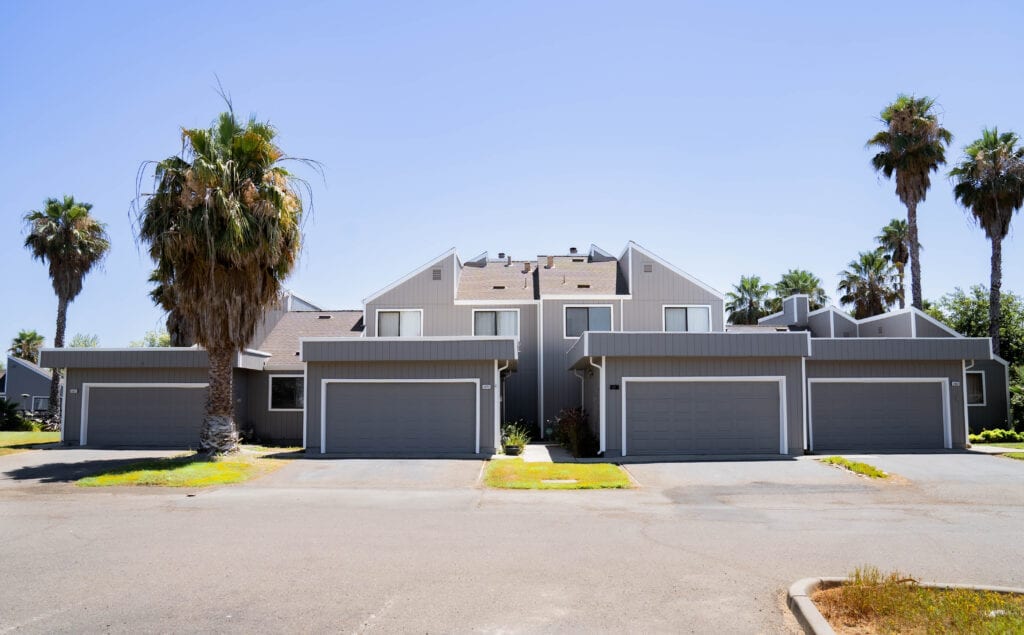
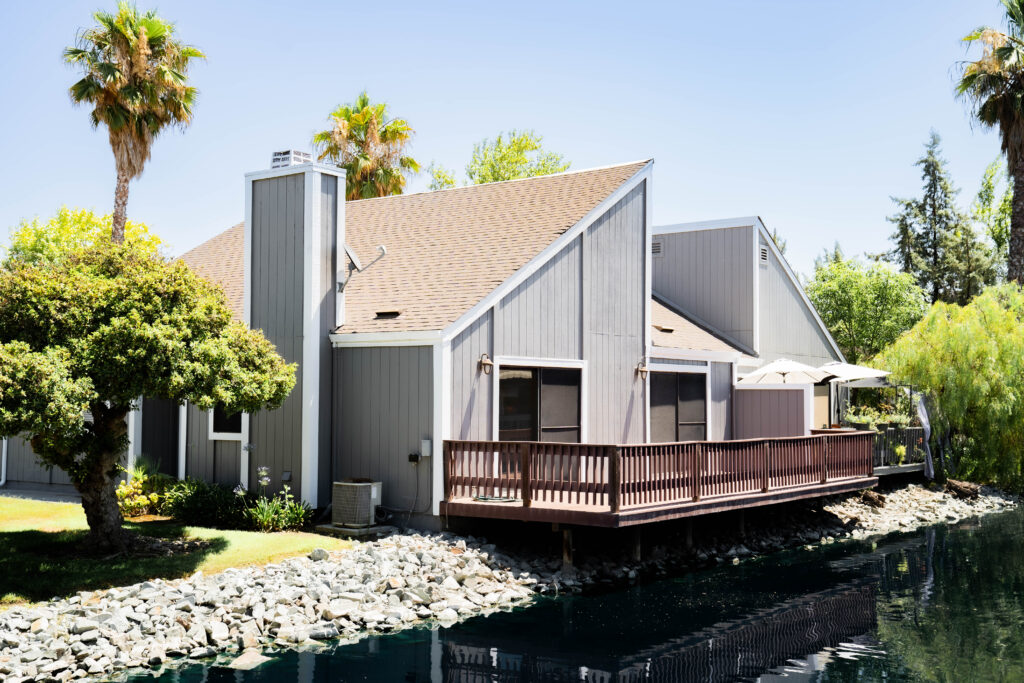
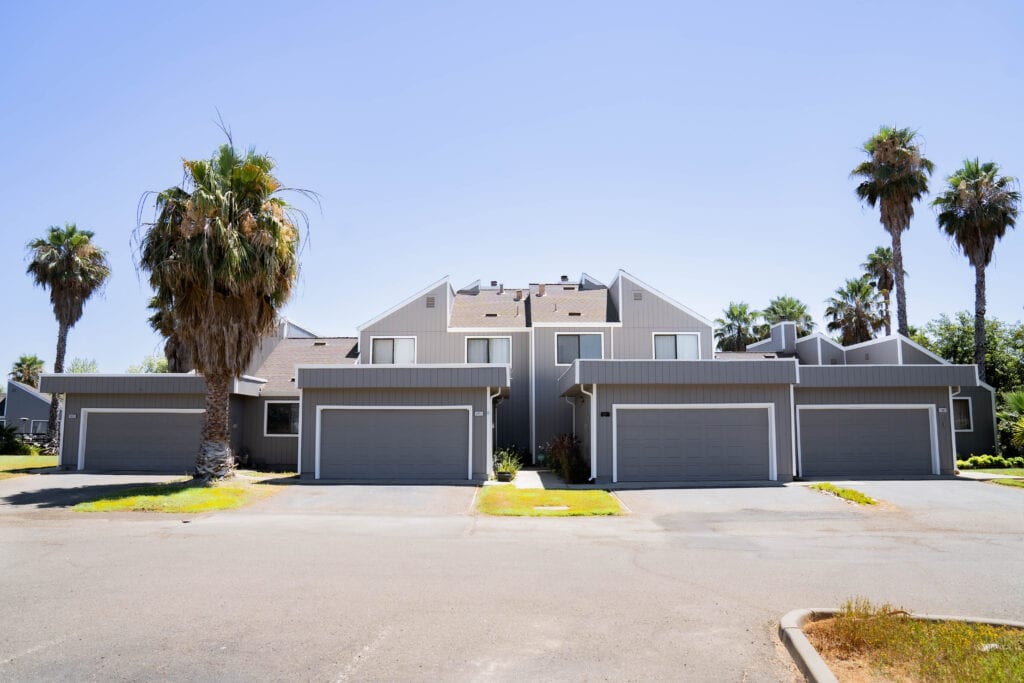
A look at homes we have re-sided and re-glazed across Sacramento, the Bay Area, and Lake Tahoe.





★★★★★ Rated 4.9 from 69 Google reviews
Heritage Exteriors is beyond exceptional. Very impressed with the timeliness, communication, and reasonable price of the whole project.
Heritage replaced my old crumbling wood siding and did a fantastic job. From the first interactions assessing the project and providing a quote, to the project itself, was all exceptional. My home looks brand new.
We recently had our house re-sided with Hardie product. We interviewed 3 companies, one of them being Heritage Exteriors. From our first meeting with David to the last day's work touching up paint, the experience was excellent.