
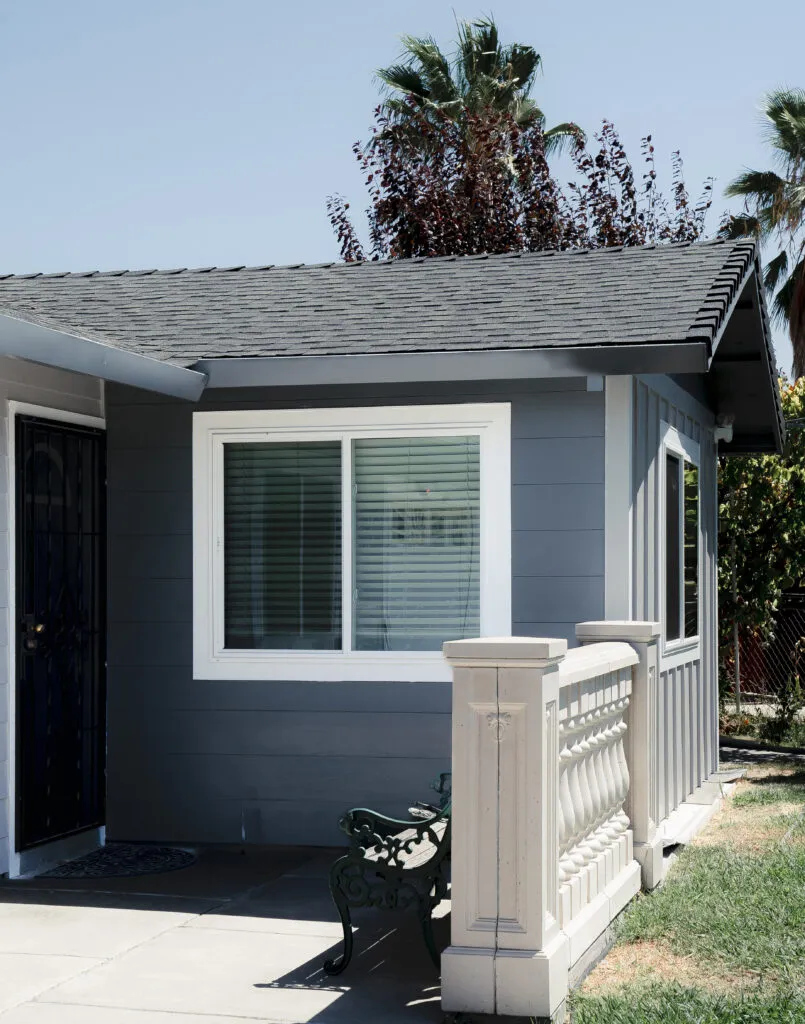
- T1-11 is a plywood-based panel siding with a low upfront cost ($3–$6 per sq. ft. installed), while James Hardie is fiber cement at a moderate-to-high cost ($10–$16 per sq. ft. installed).
- James Hardie lasts 30–50 years with very little upkeep, whereas T1-11 lasts only 15–25 years and demands repainting and sealing every 3–5 years.
- James Hardie is noncombustible with a Class A flame-spread rating, while wood-based T1-11 is combustible — a key concern in Northern California’s wildfire-prone areas.
- T1-11 is vulnerable to moisture, rot, and termites, but James Hardie fiber cement resists rot, pests, warping, and cracking.
- Although T1-11 is cheaper initially, James Hardie’s durability and low maintenance typically deliver a lower lifetime cost of ownership.
When it comes to choosing the right siding for your home, it’s essential to weigh your options carefully. Two popular choices in the siding industry are T1-11 and James Hardie siding. Each has its unique qualities, benefits, and drawbacks. In this article, we’ll compare T1-11 and James Hardie siding to help you make an informed decision for your home.
| Feature | T1-11 Siding | James Hardie Siding |
| Upfront Cost | Low ($3 – $6 per sq. ft. installed) | Moderate to High ($10 – $16 per sq. ft. installed) |
| Lifespan | 15 – 25 Years (with strict maintenance) | 30 – 50 Years |
| Fire Rating | Combustible (Wood-based) | Non-Combustible (Class A flame-spread rating) |
| Maintenance | High (Repainting/Sealing every 3–5 years) | Very Low (Occasional wash; repaint every 15+ years) |
| Resistance | Vulnerable to rot, moisture, and termites | Highly resistant to rot, pests, warping, and cracking |
Understanding T1-11 Siding
T1-11 siding is a plywood-based siding option that has been around for decades. It’s known for its affordability and rustic appearance, making it a popular choice for many homeowners.
Pros of T1-11 Siding
- Cost-Effective: T1-11 siding is budget-friendly, making it an attractive option for homeowners on a tight budget.
- Rustic Charm: Its natural wood grain appearance adds a classic and rustic look to your home.
- Easy Installation: T1-11 siding is relatively easy to install, reducing labor costs.
Cons of T1-11 Siding
- Maintenance: It requires regular maintenance, including painting and sealing, to prevent decay and damage.
- Vulnerability: T1-11 siding is susceptible to moisture damage, termites, and other pests.
Preventing Dry Rot: Effective Measures to Protect Your Property
The Advantages of James Hardie Siding
James Hardie siding, on the other hand, is a fiber cement siding that has gained popularity for its durability and aesthetic appeal.
Pros of James Hardie Siding
- Durability: It is highly durable and can withstand harsh weather conditions, including rain, wind, and hail.
- Low Maintenance: James Hardie siding is resistant to rot, termites, and moisture, reducing maintenance efforts.
- Aesthetic Variety: It comes in a wide range of colors and styles to suit your home’s design.

Cons of James Hardie Siding
- Higher Cost: Compared to T1-11, James Hardie siding is initially more expensive.
- Professional Installation: It’s best installed by professionals, which can add to the overall cost.
Making the Right Choice
When deciding between T1-11 and James Hardie siding, consider your budget, maintenance preferences, and the climate in your area. While T1-11 may be more affordable initially, the long-term benefits of James Hardie siding, such as durability and low maintenance, often outweigh the higher upfront cost.
Conclusion
Both T1-11 and James Hardie siding have their merits, but considering the long-term benefits, James Hardie stands out as the superior choice for a durable, low-maintenance, and aesthetically pleasing option. Your home deserves the best protection and appearance, and James Hardie siding delivers on both fronts.
FAQs
Q1: What is the difference between T1-11 and James Hardie siding?
T1-11 is a plywood-based panel siding that costs $3–$6 per square foot installed, while James Hardie is a fiber cement siding costing $10–$16 per square foot. James Hardie lasts 30–50 years vs. T1-11’s 15–25 years, is non-combustible (Class A fire rating) vs. T1-11’s combustibility, and resists moisture, rot, and termites — problems that commonly affect T1-11 panels in Northern California’s climate.
Q2: Is T1-11 siding good for California homes?
T1-11 siding has significant drawbacks for California homes. It is combustible (not suitable for wildfire zones or WUI areas), susceptible to moisture damage and rot without regular maintenance, and prone to termite damage. Many California homeowners are replacing T1-11 with James Hardie fiber cement siding for its fire resistance, durability, and lower long-term maintenance costs.
Q3: How much does it cost to replace T1-11 with James Hardie siding?
Replacing T1-11 with James Hardie siding costs $12–$18 per square foot in Northern California, including removal of old T1-11 panels, any sheathing or moisture barrier repairs, and installation of new HardiePlank with ColorPlus Technology. For a 2,000 sq ft home, expect $24,000–$36,000. Heritage Exteriors offers financing options to help manage the investment.
Q4: Can you install James Hardie siding over T1-11?
Installing James Hardie siding directly over T1-11 is generally not recommended. Best practice is to remove the T1-11 panels, inspect the wall sheathing and moisture barrier, make any necessary repairs, then install James Hardie over a proper weather-resistant barrier. Installing over damaged or moisture-compromised T1-11 can trap moisture and void warranties.
Q5: How long does T1-11 siding last compared to James Hardie?
T1-11 plywood siding lasts 15–25 years with regular maintenance including painting every 3–5 years, caulking, and prompt repair of any moisture damage. James Hardie fiber cement siding lasts 30–50 years with minimal maintenance — typically just occasional cleaning and touch-up painting every 15+ years with ColorPlus Technology. James Hardie costs more upfront but has a significantly lower lifetime cost of ownership.
Q6: Is James Hardie siding worth the extra cost over T1-11?
Yes, James Hardie siding is worth the higher upfront cost for most homeowners. Over a 30-year period, James Hardie’s total cost of ownership is typically lower than T1-11 when you factor in T1-11’s frequent repainting ($3,000–$5,000 every 3–5 years), repair costs from moisture/termite damage, and shorter replacement cycle. James Hardie also tends to boost resale appeal more than T1-11.
Q7: Is T1-11 cheaper than James Hardie?
Yes, T1-11 plywood panels have a significantly lower upfront material and installation cost ($3–$6 per square foot) compared to James Hardie fiber cement ($10–$16 per square foot). However, when calculating the new siding cost in Northern California, T1-11 often proves more expensive in the long run. Regular painting requirements ($3,000–$5,000 every few years) and inevitable repairs from moisture or pest damage quickly close the cost gap over time.
🏡 Time to Replace Your Aging T1-11 Siding?
Over time, wood-based panels like T1-11 become highly susceptible to moisture rot, delamination, and severe pest damage. Don’t wait for hidden structural damage to compromise your home.
Protect your investment, elevate your curb appeal, and drastically lower your maintenance list. Get a free quote for your T1-11 replacement today!
Frequently Asked Questions
Why does T1-11 require so much maintenance?
Because T1-11 is a wood-based product, it must be repainted and sealed every 3–5 years to keep moisture out and prevent decay. Without that upkeep it becomes vulnerable to rot, delamination, and termite damage. James Hardie fiber cement avoids most of this because it does not rot, warp, or crack under harsh weather.
How do I know when it’s time to replace my T1-11 siding?
Watch for signs like swelling or delaminating panels, soft or spongy spots, peeling paint, visible rot, or evidence of pest activity. These indicate moisture has penetrated the wood and hidden structural damage may be developing. If you spot these issues, Heritage Exteriors can inspect your siding and provide a free quote for a James Hardie replacement.
Our Services
Serving Northern California
Lock In a Free, No-Obligation Estimate
Get transparent pricing on siding, windows, or exterior repairs fast. No sales pressure. Just answers.
Get My Free Estimate


