★★★★★
Heritage Exteriors is beyond exceptional. Very impressed with the timeliness, communication, and reasonable price of the whole project.
Scott Doyen
Sacramento, CA · Google
Sacramento, CA · Google

Siding rarely fails without warning. It stains, streaks, chalks, and pops fasteners first. Most homeowners read those marks as the wall getting dirty and reach for a pressure washer — but several of them are the outside of a moisture problem, and washing them off removes the evidence without touching the cause.
Get a Free EstimateThe outside of a wall is a diagnostic surface. Marks on siding are the visible end of processes happening in and behind it, and learning to read them is the difference between catching a moisture problem at the staining stage and finding it at the rot stage. This guide covers the marks we are asked about most, what each usually means, and which ones justify a phone call.
| What you see | Usual cause | Cosmetic or serious? |
|---|---|---|
| Rust streaks below fasteners | Corroding or overdriven nails; or hard-water irrigation spray | Usually cosmetic, but check the fastener spec |
| White chalky bloom | Efflorescence — salts left as moisture evaporates out | Normal when new; persistent means moisture is moving |
| Powder on your hand | Chalking — UV-degraded paint binder | Cosmetic, but the coating is near end of life |
| Brown/amber bleed on wood | Tannin extraction from cedar or redwood | Cosmetic; needs the right primer to stop recurring |
| Dark streaks below windows | Concentrated runoff; missing or failed drip detail | Cosmetic now, a leak path later |
| Popped nail heads | Moisture cycling, settling, missed studs, overdriving | Isolated = routine; a row or cluster = investigate |
| Green or black film | Algae or mildew on a shaded, damp elevation | Usually cosmetic; persistent damp is the question |
| Blistering in a defined patch | Moisture behind the coating pushing outward | Serious — localized blistering is a wall signal |
Vertical rust-colored tails running down from fastener positions almost always mean the fasteners are corroding. The usual causes are a fastener not rated for the cladding, a coated fastener whose coating was chipped by the nail gun, or a head driven too deep so it sits below the surface where water collects.
Before assuming fasteners, check the pattern. Hard-water irrigation produces very similar staining, but it concentrates on the lower courses of one elevation and often shows a spray arc. If the streaks are only within sprinkler reach, the problem is in the garden, not the wall — and while you are there, note that irrigation striking siding is one of the fastest ways to destroy the bottom of an otherwise healthy elevation.
The white, chalky, sometimes crystalline bloom on cementitious siding is mineral salt. Water moves through the material, reaches the surface, evaporates, and leaves dissolved salts behind.
Some efflorescence on newly installed fiber cement is ordinary — the material is drying and it is a one-time event that washes off and does not return. Efflorescence that keeps reappearing years after installation is a different message: moisture is still moving through that assembly. That may be from behind, and it is worth investigating rather than repeatedly cleaning. Our page on water damage behind siding covers where that moisture usually comes from.
Rub the wall and get colored powder on your hand and that is chalking — the paint's binder breaking down under ultraviolet light and freeing pigment particles. It is a normal aging process, and in the Sacramento Valley it runs visibly faster on south and west elevations than on north ones.
By itself it is cosmetic. What it signals is that the coating is losing its ability to shed water, so the substrate underneath is progressively less protected. Chalking is the wall telling you the repaint clock is running, and a factory-baked finish is the usual answer if you are tired of the cycle — see James Hardie maintenance.
A popped fastener stands proud of the surface, often lifting or splitting the siding around it. The distribution tells you what is happening:
Our article on settling pulling nails out covers the structural side of this.
Dark vertical marks under window corners are usually concentrated runoff — water leaving the window in a stream rather than being thrown clear of the wall. The likely reasons are a missing or badly formed drip detail at the head, a sill that has lost its outward slope, or sealant that has failed and is channelling water instead of shedding it.
The staining is cosmetic. What it represents is not: concentrated water running repeatedly over one path is precisely how a small detailing shortfall becomes a leak over several seasons. This is worth correcting while it is still a stain.
Call someone when the staining is accompanied by any of these:
And a general caution: resist the pressure washer. High pressure drives water into the assembly through joints and behind laps, removes the evidence you would want a professional to see, and on older homes may disturb materials that should not be disturbed — see asbestos siding on older homes.
Heritage Exteriors (CSLB #1055919) repairs and replaces siding across Sacramento, the Bay Area, and Lake Tahoe. If you are unsure whether a mark is weathering or a warning, that is a reasonable thing to have looked at before it becomes a repair. See our siding repair services, get in touch, or call (916) 546-2991.
What causes rust streaks running down from nail heads?
Corroding fasteners, and there are three usual reasons: the wrong fastener was used for the cladding material, a coated fastener had its coating damaged during installation, or the nail head was overdriven and broke the surface so water sits against it. A fourth possibility has nothing to do with the siding — hard-water irrigation spray leaves iron deposits that streak in the same pattern. Look at where the streaks are: sprinkler staining concentrates on the lower courses of a specific elevation.
What is the white chalky residue on my fiber cement siding?
Usually efflorescence — mineral salts carried to the surface as moisture moves through a cementitious material and then evaporates, leaving the salts behind. A modest amount on new fiber cement is common as the material dries and is generally cosmetic. Persistent or spreading efflorescence long after installation is more interesting, because it means moisture is still moving through that assembly, and that is worth investigating rather than just cleaning.
My paint leaves powder on my hand. Is that a problem?
That is chalking — the paint binder degrading under UV and releasing pigment as a fine powder. It is normal aging, and it happens far faster on south- and west-facing walls in the Central Valley. It is not a water problem in itself, but chalked paint no longer sheds water well, so it is a sign the coating is near the end of its service life and the substrate is losing its protection.
What are nail pops and do they matter?
A nail pop is a fastener backing out so the head stands proud, often lifting or cracking the siding around it. Causes include seasonal moisture cycling in the framing, house settling, fasteners that missed the stud, and overdriven nails that never held properly. One or two are routine maintenance. A row of them along one line usually indicates framing movement, and pops concentrated near a window or roof junction can indicate wet framing — which is a wall problem, not a nail problem.
Why are there dark streaks below my windows?
Most often water running off the window and down the wall in a concentrated stream rather than being thrown clear. That points to a missing or poorly formed drip detail at the window head or sill, or a sill that has lost its slope. The staining itself is cosmetic; what it tells you is that concentrated water is repeatedly running over that surface, and over years that is exactly how sealant fails and water finds a way in.
Which stains mean I should call someone?
Call when staining is accompanied by any of: soft or spongy material when pressed, a musty smell near the wall, blistering or peeling paint in a defined patch rather than generally, staining that is worse at a junction such as deck-to-wall or roof-to-wall, or interior signs on the same wall. Those combinations suggest water inside the assembly. A uniform cosmetic mark across a whole sunny elevation is usually just weathering.
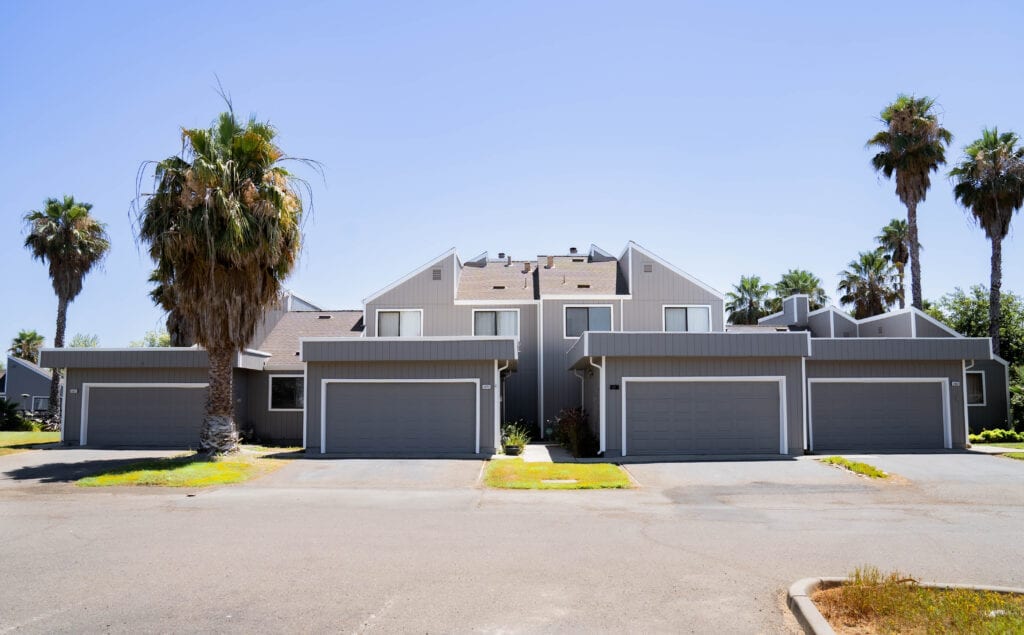
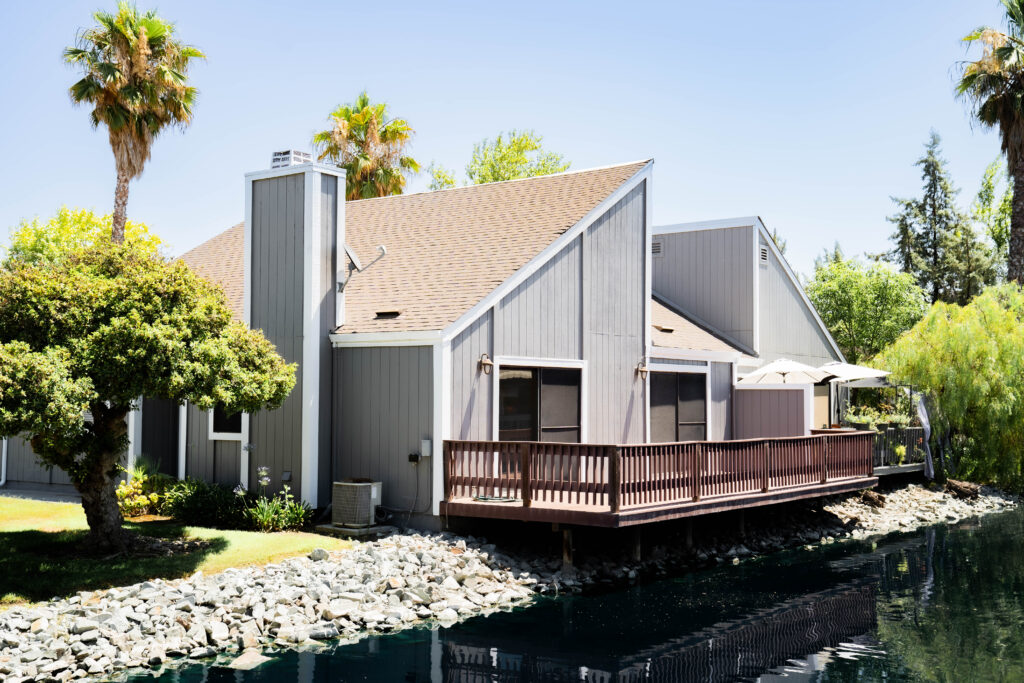
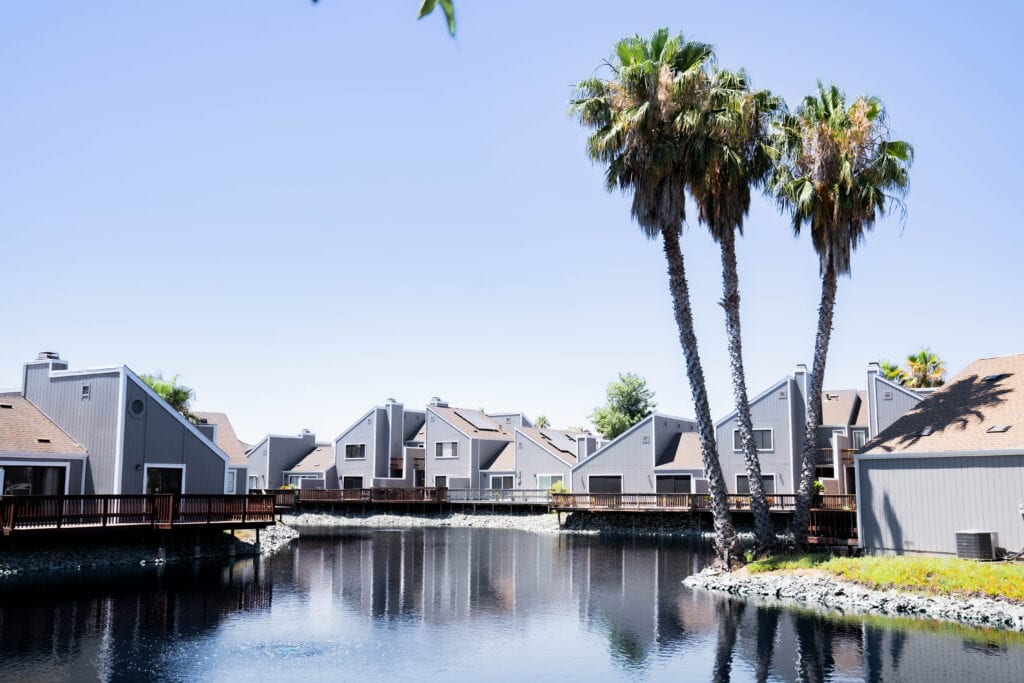
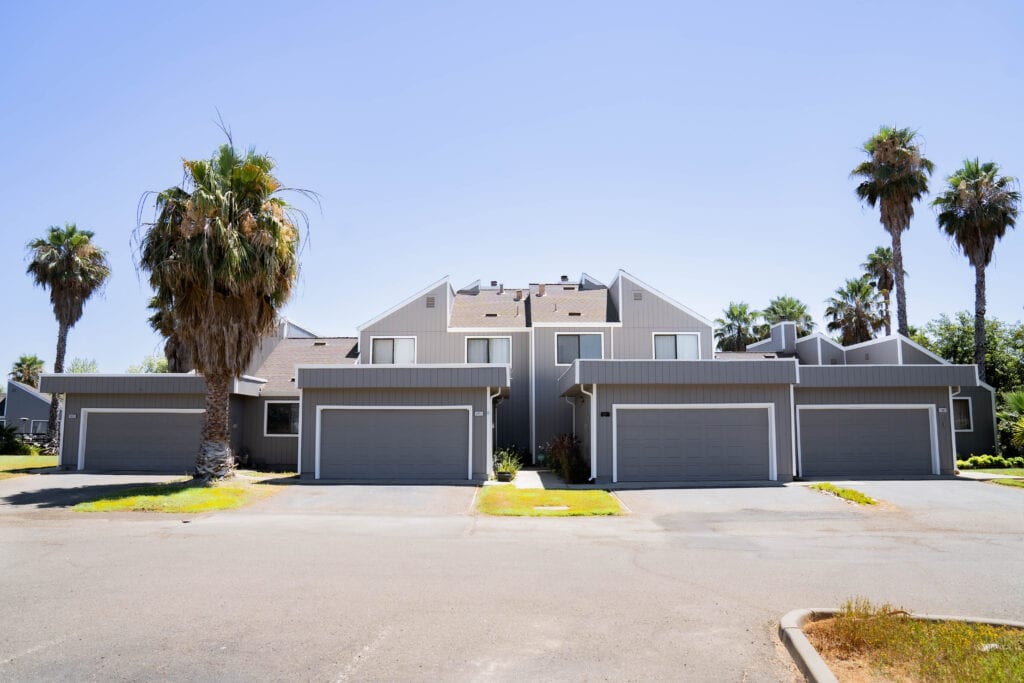
A look at homes we have re-sided and re-glazed across Sacramento, the Bay Area, and Lake Tahoe.




★★★★★ Rated 4.9 from 69 Google reviews
Heritage Exteriors is beyond exceptional. Very impressed with the timeliness, communication, and reasonable price of the whole project.
Heritage replaced my old crumbling wood siding and did a fantastic job. From the first interactions assessing the project and providing a quote, to the project itself, was all exceptional. My home looks brand new.
We recently had our house re-sided with Hardie product. We interviewed 3 companies, one of them being Heritage Exteriors. From our first meeting with David to the last day's work touching up paint, the experience was excellent.