


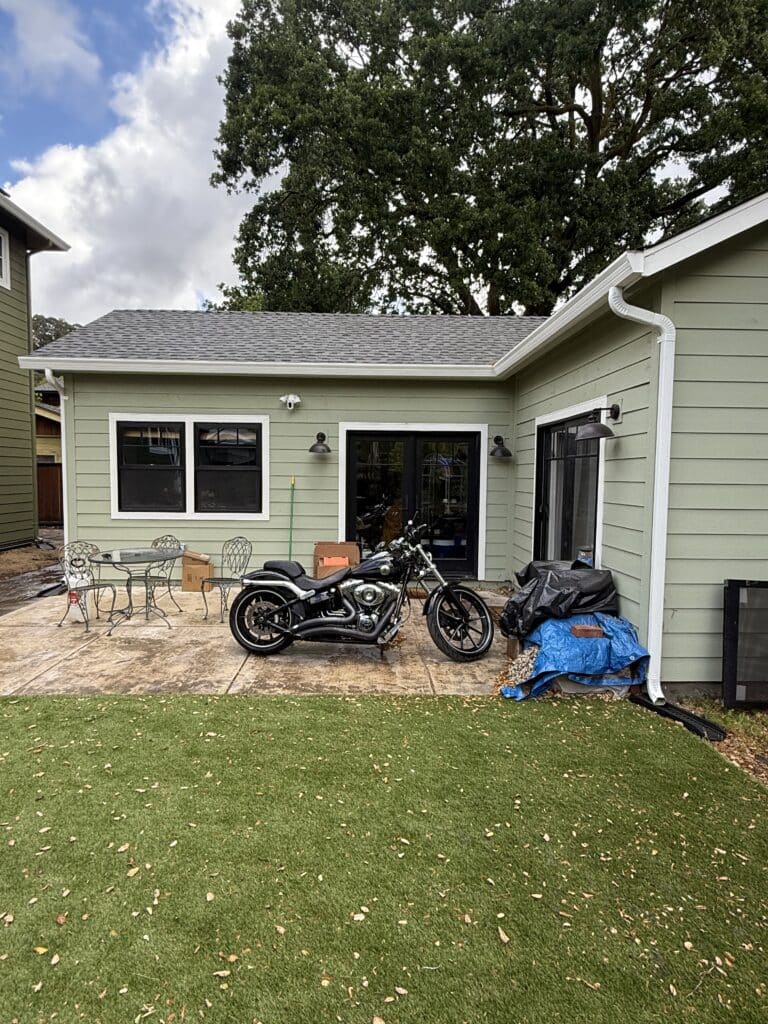
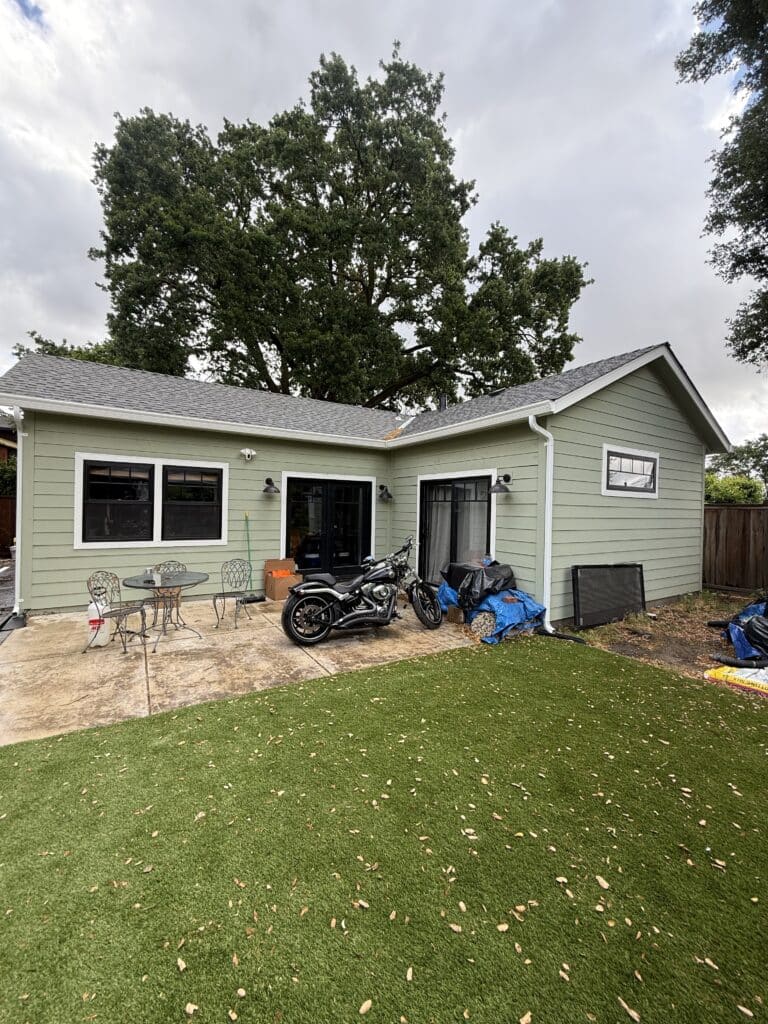
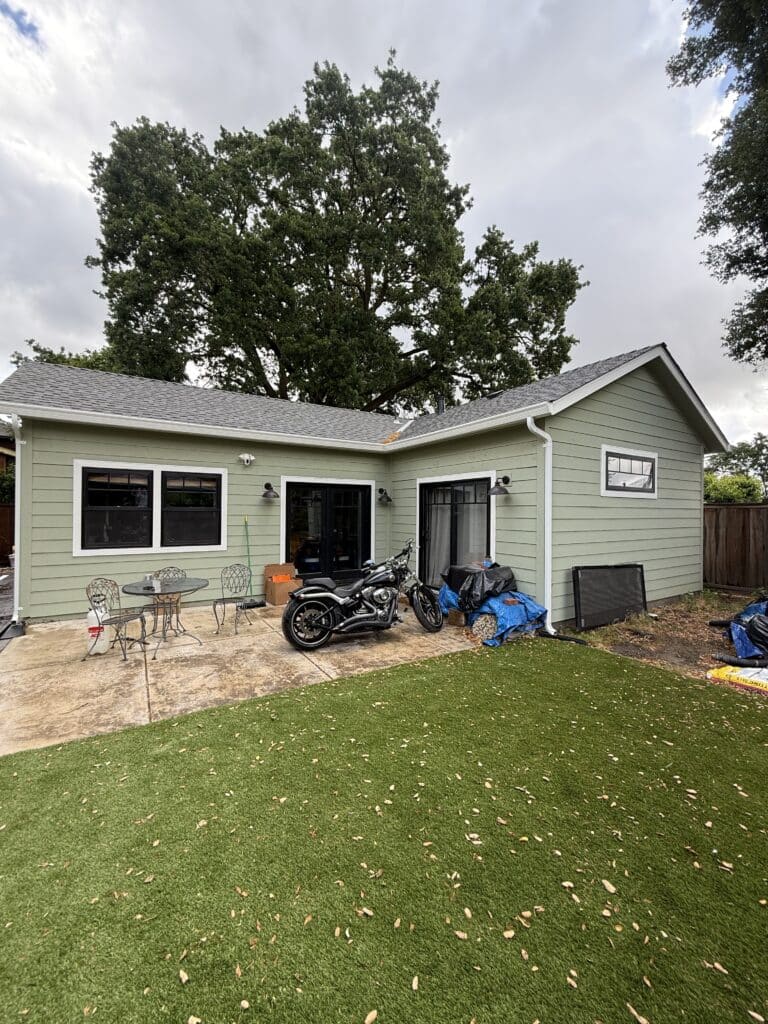

James Hardie Siding Installation in Lafayette, CA
Project Overview
This residential siding project in Lafayette focused on updating the home’s exterior with a durable, cohesive siding system designed to protect the structure while enhancing its architectural character. The homeowners were looking for a long-term solution that would improve weather resistance, reduce ongoing maintenance, and bring visual consistency to a multi-level home with several additions and transitions.
James Hardie fiber cement siding was selected for its proven performance in Northern California’s varied climate. From seasonal moisture and fog to summer heat and sun exposure, the material provides dependable protection without sacrificing appearance. The final result is a clean, balanced exterior that respects the home’s original design while delivering modern durability.
This project required careful planning due to the home’s layout, existing masonry elements, and multiple rooflines. Each elevation was treated with attention to proportion, alignment, and detail to ensure the finished siding felt intentional rather than applied.
Understanding the Home’s Architecture
The Lafayette property features a combination of horizontal lap siding, vertical surfaces, and brick elements that required thoughtful integration. Several exterior walls meet at varying depths, creating natural visual breaks that needed to be emphasized rather than hidden. The goal was not to simplify the structure, but to refine it.
Window placement, door openings, and roof overhangs all influenced the siding layout. Maintaining consistent reveals and sight lines across these transitions was critical. Even small inconsistencies become noticeable on a project like this, especially when using a precision product like fiber cement.
By mapping out the siding plan before installation began, each wall could be addressed individually while still contributing to a unified exterior. This approach ensured clean lines, even spacing, and a balanced appearance across the entire home.
Why James Hardie Fiber Cement Siding Was Chosen
James Hardie siding offers a combination of strength, stability, and design flexibility that makes it ideal for homes like this one. The material resists moisture, pests, and fire while holding paint exceptionally well over time. For homeowners seeking long-term value, this durability plays a major role in reducing future maintenance costs.
The lap siding profile used on this project delivers a timeless look that complements both traditional and transitional architecture. Its subtle texture adds depth without overpowering the design, allowing trim elements, windows, and doors to stand out naturally.
In a climate like Lafayette’s, where temperature shifts and moisture exposure are common, fiber cement provides peace of mind. The material maintains its shape, resists warping, and performs consistently year after year.
Surface Preparation and Tear-Off
Before new siding installation could begin, the existing exterior surfaces were carefully evaluated. Any compromised materials were removed, and the underlying structure was inspected to ensure a solid foundation for the new system. Proper preparation is essential for fiber cement installations, as the performance of the finished product depends heavily on what lies beneath.
Moisture barriers and flashing were installed where needed to protect vulnerable areas around windows, doors, and transitions. This step helps prevent water intrusion and supports long-term performance, particularly in areas exposed to wind-driven rain.
By addressing these details upfront, the installation could proceed efficiently while ensuring the finished siding would perform as intended.
Precision Installation and Layout Planning
James Hardie siding demands accuracy. Each board must be installed level, properly spaced, and securely fastened to achieve both visual consistency and structural integrity. On this project, layout planning played a significant role in achieving clean results.
Courses were aligned carefully across adjacent walls to maintain visual continuity. Corners and transitions were treated with matching trim profiles to create crisp edges and defined breaks. Special attention was given to areas where siding met brick or other materials to ensure clean transitions without awkward overlaps.
The result is an exterior that feels deliberate and refined, with every board contributing to the overall composition rather than drawing attention to itself.
Managing Existing Conditions and Site Constraints
Every siding project presents unique on-site conditions, and this Lafayette home required careful coordination around existing systems and exterior features. Mechanical units, electrical runs, and structural penetrations all had to be addressed without compromising the integrity of the new siding system. Rather than treating these elements as obstacles, they were integrated thoughtfully into the final layout.
Special attention was given to clearances around HVAC equipment and utility connections. Proper spacing and sealing are essential to maintain airflow, accessibility, and long-term serviceability while still achieving a clean finished appearance. Each penetration was flashed and sealed individually to prevent moisture intrusion and ensure durability over time.
The home’s exterior walkways, patios, and landscaped areas were also protected throughout the installation process. Maintaining a clean, organized site not only minimizes disruption for homeowners but also allows installers to work efficiently and accurately. Careful staging of materials and tools helped keep progress steady without sacrificing precision.
In areas where siding met hardscape or grade-level surfaces, additional planning ensured proper clearances and drainage. These details play a critical role in preventing moisture-related issues and extending the life of the siding. By addressing them proactively, the finished exterior performs as well as it looks.
This attention to existing conditions is a key part of delivering reliable results. It ensures that the siding system functions as a complete envelope rather than a surface treatment, reinforcing the home’s protection while maintaining a refined appearance across every elevation.
Trim Work and Architectural Details
Trim elements play a crucial role in elevating siding installations, and this Lafayette project was no exception. Window and door trim was installed with consistent proportions to frame openings cleanly while complementing the siding profile.
Eaves, fascia, and soffits were addressed to ensure a seamless connection between the siding and rooflines. These areas are often overlooked, but they significantly impact the finished appearance of the home. Proper trim alignment also supports water management and long-term durability.
The combination of siding and trim creates visual structure, guiding the eye across the home’s exterior without clutter or distraction.
Addressing Complex Transitions
This home includes several architectural transitions, including changes in elevation, roof overhangs, and recessed areas. Each transition required a tailored approach to maintain both performance and aesthetics.
Careful flashing installation was critical in these areas, particularly where siding met horizontal surfaces or rooflines. By integrating these components properly, the exterior is better protected against moisture infiltration while maintaining clean lines.
These details may not be immediately noticeable, but they contribute significantly to the longevity and reliability of the finished siding system.
Color and Finish Considerations
The chosen color palette complements the home’s surroundings while enhancing its architectural features. The muted green tone adds warmth and depth without overwhelming the structure, allowing the home to sit naturally within its landscape.
Fiber cement siding holds color exceptionally well, reducing fading and maintaining a consistent appearance over time. This stability is especially important for larger homes, where uneven fading can become visually disruptive.
The finished exterior feels cohesive and grounded, with a color choice that supports both curb appeal and longevity.
Durability and Long-Term Performance
One of the primary benefits of James Hardie siding is its ability to withstand the elements. The material resists moisture damage, insect activity, and fire, making it a strong choice for homeowners prioritizing safety and durability.
Proper installation ensures that these benefits are fully realized. By following best practices for fastening, spacing, and sealing, the siding system performs as a protective barrier while maintaining its appearance.
This project was completed with long-term performance in mind, ensuring the home remains protected and visually appealing for years to come.
Visual Impact and Finished Results
The completed exterior delivers a noticeable transformation. Clean lines, consistent spacing, and balanced proportions give the home a refreshed presence without altering its character. The siding enhances the structure rather than competing with it.
Each elevation feels intentional, with thoughtful transitions and details that reward closer inspection. From wide exterior views to close-up details, the craftsmanship remains consistent throughout.
The result is a home that looks well-built, well-maintained, and thoughtfully updated.
The Heritage Exteriors Approach
Projects like this reflect the Heritage Exteriors approach to exterior remodeling. Rather than focusing solely on materials, the emphasis is placed on planning, execution, and attention to detail. Every decision is made with the homeowner’s long-term satisfaction in mind.
By handling each phase of the project carefully—from preparation through final inspection—the team ensures results that stand the test of time. The Lafayette siding installation is a clear example of how quality materials, skilled installation, and thoughtful design come together to create lasting value.
See more residential siding projects
Learn about our siding options
Get a free siding estimate


