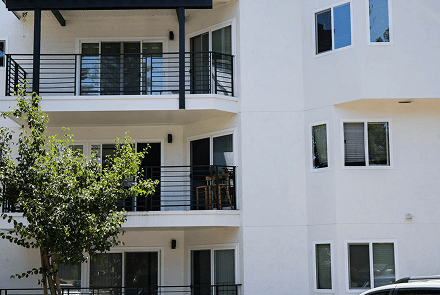
California’s wildfire seasons continue to grow more destructive, making fire-resistant building materials essential for foothill and mountain communities.
Key Takeaways
| 🔑 What You Need to Know âś“ California Building Code Chapter 7A requires fire-resistant exterior materials in WUI (Wildland-Urban Interface) zones — which includes most of Tahoe, El Dorado County, and the Sierra Foothills. âś“ Fiber cement siding (James Hardie) is the gold standard: Class A fire-rated, non-combustible, and preferred by insurance companies. âś“ Vinyl siding melts and can accelerate fire spread — it is not appropriate for wildfire zones. âś“ Your siding choice directly affects your homeowner’s insurance rates. Some fire-resistant materials can reduce premiums by 10–20%. âś“ Local jurisdictions like the Town of Truckee and El Dorado County often have additional fire-hardening requirements beyond state code. âś“ Retrofitting vulnerable siding is one of the highest-impact fire-safety upgrades you can make to an existing home. |
Why Siding Choice Is Life-or-Death in California Fire Zones
California has experienced some of the most devastating wildfire seasons in recorded history. The 2020 and 2021 fire seasons burned over 4 million acres combined. The 2026 Palisades and Eaton fires in January destroyed over 16,000 structures in Los Angeles County alone. And in Northern California, communities from Paradise to Grizzly Flats have been fundamentally reshaped by wildfire.
For homeowners in Lake Tahoe, Truckee, El Dorado County, Placer County, and Gold Country, wildfire is not an abstract risk — it is a near-certainty over the lifespan of your home. The Caldor Fire in 2021 reached the shores of Lake Tahoe. The Mosquito Fire in 2022 burned through Placer and El Dorado counties. These events make one thing clear: the materials on the outside of your home are your first line of defense.
Here’s what many homeowners don’t realize: your siding is often the deciding factor in whether your home survives a wildfire or becomes fuel for one. Embers from wildfires can travel more than a mile, landing on and igniting combustible siding materials. Even homes with adequate defensible space can be lost if their exterior cladding catches fire from ember exposure.
Beyond the direct safety implications, siding choices now have major financial consequences:
- Insurance companies are increasingly requiring fire-resistant materials as a condition of coverage in WUI zones.
- The California FAIR Plan — the insurer of last resort — is more expensive and offers less coverage than standard policies.
- Property values in fire-prone areas are directly tied to the fire-hardening measures taken on the home.
- Rebuilding after a fire costs 30–50% more than proactive upgrades, and often involves lengthy permitting delays.

Aerial view of wildfire devastation — homes with combustible exterior materials are at the highest risk of total loss.
California Building Code Requirements for Fire Zones
California’s approach to wildfire-resistant construction is governed primarily by Chapter 7A of the California Building Code (CBC), officially titled ‘Materials and Construction Methods for Exterior Wildfire Exposure.’ If your home is in or near a WUI zone, Chapter 7A is the playbook your contractor must follow.
What Chapter 7A Requires for Siding
Chapter 7A mandates that exterior wall coverings on buildings in designated fire hazard zones must be constructed with ignition-resistant materials. Specifically:
- Siding must meet a minimum Class A fire rating (best) or comply with SFM Standard 12-7A-1 for ignition-resistant exterior wall assemblies.
- Non-combustible materials (fiber cement, metal, stucco) meet this requirement automatically.
- Combustible materials like wood and vinyl must be part of a tested assembly that demonstrates ignition resistance — but in practice, most building officials in high-fire zones strongly discourage or prohibit them.
- Horizontal siding joints must be tight-fitting to prevent ember intrusion behind the cladding.
WUI Zone Classifications
CAL FIRE designates fire hazard severity zones across the state. In the State Responsibility Area (SRA), zones are classified as Moderate, High, or Very High Fire Hazard Severity Zones. Within Local Responsibility Areas (LRA), cities and counties can adopt similar or stricter classifications.
Virtually all of the Sierra Nevada foothills, Lake Tahoe basin, and Gold Country fall within High or Very High severity zones. This means Chapter 7A requirements apply to all new construction and, in many jurisdictions, to significant remodels and re-siding projects.
Local Jurisdiction Additions
Several Northern California jurisdictions go beyond Chapter 7A with additional fire-hardening requirements:
- Town of Truckee: The Town’s Fire Code requires all new construction and remodels exceeding 50% of the structure’s value to comply with WUI-specific fire-resistant standards. Truckee also requires annual defensible space inspections tied to short-term rental permits.
- El Dorado County: Following the Caldor Fire, El Dorado County has strengthened its enforcement of Chapter 7A and requires fire-resistant siding on all new construction in the county’s extensive WUI zones. The county’s building department frequently requires site-specific fire protection plans.
- Placer County: The communities of Auburn, Foresthill, and Colfax are in designated WUI zones. Placer County’s building division enforces Chapter 7A compliance and has begun requiring more detailed fire-hardening documentation for building permits.
Fire-Resistant Siding Materials Ranked
Not all siding materials respond to fire equally. Below is a practical comparison for Northern California homeowners evaluating their options.
Fiber Cement (James Hardie)
Fiber cement siding — with James Hardie as the dominant brand — is the industry gold standard for fire-resistant residential siding. Made from a mixture of Portland cement, sand, and cellulose fibers, it is classified as non-combustible and carries a Class A fire rating, the highest available.
- Fire rating: Class A (non-combustible)
- Won’t ignite, burn, or melt when exposed to direct flame or ember contact
- Preferred or required by most insurance companies operating in WUI zones
- Available in lap siding, panel, shingle, and board-and-batten profiles
- 2026 installed cost: $10–$16 per square foot in Northern California
- Additional benefits: resistant to rot, termites, and woodpeckers — all common issues in foothill and mountain environments
Heritage Exteriors is a James Hardie Elite Preferred contractor, meaning our installation crews are factory-trained and the work is backed by an enhanced warranty. For homeowners considering fiber cement siding, you can learn more about our James Hardie siding installation services.
Metal/Steel Siding
Metal siding is entirely non-combustible and carries a Class A fire rating. Steel and aluminum panels will not ignite, melt, or contribute fuel to a fire. However, metal siding is less common in residential applications in Northern California for aesthetic reasons.
- Fire rating: Class A (non-combustible)
- Extremely durable and long-lasting (50+ year lifespan)
- 2026 installed cost: $12–$20 per square foot
- Considerations: can dent, may not suit traditional mountain home aesthetics, thermal expansion/contraction in Tahoe’s temperature extremes
Stucco (Portland Cement Plaster)
Traditional three-coat stucco is inherently fire-resistant and is widely used in California. It provides a continuous, non-combustible barrier around the home’s exterior.
- Fire rating: Class A (non-combustible when properly applied)
- Excellent fire resistance when applied over non-combustible sheathing
- 2026 installed cost: $9–$14 per square foot
- Considerations: can crack in freeze-thaw cycles (a significant concern in Tahoe, Truckee, and foothill communities above 2,500 feet), requires ongoing maintenance, moisture management is critical
Engineered Wood (LP SmartSide)
LP SmartSide is treated with a zinc borate compound that provides resistance to rot, termites, and fungal decay. While it has better fire performance than untreated wood, it is still a combustible material.
- Fire rating: Class C (combustible, but treated for improved resistance)
- Can achieve Class A as part of a tested wall assembly with specific sheathing and weather barriers
- 2026 installed cost: $7–$12 per square foot
- Considerations: still burns at sustained high temperatures, may not satisfy insurance requirements in Very High fire zones, not recommended as a primary siding in the most fire-exposed areas
Vinyl Siding
Vinyl siding is the most common siding material in the United States by volume — but it is fundamentally unsuitable for California wildfire zones. Vinyl melts at approximately 165°F and can ignite at around 700°F. When it melts, it exposes the underlying sheathing and framing to direct flame and ember contact.
- Fire rating: Unrated / not applicable for WUI zone construction
- Melts and deforms at relatively low temperatures
- Does not comply with Chapter 7A requirements in fire hazard zones
- Most insurance companies will not write policies for homes with vinyl siding in High or Very High fire zones
- 2026 installed cost: $5–$9 per square foot (lowest cost, but highest risk)
Natural Wood Siding
Cedar, redwood, and pine siding are traditional choices for mountain and foothill homes in Northern California. However, untreated wood is one of the most combustible siding materials available and is frequently prohibited in WUI zones.
- Fire rating: Class C at best (typically unrated without fire-retardant treatment)
- Readily ignites from ember contact
- Often explicitly prohibited in Very High fire hazard severity zones
- Fire-retardant-treated wood exists but requires re-treatment every 5–10 years and may not satisfy all jurisdictions
- 2026 installed cost: $8–$15 per square foot (untreated)
| Siding Material | Fire Rating | Combustible? | Chapter 7A Compliant? | Typical 2026 Cost (Installed) |
| Fiber Cement (James Hardie) | Class A | No | Yes | $10–$16/sq ft |
| Metal/Steel | Class A | No | Yes | $12–$20/sq ft |
| Stucco | Class A | No | Yes | $9–$14/sq ft |
| Engineered Wood (LP SmartSide) | Class C* | Yes | Assembly-dependent | $7–$12/sq ft |
| Vinyl | Unrated | Yes (melts) | No | $5–$9/sq ft |
| Natural Wood | Class C | Yes | Rarely | $8–$15/sq ft |
*LP SmartSide can achieve Class A fire rating as part of a tested wall assembly. Consult your contractor and local building department.
James Hardie in Fire Zones: Why It’s the #1 Choice for Tahoe & Foothill Homes

Fiber cement siding like James Hardie provides a Class A fire-rated, non-combustible exterior that stands up to Northern California’s fire risk.
Among fire-resistant siding options, James Hardie fiber cement has emerged as the overwhelming choice for residential applications in California’s fire zones — and for good reason.
James Hardie siding is composed primarily of Portland cement, sand, and cellulose fibers pressed at high pressure. The result is a material that is genuinely non-combustible. It will not ignite, it will not melt, and it will not contribute fuel to an advancing wildfire. In post-fire assessments, fiber cement-clad homes have consistently been among the structures most likely to survive.
The real-world evidence is compelling. After the 2018 Camp Fire destroyed the town of Paradise, post-fire investigators noted that homes with non-combustible siding — particularly fiber cement — had significantly higher survival rates than those clad in wood or vinyl, even when defensible space was similar. Similar patterns were observed after the 2021 Caldor Fire near Lake Tahoe.
Insurance companies have taken notice. In WUI zones across Northern California, many carriers now specifically ask about siding materials during the underwriting process. Homes with James Hardie or equivalent fiber cement siding are far more likely to qualify for standard-market insurance at competitive rates.
For homes in the Lake Tahoe basin, James Hardie offers additional advantages beyond fire resistance: it won’t rot from snow exposure, it resists the freeze-thaw cycling that damages stucco, and it’s impervious to the woodpeckers and carpenter ants that plague mountain homes. Learn more about the best siding for Lake Tahoe homes and our James Hardie siding in Lake Tahoe service area.
Insurance Implications: How Your Siding Affects Your Coverage
If you own a home in a California fire zone, you’re already familiar with the insurance crisis. Major carriers like State Farm, Allstate, and USAA have pulled out of high-risk areas or dramatically increased premiums. Your siding material is one of the factors that can determine whether you get coverage at all — and how much you pay.
The Insurance Equation
- Homes with non-combustible siding (fiber cement, metal, stucco) are more likely to qualify for standard-market insurance, which typically costs $2,000–$5,000/year in fire zones.
- Homes with combustible siding (vinyl, wood) may be forced onto the California FAIR Plan, which can cost $8,000–$15,000/year or more, with significantly less coverage.
- Some insurers offer explicit discounts (10–20% on premiums) for homes that demonstrate comprehensive fire hardening, including non-combustible siding.
- Documentation matters: keep your siding material specifications, installation records, and photos on file. Your insurance agent or broker needs this documentation to secure the best rates.
FAIR Plan Considerations
The California FAIR Plan is the state’s insurer of last resort. If no private carrier will insure your home, the FAIR Plan will — but at a premium. Properties on the FAIR Plan typically pay 2–4x more than standard-market rates and receive less comprehensive coverage.
Upgrading your siding from a combustible material to fiber cement or another non-combustible option is one of the most effective strategies for moving off the FAIR Plan and back into the standard insurance market. Combined with defensible space improvements and other fire-hardening measures (ember-resistant vents, Class A roofing, tempered glass), a siding upgrade can be the tipping point that makes your home insurable again.
Area-Specific Guidance for Northern California Homeowners

Mountain and foothill homes face unique environmental challenges beyond fire — including freeze-thaw, heavy snow loads, and pest damage.
Lake Tahoe & Truckee
The Tahoe Basin and Truckee corridor represent some of the highest fire-risk residential areas in California. The 2021 Caldor Fire burned to within miles of South Lake Tahoe, triggering the first evacuation of the Tahoe Basin in modern history. The Angora Fire of 2007 destroyed 254 homes in the community of Meeks Bay.
For Tahoe and Truckee homeowners, siding selection must account for both wildfire and extreme weather:
- The Town of Truckee requires all new construction to comply with WUI fire-hardening standards. Many remodels also trigger compliance.
- Freeze-thaw cycling is severe: Tahoe sees overnight temperatures drop below 0°F in winter and reach 80°F+ in summer. Stucco is prone to cracking in these conditions, making fiber cement the preferred non-combustible option.
- Heavy snow loads mean siding must resist moisture infiltration and snow-pile contact. James Hardie’s HardieZone HZ10 product line is specifically engineered for cold/wet climates.
- TRPA (Tahoe Regional Planning Agency) may have additional design review requirements affecting siding color and profile choices.
Heritage Exteriors has extensive experience with fire-resistant siding for Tahoe Basin homes, and our crews understand the unique installation requirements of high-altitude, cold-climate fiber cement work.
El Dorado County (Foothills & WUI Zones)
El Dorado County stretches from the Sacramento Valley floor to the Sierra crest, with many foothill communities — Placerville, Camino, Pollock Pines, Georgetown — directly in the WUI zone. The Caldor Fire (2021) burned over 221,000 acres in El Dorado County, destroying 1,003 structures and damaging 81 more.
- El Dorado County building department enforces Chapter 7A compliance for all new construction and significant remodels in WUI zones.
- Post-Caldor, the county has increased fire-hardening inspections and documentation requirements.
- Many foothill properties have steep terrain and dense vegetation, increasing ember exposure risk to siding.
- Fire-resistant siding in El Dorado County is frequently paired with ember-resistant vent installations and dual-pane tempered glass upgrades as part of comprehensive fire hardening.
Gold Country (Angels Camp, Arnold, Grass Valley)
Gold Country communities in Calaveras and Nevada counties are surrounded by dense conifer forests and are among the most fire-prone areas in Northern California. The 2015 Butte Fire burned through Calaveras County, destroying 921 structures and causing two fatalities.
- Arnold and Angels Camp sit in heavily forested areas with significant WUI exposure. Fire-resistant siding in Arnold and Angels Camp is a critical upgrade for homes in these communities.
- Grass Valley and Nevada City have experienced multiple close calls with major wildfires. Both communities have active fire-safe councils that encourage fire-resistant building materials.
- Many Gold Country homes were built with cedar or pine siding in the 1970s–1990s, before modern fire codes. These homes are prime candidates for siding replacement with fiber cement.
Placer County (Auburn, Foresthill, Colfax)
Placer County’s foothill communities experienced the devastating Mosquito Fire in 2022, which burned over 76,000 acres and destroyed 78 structures near Foresthill and Michigan Bluff.
- Auburn, Foresthill, and Colfax are in designated WUI zones with Chapter 7A requirements.
- Placer County’s building division has been proactive about enforcing fire-hardening standards since the Mosquito Fire.
- The combination of steep terrain, dense brush, and hot, dry summers creates extreme fire conditions. Non-combustible siding isn’t just recommended — it’s increasingly required.
Retrofitting Existing Homes in Fire Zones

Upgrading your home’s siding to a fire-resistant material is one of the most impactful fire-hardening investments you can make.
Most homes in California’s fire zones were built before current fire codes took effect. If your home has wood, vinyl, or other combustible siding, a retrofit is one of the most impactful fire-safety improvements you can make.
When Full Replacement Is Needed
- If your siding is vinyl: full replacement is strongly recommended. Vinyl melts and exposes underlying structure to fire. There is no partial solution.
- If your siding is untreated wood: full replacement is recommended, especially if the wood is aged, dry, or showing signs of deterioration.
- If your siding is fire-retardant-treated wood: you may be able to maintain it if the treatment is still effective and the local building department accepts it, but most fire-safety experts recommend upgrading to non-combustible material.
Prioritizing the Most Vulnerable Areas
If budget constraints prevent a full re-siding project in one phase, prioritize the sides of your home most exposed to wildfire risk:
- Sides facing wildland vegetation or steep downhill slopes (fire travels uphill)
- The eaves and soffits (primary ember entry points)
- Areas around windows and doors (vulnerable penetrations)
- The lower 3–4 feet of exterior walls (most exposed to radiant heat from ground-level fire)
Cost Considerations
A full re-siding project with James Hardie fiber cement for a typical 2,000-square-foot Northern California home costs approximately $20,000–$40,000 installed, depending on the home’s complexity, number of stories, and current siding condition. This includes removal and disposal of existing siding, installation of weather-resistant barriers, and new fiber cement cladding.
That may sound substantial — but compare it to the alternative. The average cost to rebuild a home destroyed by wildfire in California exceeds $400,000, and many homeowners are underinsured. A proactive siding upgrade is roughly 5–10% of the cost of rebuilding and can be the difference between a home that survives and one that doesn’t.
Frequently Asked Questions
What is the most fire-resistant siding material available?
Fiber cement siding (such as James Hardie) and metal siding are the most fire-resistant options available for residential use. Both are classified as non-combustible and carry a Class A fire rating. Fiber cement is the more popular choice for homes due to its versatile aesthetics and lower cost compared to metal.
Is vinyl siding legal in California fire zones?
In designated WUI (Wildland-Urban Interface) zones, vinyl siding does not meet the Chapter 7A requirements of the California Building Code for new construction. While existing vinyl siding on an older home isn’t technically illegal, it is increasingly a barrier to obtaining homeowner’s insurance and is strongly discouraged by fire safety officials.
How much does it cost to replace siding with fire-resistant material?
For a typical 2,000-square-foot home in Northern California, a full re-siding project with James Hardie fiber cement costs approximately $20,000–$40,000 installed. The cost varies based on the home’s complexity, number of stories, accessibility, and the condition of the existing siding and sheathing. Some homeowners phase the project over 2–3 years to manage costs.
Will fire-resistant siding lower my insurance premiums?
In many cases, yes. Homeowners who upgrade to non-combustible siding as part of a comprehensive fire-hardening plan have reported insurance premium reductions of 10–20%. More importantly, non-combustible siding may help you qualify for standard-market insurance rather than being forced onto the higher-cost California FAIR Plan. Be sure to document your siding upgrade and provide material specifications to your insurance agent.
Do I need a permit to replace my siding in a fire zone?
In most Northern California jurisdictions, a re-siding project requires a building permit, especially in designated WUI zones where Chapter 7A compliance is enforced. Your contractor should pull the permit and ensure the project meets all applicable fire codes. In some jurisdictions like the Town of Truckee and El Dorado County, additional fire protection documentation may be required.
Protect Your Home — Get a Fire-Zone Siding Assessment

A professional fire-zone siding assessment can identify vulnerabilities and recommend the most effective upgrades for your home.
| Schedule Your Free Fire-Zone Siding Assessment Heritage Exteriors is experienced in fire-zone siding installation across Lake Tahoe, Truckee, El Dorado County, and the Sierra Foothills. We understand local building codes and can help you choose the right fire-rated siding for your home. Visit hexteriors.com or call us to schedule a free assessment. |
Lock In a Free, No-Obligation Estimate
Get transparent pricing on siding, windows, or exterior repairs fast. No sales pressure. Just answers.
Get My Free Estimate