Wood siding is one of the most classic and desirable exterior finishes for homes in California and beyond. It offers a timeless aesthetic, natural insulation, and a unique character that synthetic materials struggle to replicate perfectly. However, wood is an organic material, which means it behaves differently than vinyl or fiber cement. It expands, contracts, absorbs moisture, and can be enticing to insects.
Over time, even the highest quality wood siding will encounter issues. Whether it’s warping boards, dry rot, or peeling paint, understanding these common problems is the first step toward preserving your home’s value. While some minor maintenance can be a DIY project, significant damage often requires the expertise of professionals who understand the structural implications behind the surface flaws.
This guide explores the most frequent wood siding problems homeowners face and details exactly how professionals diagnose and repair them to ensure your home remains beautiful and protected for decades.
Why Wood Siding is Worth Saving
Before diving into the problems, it’s important to remember why wood siding is such a valuable asset. It offers unparalleled curb appeal and can last for generations if maintained correctly. Unlike some modern materials that eventually end up in a landfill, wood is biodegradable and renewable.
However, the “if maintained correctly” part is crucial. Neglect can turn a beautiful cedar or redwood exterior into a costly liability. Recognizing early signs of distress can save you thousands of dollars in extensive replacement costs down the road.
1. Dry Rot: The Silent Destroyer
Dry rot is arguably the most dreaded enemy of wood siding. Contrary to its name, dry rot is caused by a fungus that thrives in moisture. It feeds on the cellulose in wood, leaving the timber brittle, crumbly, and structurally unsound.
Identifying Dry Rot
You might not see dry rot immediately. It often starts beneath the surface or in areas where water gets trapped, like behind gutters or near the foundation.
- Visual cues: Look for wood that appears shrunken or darkened.
- Texture: If you press on a board and it feels spongy or crumbles under your finger, you likely have rot.
- Fungal growth: White or greyish mycelium (fungal threads) or mushroom-like fruiting bodies are advanced signs.
How Professionals Fix It
Repairing dry rot isn’t just about patching a hole; it’s about stopping the infection and preventing recurrence.
- Moisture Source Identification: A professional will first find why the wood is wet. Is it a leaking gutter? Poor flashing? Fixing the wood without fixing the leak is a waste of time.
- Excision: The rotted wood must be completely removed. Builders will cut back the siding well past the visible rot to ensure no fungal spores remain.
- Fungicide Application: The remaining surrounding wood is treated with a fungicide to kill any lingering spores.
- Replacement or Patching: For small areas, an epoxy wood filler might be used. For larger sections, the siding board is replaced entirely.
- Sealing and Painting: The new wood is primed and painted to match the existing exterior, sealing it against future moisture intrusion.
If you suspect rot is spreading beyond just a few boards, it is critical to consult experts in siding repair to assess if the structural sheathing underneath has been compromised.
2. Warping and Buckling Boards
Wood moves. It reacts to changes in humidity and temperature. When siding boards warp, buckle, or cup, it usually points to an issue with how the wood was installed or how it is managing moisture.
Common Causes
- Improper fastening: If boards are nailed too tightly or without room for expansion, they will buckle when they swell.
- Moisture imbalance: If the back of the siding gets wet while the front stays dry (or vice versa), the wood will cup.
- Lack of finish: Unsealed wood absorbs water unevenly.
The Professional Fix
You cannot simply “bend” a warped board back into place. Once the wood fibers have distorted, the board is generally ruined.
- Removal: The warped boards are carefully pried off to avoid damaging adjacent good siding.
- Inspection of Vapor Barrier: Professionals check the building paper or house wrap underneath. Warping often signals that moisture is getting behind the siding but can’t get out.
- Proper Installation: New boards are installed using correct nailing patterns. Professionals know to nail into the studs and allow appropriate spacing for natural expansion.
- Back-Priming: A crucial step often skipped by amateurs is “back-priming.” This involves painting the back of the siding board before installation. This seals the wood on all sides, preventing uneven moisture absorption that leads to cupping.
3. Cracking and Splitting
Over the years, the oils in wood dry out, making the material brittle. Constant exposure to the harsh sun—common in California—accelerates this process. Impact damage from hail or stray baseballs can also cause cracks.
Why It’s a Problem
A crack is an open door for water. Once water enters a crack, it freezes and expands (in colder climates) or simply soaks into the insulation and framing, leading to mold and rot.
Repair Strategies
- Caulking (Temporary/Minor): For very small hairline cracks, a high-quality exterior wood caulk can seal the gap. However, this is maintenance-heavy and not a permanent structural fix.
- Board Replacement: If a split runs the length of the board or goes all the way through, replacement is the only option.
- Preventative Maintenance: Professionals will recommend regular staining or painting to keep the wood supple and protected from UV rays.
4. Peeling and Blistering Paint
Peeling paint is often dismissed as a cosmetic issue, but on wood siding, it is a major red flag. It usually means there is moisture inside the wood trying to escape.
The Mechanism of Failure
When water vapor from inside the house (from cooking, showering, etc.) passes through the walls and hits the back of the siding, it pushes against the paint film on the exterior. This pressure causes blisters and peeling. Alternatively, if rain gets into the wood through cracks, the sun heats the moisture, causing it to push the paint off.
Professional Remediation
Scraping and painting over the problem won’t work if the moisture issue remains.
- Ventilation Check: Professionals assess if the home has adequate wall ventilation. Sometimes, installing small wedges or vents in the siding allows moisture to escape.
- Surface Preparation: All loose paint must be scraped down to the bare wood.
- Sanding: The edges of the remaining paint are feathered (sanded smooth) so the new paint job looks seamless.
- Priming: A high-quality oil-based primer is often used on bare wood because it penetrates better than latex, providing a strong anchor for the topcoat.
For extensive paint failure, it might be time to consider whether the siding has reached the end of its lifespan. In such cases, exploring full residential siding services might be more cost-effective than a complete strip-and-repaint job.
5. Insect Damage: Termites and Woodpeckers
Wood is food for some creatures and a housing opportunity for others. Termites and carpenter ants can hollow out siding from the inside, while woodpeckers can drill holes in search of those insects.
Signs of Infestation
- Mud tubes: Small tunnels of mud running up the foundation are a sign of subterranean termites.
- Holes: Perfectly round holes often indicate carpenter bees or woodpeckers.
- Frass: Sawdust-like piles near the base of the wall indicate carpenter ants.
The Fix
- Extermination: You cannot repair the wood until the pests are gone. This usually requires a pest control specialist.
- Structural Assessment: Siding damage by insects is often the “tip of the iceberg.” Professionals will probe deeper to ensure the wall studs aren’t compromised.
- Wood Replacement: Damaged wood is removed and replaced.
- Deterrents: Professionals might recommend using cedar or redwood for repairs (which are naturally insect-resistant) or installing metal flashing to prevent ground contact.
6. Loose Siding Boards
Sometimes, siding just comes loose. This is often due to the expansion and contraction cycles pushing nails out (nail popping) or the degradation of the fasteners themselves (rust).
The danger of loose boards
Loose boards rattle in the wind, allowing water to drive behind them during storms. This creates a hidden moisture trap against your home’s waterproofing layer.
How Pros Tighten It Up
Simply hammering the old nail back in rarely works because the hole has widened.
- New Fasteners: Professionals will remove the old nail and drive a new, slightly larger ring-shank nail (which has ridges for better grip) into a fresh spot on the stud.
- Blind Nailing: Ideally, siding is “blind nailed,” meaning the nail head is covered by the board above it. This protects the nail from weather and looks cleaner.
- Caulking Old Holes: The old nail holes are filled with high-grade wood filler or caulk to prevent water entry.
7. Wood Siding Maintenance: The Key to Longevity
Repair is reactive; maintenance is proactive. The best way to avoid expensive repairs is a strict maintenance schedule.
Cleaning
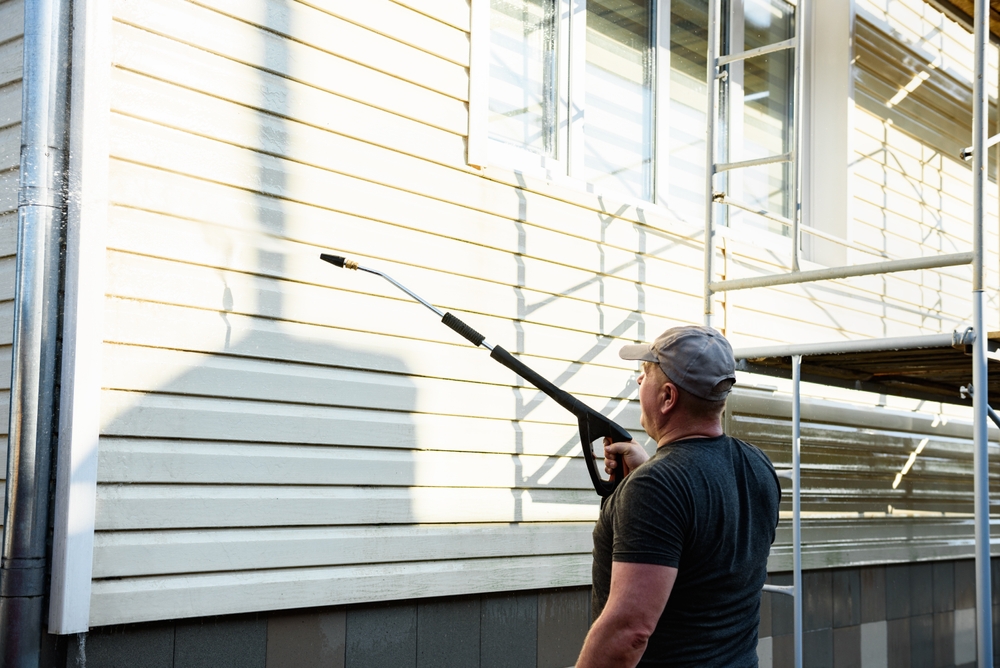
Wood siding should be washed annually. However, professionals advise against high-pressure power washing, which can gouge soft wood and force water deep into cracks. A soft wash with a mild detergent and a garden hose is usually sufficient to remove dirt, mildew, and algae.
Re-sealing
Depending on the finish (paint, solid stain, or semi-transparent stain), wood siding needs to be recoated every 3 to 7 years.
- Clear sealers: Last 1-2 years.
- Semi-transparent stains: Last 3-4 years.
- Solid stains/Paint: Last 5-7+ years.
Keeping up with this schedule protects the wood fibers from UV degradation and moisture absorption.
When to Repair vs. When to Replace
This is the most common question homeowners ask. “Can I just patch this, or do I need to re-side the whole house?”
The 50% Rule
A general rule of thumb used by contractors is if more than 50% of the siding on a particular elevation (wall) is damaged, it is often more cost-effective to replace the siding on that entire wall. Patching half a wall is labor-intensive, and it is incredibly difficult to match the color of aged wood with new wood.
Underlying Issues
If the siding problems are symptoms of a deeper issue—like widespread rot in the framing or zero insulation in the walls—a full “tear-off” might be necessary. This allows contractors to fix the structure, add modern insulation, install a high-performance house wrap, and then install new siding.
Material Upgrades
If you are constantly battling rot and woodpeckers, you might consider replacing your wood siding with a material that mimics wood but offers higher durability, such as fiber cement. Companies like Hexteriors specialize in helping homeowners transition to durable solutions while maintaining the aesthetic they love. You can learn more about these options on our residential siding services page.
The Cost of Ignoring Siding Problems
Ignoring a small crack or a patch of rot is tempting, but the cost of deferral is high.
- Structural Damage: Rot spreads. What starts as a siding issue can become a framing issue, threatening the integrity of your walls.
- Mold and Health: Moisture trapped behind siding leads to mold growth, which can impact indoor air quality and your family’s health.
- Decreased Energy Efficiency: Warped and cracked siding allows air leakage, causing your HVAC system to work harder and driving up utility bills.
- Lower Property Value: Damaged siding is a major red flag for home inspectors and potential buyers.
Why Hire a Professional?
While a handy homeowner can caulk a crack or paint a board, structural wood siding repair requires specific skills.
- Matching Profiles: Wood siding comes in dozens of profiles (bevel, shiplap, tongue and groove, board and batten). Finding the exact match for a 50-year-old home can be difficult. Professionals have access to millwork shops that can custom-cut boards to match your existing exterior perfectly.
- Waterproofing Knowledge: Siding is not the waterproof barrier; the house wrap and flashing behind it are. Professionals understand how to integrate new repairs into the existing water management system so you don’t create leaks.
- Safety: Working on ladders and scaffolding with power tools carries risks. Professional crews are trained and insured for this work.
- Warranty: Reputable contractors offer warranties on their labor. If the repair fails, they come back and fix it.
Conclusion
Wood siding is a beautiful, premium choice for a home exterior, but it demands respect and care. From the subtle signs of dry rot to the obvious warping of boards, wood tells you when it needs attention. Addressing these common problems promptly with professional help ensures that your home remains safe, dry, and aesthetically pleasing.
Whether you need a minor repair on a few boards or a comprehensive evaluation of your home’s exterior envelope, relying on experts ensures the job is done right the first time. Don’t let small problems become structural nightmares. If you suspect your wood siding is compromised, contact the experts at Hexteriors for a professional assessment today.