California is often idealized as a land of eternal sunshine and mild winters, a paradise where the harsh weather of the Midwest or the East Coast feels like a distant rumor. For homeowners, this reputation can lead to a false sense of security regarding their home’s exterior maintenance. If you aren’t shoveling snow off your roof, surely your siding is safe, right?
Unfortunately, the reality is far more complex. The unique climate of the Golden State presents a specific, often aggressive set of challenges for wood siding. From the intense UV radiation of the Sacramento Valley to the damp fog of the Bay Area and the drastic temperature swings in the Sierra foothills, California’s environment is engaged in a constant battle with your home’s exterior.
Wood, being a natural and organic material, is particularly susceptible to these local forces. It expands, contracts, dries out, and absorbs moisture. Without a deep understanding of these environmental stressors and a proactive protection plan, even the most beautiful cedar or redwood siding can fail prematurely.
This guide explores exactly why wood siding in California faces such a tough road, identifying the specific climate enemies attacking your home and providing actionable strategies to protect wood siding for the long haul.
The Myth of the “Mild” Climate
When people think of siding damage, they typically picture hail storms, hurricanes, or freezing blizzards. California rarely sees these extremes, yet siding failure here is common. Why?
The answer lies in the subtle, relentless nature of California’s weather patterns. It isn’t one catastrophic event that destroys your siding; it is the cumulative effect of daily stress. The “mild” climate is actually a cycle of extremes—extreme dryness followed by concentrated wet seasons, and extreme heat followed by rapid cooling.
For wood, which is hygroscopic (meaning it absorbs and releases water), this environment is exhausting. It is constantly moving, shifting, and reacting. Over time, this movement fatigues the wood fibers, cracks the paint, and opens the door for failure.
Challenge 1: The Relentless UV Radiation
The most obvious adversary in California is the sun. We enjoy more sunny days than almost anywhere else in the nation, but that sunshine comes with high levels of Ultraviolet (UV) radiation.
How UV Destroys Wood
UV rays act like a slow-burning laser on wood fibers.
- Lignin Degradation: Lignin is the natural glue that holds wood cells together. UV radiation breaks down lignin, causing the surface of the wood to turn gray and become fibrous or “fuzzy.”
- Embrittlement: As the lignin fails, the wood loses its flexibility. It becomes brittle and dry.
- Finish Failure: The sun doesn’t just attack the wood; it attacks the paint or stain protecting it. Intense heat causes paint to chalk and fade, thinning the protective layer until the raw wood is exposed.
The “South and West” Rule
In California, the south and west-facing walls of a home take a brutal beating. It is common to see a house where the north side looks pristine while the south side looks twenty years older. This uneven aging creates maintenance headaches, as one part of the house fails while the rest is fine.
Protection Strategy: The UV Shield
To protect wood siding from the sun, you need a physical barrier.
- Pigment is Protection: Clear sealers offer almost no UV protection. They allow the sun to pass right through to the wood. Solid color stains or heavy-bodied paints offer the highest UV resistance because the pigment blocks the radiation.
- Lighter Colors: Dark colors absorb heat, causing the wood to expand more and cooking the finish. Lighter colors reflect sunlight, keeping the siding cooler and extending the life of the paint job.
- Shade Trees: Strategically planting deciduous trees on the west and south sides of your home can act as a natural umbrella, filtering the harsh afternoon sun while letting light in during winter.
Challenge 2: The Dry-Wet Cycle (Thermal Shock)
California’s climate is defined by distinct seasons: long, hot, arid summers and cool, wet winters. This dichotomy is a nightmare for wood stability.
The Summer Shrink
During our long summers, humidity drops to single digits. The wood siding dries out completely, shrinking in the process. Gaps open up between boards. Caulk shrinks and pulls away from windows and trim. Nail holes widen.
The Winter Swell
Then comes the rainy season. Water hits the siding and finds all those tiny gaps that opened up in July. The thirsty, dry wood sucks up the moisture like a sponge. The boards swell rapidly.
The Result: Cracking and Warping
This annual cycle of shrinking and swelling is the primary cause of warping, cupping, and splitting. The wood is being pulled in two directions. If the siding is nailed too tightly, it splits when it shrinks. If it is nailed too loosely, it buckles when it swells. Over ten or fifteen years, this mechanical stress fatigues the boards to the point of failure.
Protection Strategy: Flexible Sealants
You cannot stop the weather, so you must help your house move with it.
- High-Quality Caulk: Use elastomeric sealants that can stretch and compress without breaking. Cheap caulk hardens and cracks after one summer.
- Breathable Finishes: Avoid paints that form a hard, impermeable shell. When moisture gets in (and it will), it needs to get out. Permeable stains allow the wood to “breathe,” releasing trapped moisture before it causes rot.
- Regular Inspections: Every autumn, before the rains start, inspect your siding for shrinkage gaps. Filling these gaps before the water arrives is the single most effective maintenance task you can perform.
Challenge 3: Fog and Micro-Climates
If you live in the Bay Area or coastal regions, you face a different enemy: fog.
The Slow Soak
Rain falls and runs off. Fog sits. It envelops the house in a blanket of moisture that doesn’t run off but rather soaks in slowly. This creates a condition of chronic dampness. The wood never fully dries out.
Mold and Mildew
This constant moisture creates the perfect petri dish for biological growth. Mold, mildew, and algae thrive on damp wood siding. While often considered cosmetic, these organisms retain moisture against the wood surface, accelerating rot and decay.
Rust
Coastal fog often carries salt. This salty air attacks the fasteners holding your siding up. Standard nails will rust quickly, causing unsightly red streaks (bleeding) down your siding and eventually leading to boards coming loose.
Protection Strategy: Ventilation and Hardware
- Airflow is King: Trim bushes and trees back from the house. You need wind to hit the siding to help dry it out.
- Fungicides: Use paints and stains that contain mildewcides to inhibit growth.
- Stainless Steel: If you live near the coast, you must use stainless steel nails. They are impervious to salt corrosion and will prevent rust bleeding.
Challenge 4: The Termite Territory
California is high-risk territory for termites, specifically Subterranean and Drywood termites.
Why They Love Our Siding
Termites are always looking for cellulose (wood) and moisture. A wood-sided home in California usually offers both.
- Subterranean Termites: Live in the soil and build mud tubes up the foundation to reach the tasty wood siding.
- Drywood Termites: Don’t need soil contact. They fly directly into the siding, entering through cracks or unpainted crevices, and eat the wood from the inside out.
The Invisible Damage
The scary part about termite damage in siding is that it is often invisible. The paint remains intact while the insects hollow out the board behind it. You might not know you have a problem until you poke a board and your finger goes right through it.
Protection Strategy: Barriers and Vigilance
- Ground Clearance: Ensure there is at least 6-8 inches of clearance between the soil and the bottom of your siding. Wood should never touch the dirt.
- Keep it Painted: A solid coat of paint seals the crevices that Drywood termites use to enter.
- Professional Repair: If you find evidence of termites, spot repairs are rarely enough. You need to verify the structural integrity of the wall. Our team at Hexteriors specializes in assessing and repairing wood siding in California to ensure the infestation hasn’t compromised the home’s safety.
Challenge 5: Wildfire Risks
We cannot discuss climate challenges for siding in California without addressing wildfires. As fire seasons become longer and more intense, the flammability of exterior materials is a critical safety concern.
Wood is Fuel
Traditional wood siding is combustible. In a wildfire event, it isn’t always the direct wall of flame that ignites a house; often, it is wind-blown embers. These embers can lodge in cracks in the siding, under curled boards, or in vents, igniting the home long before the main fire arrives.
The WUI Codes
Many parts of California are now designated as the Wildland-Urban Interface (WUI). Building codes in these areas have strict requirements for siding materials. Older wood siding often does not meet these modern safety standards.
Protection Strategy: Hardening the Home
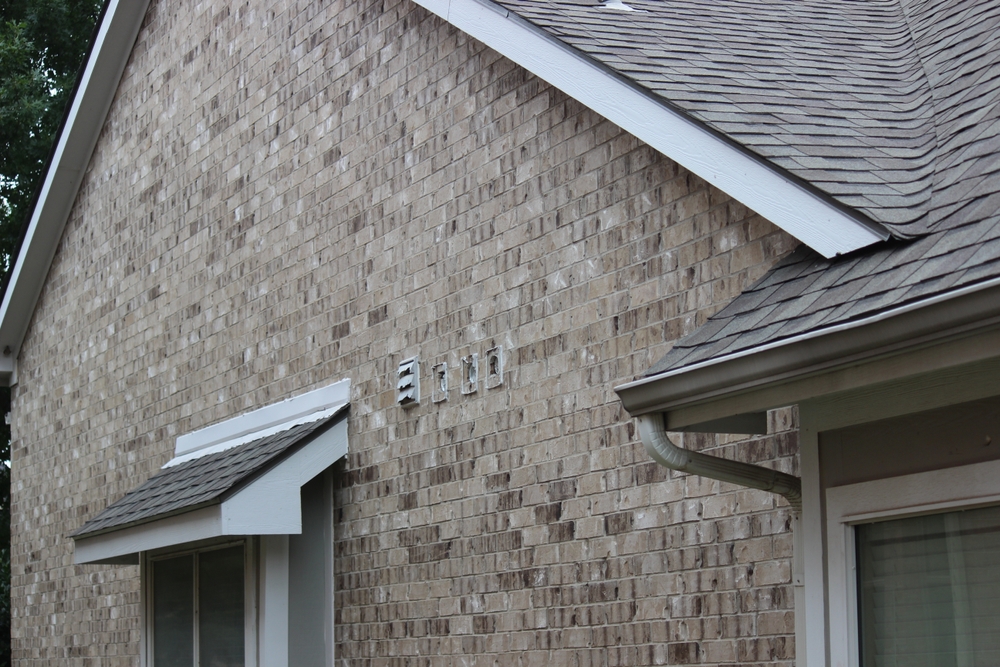
- Ember-Resistant Vents: Retrofit your vents with fine mesh to stop embers from entering the walls.
- Maintain the Envelope: Repair any warped or loose boards immediately. An ember needs a gap to get behind the siding. A tight, well-maintained wall is much more fire-resistant than a neglected one.
- Consider Replacement: For homeowners in high-risk zones, the ultimate protection is often replacing wood with fire-resistant materials like fiber cement. While it mimics the look of wood, fiber cement is non-combustible. You can learn more about these options on our residential siding services page.
Signs Your Siding is Failing
Understanding the climate risks is step one. Step two is recognizing when those risks have turned into actual damage. Here is what to look for:
1. Peeling or Blistering Paint
This is the universal sign of moisture trouble. It means water is getting behind the siding (or migrating from inside the house) and pushing the paint off. It indicates that the wood is saturated.
2. Dry Rot
Look for wood that appears darker than the surrounding area, is shrunken, or crumbles when touched. Pay special attention to the bottom corners of the house and areas around window sills.
3. Warped Boards
Stand at the corner of your house and look down the wall. The siding should be straight. If you see waves, bowing, or boards popping out, the wood is reacting violently to moisture changes.
4. Caulk Failure
If the caulk around your windows is hard, cracked, or missing, your home’s weather seal is broken. Water is freely entering the wall cavity.
How to Extend the Life of Your Wood Siding
If you love your wood siding and aren’t ready to replace it, you must commit to a rigorous maintenance schedule. In California, passive ownership leads to active failure.
The Annual Wash
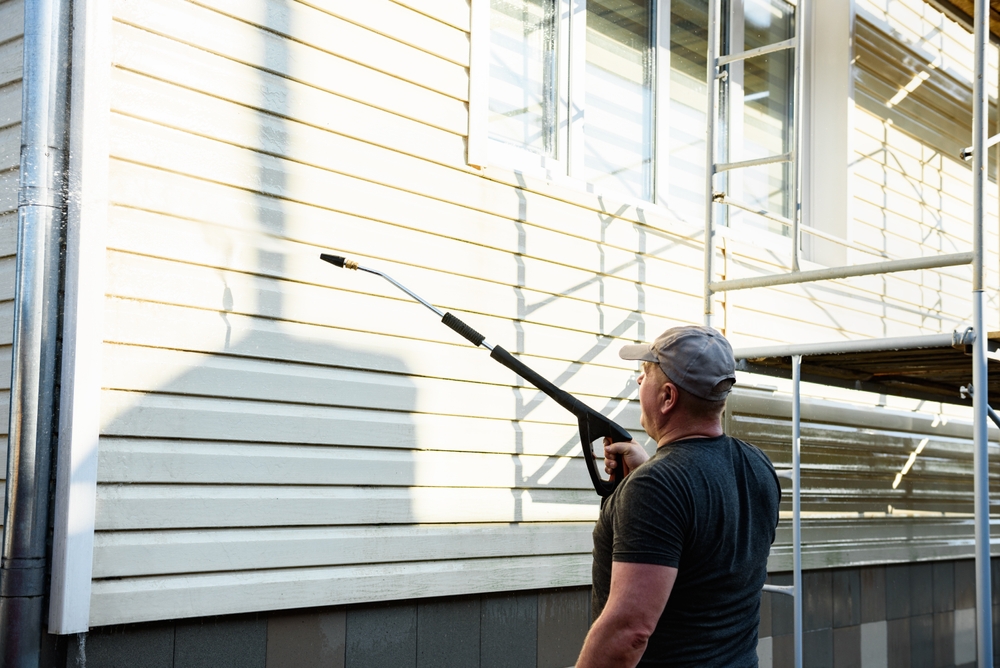
Wash your home once a year. This removes the dirt that holds moisture and the mold spores trying to take root. Use a garden hose and a soft brush. Avoid high-pressure power washers, which can drive water deep into the wood and scar the surface.
The “Seal the Envelope” Check
Walk around your home with a tube of high-quality exterior caulk. Look for gaps at corners, around trim, and near faucets or vents. Seal them up. This small act prevents gallons of water from entering your walls during winter storms.
Manage Your Sprinklers
This is the most common self-inflicted wound we see. Adjust your sprinkler heads so they do not hit the house. A sprinkler hitting the same spot on your siding every morning simulates a tropical rainforest climate in a desert environment. The wood will rot in record time.
Keep Vegetation at Bay
Trees and bushes act like bridges for insects and moisture. They block airflow, preventing the siding from drying out, and their leaves trap water against the wood. Keep all vegetation trimmed at least 12-24 inches away from the siding.
When Repair Isn’t Enough: The Case for Replacement
There comes a point in the life of every wood-sided home where repair becomes throwing good money after bad. If you are facing the following, it might be time to consider a full replacement:
- Frequent Rot: You are replacing rotten boards every year.
- Widespread Paint Failure: The paint is peeling on multiple walls, requiring a complete strip-and-sand job (which is very expensive).
- Structural Concerns: The siding damage has allowed water to rot the sheathing or framing underneath.
- Energy Efficiency: Old wood siding often has no insulation behind it. Replacing it offers the chance to wrap the house in modern insulation, lowering your cooling bills during those hot Sacramento summers.
Alternatives that Handle California Better
If you decide to replace, you don’t have to lose the look of wood. Modern technology has given us materials that look like wood but act like concrete.
Fiber Cement Siding
This is the gold standard for California. Made of cement, sand, and cellulose fiber, it is:
- Fire Resistant: Non-combustible.
- Rot Proof: Unaffected by moisture or fog.
- Insect Proof: Termites can’t eat concrete.
- Stable: It doesn’t shrink or expand, meaning paint lasts 2-3 times longer than on wood.
At Hexteriors, we specialize in helping homeowners transition from high-maintenance wood to durable, beautiful fiber cement. It is the ultimate way to “future-proof” your home against the California climate.
Conclusion
Wood siding is undeniably beautiful. It tells a story of craftsmanship and tradition. But in California, keeping that story alive requires effort. The sun, the dry heat, the winter rains, and the fire risks are all conspiring to degrade the material.
By understanding these climate challenges for siding, you can move from reactive repairs to proactive care. Shield your home from UV rays, manage the moisture, and keep the envelope sealed.
However, if your wood siding is showing signs of losing the battle—if the cracks are spreading and the rot is returning—don’t wait until the damage reaches the structure of your home. Contact the experts atHexteriors. Whether you need a surgical repair to save a historic wall or a full consultation on upgrading to modern materials, we are here to help you protect your investment against the elements.