You remember the day the painters left. Your home looked crisp, vibrant, and brand new. The curb appeal was undeniable, and for a few weeks, you paused every time you pulled into the driveway just to admire the fresh color. But fast forward a few years—or maybe even just a few seasons—and that luster is gone. The vibrant blue is now a chalky slate; the rich beige looks washed out and tired.
Paint fading is one of the most common frustrations for homeowners in Northern California. It feels like a betrayal; you invested time and money into beautifying your home, only to watch the sun steal it away. But is the sun the only culprit? And why does it seem to happen faster on some houses than others?
The truth is, while fading is a natural part of a paint’s lifecycle, rapid or uneven fading is often a sign of underlying issues. It can point to the quality of materials used, the preparation of the surface, or environmental factors you might not have considered.
In this comprehensive guide, we will peel back the layers of this problem. We will explore the science behind why paint fades, identify the specific triggers in the Sacramento and Bay Area climates, and, most importantly, provide you with actionable repair options. Whether you are looking to touch up a few spots or are considering a complete exterior overhaul, understanding the “why” is the first step to a long-lasting solution.
The Science of Fading: What Is Actually Happening?
To fix the problem, you first need to understand the mechanism at play. Paint isn’t just a colored liquid; it’s a complex chemical mixture designed to form a protective shell.
Breaking Down the Components of Paint
Paint consists of three main components:
- Pigment: The particles that provide color and coverage.
- Binder (Resin): The glue that holds the pigment particles together and adheres them to the siding.
- Solvent: The liquid carrier that makes the paint spreadable and then evaporates as it dries.
Fading occurs when the chemical bonds in the pigment or the binder break down. This degradation is a photochemical reaction. When ultraviolet (UV) rays hit the paint, they excite the electrons in the chemical bonds. Over time, this energy breaks the bonds apart. As the pigment molecules degrade, they lose their ability to reflect light in the specific wavelength that creates color, leading to a bleached or washed-out appearance.
Inorganic vs. Organic Pigments
Not all colors fade at the same rate. This is due to the source of the pigment.
- Inorganic Pigments: Derived from natural minerals and metals (like iron oxide). These create earth tones—beiges, browns, tans, and muted reds. They are generally more stable and resistant to UV breakdown.
- Organic Pigments: Carbon-based pigments often used to create brighter, more vibrant colors like deep blues, vivid greens, and bright yellows. While they look stunning initially, they are chemically less stable and prone to fading much faster.
If you chose a bright, bold color for your home and noticed it fading within two years, it is likely because the paint used organic pigments that simply couldn’t withstand the UV exposure.
The Primary Causes of Fading Siding
While UV radiation is the biggest enemy, it works in concert with other factors to attack your siding’s finish. Here are the main reasons your paint job isn’t lasting.
1. Intense UV Exposure (The California Sun)
In Sacramento and the surrounding valleys, we enjoy long, sunny summers. While great for pool days, this is brutal for exterior paint. South and west-facing walls receive the most direct sunlight and heat. It is common to see these sides of a house fade significantly faster than the north or east sides. This uneven fading can make your home look patchy and neglected.
2. Poor Surface Preparation
This is the hidden killer of paint jobs. If you paint over a dirty, chalky, or peeling surface, the new paint cannot bond properly. The binder struggles to hold onto the siding, leaving the pigment vulnerable. Furthermore, if the old paint wasn’t primed correctly, the porous siding material might absorb the binder from the new paint, leaving the pigment on the surface to dry out and fade rapidly.
3. Chalking
Have you ever brushed your hand against your siding and come away with a powdery residue on your palm? That is chalking. It happens when the binder in the paint degrades due to UV exposure, releasing the pigment particles as a loose dust. As the pigment washes away in the rain, the color underneath appears lighter and duller. While some chalking is normal over a decade, early chalking indicates low-quality paint.
4. Moisture and Salt Air
For homes in the Bay Area, salt air is corrosive. It accelerates the breakdown of the paint film. Inland, moisture from morning dew or improperly directed sprinklers can soften the paint. When water constantly cycles through evaporation on the siding surface, it can leave behind mineral deposits that dull the sheen, or worse, cause the paint to blister and lose its color integrity.
5. Low-Quality Paint
You get what you pay for. Cheaper paints use inexpensive fillers (like clay or silica) instead of high-quality titanium dioxide and durable acrylic binders. These fillers do not protect the pigment effectively. High-quality acrylic latex paints have robust binders that form a flexible, UV-resistant shield around the pigment, keeping the color true for much longer.
How Different Siding Materials Affect Paint Life
The material underneath the paint plays a massive role in how long the color lasts.
Wood Siding
Wood is organic and “breathes.” It expands and contracts with humidity and temperature changes. This movement stresses the paint film, causing microscopic cracks. Once the film is compromised, UV rays can attack the pigments more easily. Additionally, natural tannins in wood like cedar or redwood can bleed through the paint, causing discoloration that looks like fading or staining.
Vinyl Siding
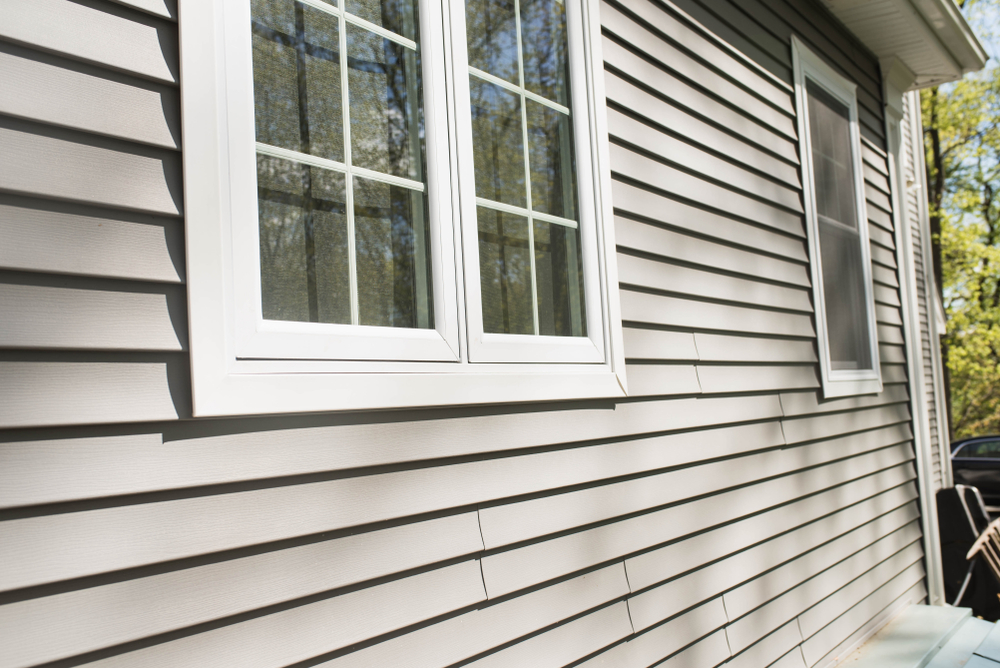
Standard vinyl siding is colored all the way through, so it doesn’t “fade” in the traditional sense of a painted layer wearing off. However, the plastic itself oxidizes in the sun, developing a chalky white haze that makes the color look faded. If you paint over vinyl, you must use paint specifically formulated for plastic, or it will peel and fade rapidly due to vinyl’s extreme thermal expansion.
Fiber Cement (James Hardie)
This is the gold standard for paint durability. Fiber cement is dimensionally stable—it doesn’t expand and contract like wood or vinyl. This stability means the paint film isn’t constantly being stretched, allowing it to maintain its integrity longer. Factory-finished fiber cement (like James Hardie’s ColorPlus® Technology) is baked on, offering superior fade resistance compared to field-applied paint.
Assessing Your Situation: Is It Fading or Something Else?
Before you decide on a repair, make sure you are treating the right problem. Sometimes, what looks like fading is actually dirt or biological growth.
The Wash Test:
Find a faded spot on your siding. Mix a little detergent with water and gently scrub the area with a sponge. Rinse it off and let it dry.
- If the color returns: Your siding was just dirty or covered in surface oxidation. A good house wash might be all you need.
- If the color remains dull: The paint has chemically degraded. You are dealing with true fading.
- If the paint comes off on the sponge: You have severe chalking or adhesion failure.
If you discover that the issue goes beyond simple fading—perhaps you find soft spots in the wood or cracks in the boards during your inspection—you might need more than just a paint job. In these cases, professional repair is necessary to secure the home’s envelope. Our team specializes in diagnosing these issues; learn more about our approach tosiding repair in Sacramento.
Repair Option 1: The Deep Clean (For Minor Chalking/Dirt)
If your paint is relatively new (3-5 years old) and just looks a bit dull, you might be able to restore it without picking up a paintbrush.
The Soft Wash Method:
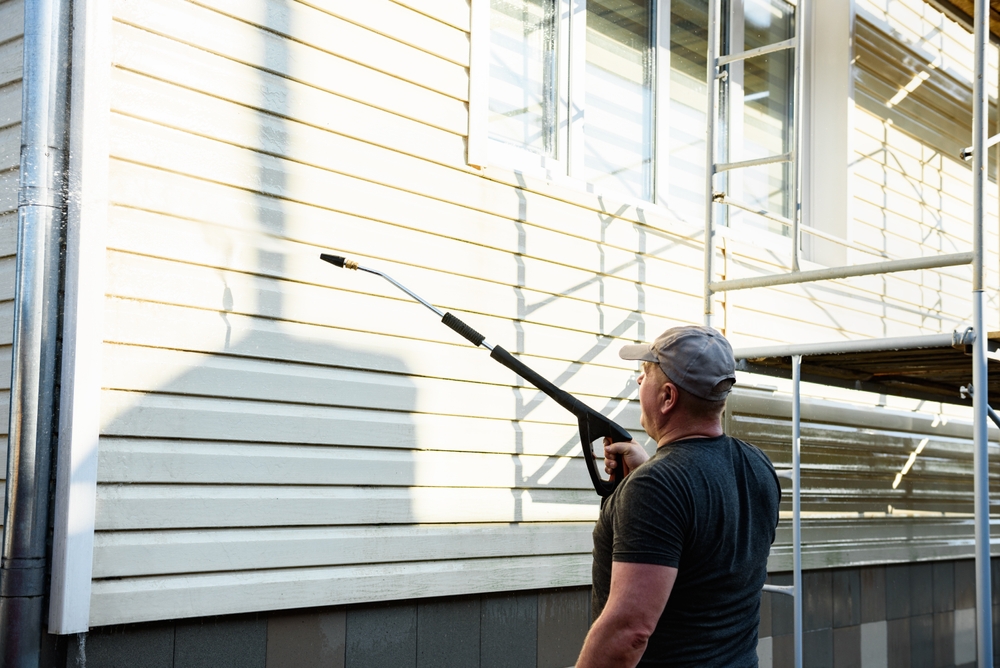
Avoid high-pressure power washing, which can drive water behind the siding and damage the paint further. Instead, use a “soft wash” technique.
- Use a garden hose sprayer to wet the siding.
- Apply a specialized house cleaning solution (available at hardware stores) that targets oxidation and mildew.
- Let it dwell for 10-15 minutes (do not let it dry).
- Gently scrub with a soft-bristle brush on an extension pole.
- Rinse thoroughly from top to bottom.
This removes the chalky oxidation layer and reveals the fresh paint underneath. While it won’t fix deep chemical fading, it can brighten a home significantly.
Repair Option 2: Repainting (The Standard Solution)
If the color is gone, the only way to get it back is to apply new pigment. However, slapping new paint over old, faded paint is a mistake. You must follow a strict process to ensure the new coat doesn’t suffer the same fate.
Step 1: Aggressive Surface Prep
You must remove the dead paint fibers. This involves pressure washing (carefully!) to remove the chalking residue. If the paint is peeling, it needs to be scraped and sanded.
Step 2: Prime Properly
Never skip primer on a faded house. The old, faded surface is porous and “thirsty.” If you apply topcoat directly, the old paint will suck the moisture out of the new paint, leading to uneven sheen and early failure. Use a high-quality acrylic bonding primer to seal the surface.
Step 3: Choose the Right Paint
This is where you future-proof your home.
- Select 100% Acrylic Latex: It provides the best color retention and flexibility.
- Invest in Premium Grades: Spend the extra $20 per gallon. The extra cost goes into better resins and UV blockers.
- Consider Color Choice: If you live in a high-UV area, opt for earth tones or lighter pastels. If you crave a dark color, ensure the brand uses “reflective technology” pigments designed to resist heat and UV breakdown.
Repair Option 3: Siding Replacement (The Long-Term Fix)
Sometimes, repainting is throwing good money after bad. If your siding is old, damaged, or requires painting every 3-4 years to stay looking decent, it is time to calculate the long-term costs.
Repainting a whole house is expensive. Doing it three times over a decade often costs more than installing new, high-performance siding once.
Why Upgrade to Fiber Cement?
If you are tired of the maintenance cycle, replacing your siding with fiber cement is the ultimate solution to fading.
- Factory-Baked Finish: Products like James Hardie siding come with ColorPlus® Technology. The color is baked on in a controlled factory environment. It is cured between coats for a bond that field-applied paint cannot achieve.
- UV Resistance: These finishes are specifically engineered to resist damaging UV rays.
- Warranty: Most high-end fiber cement sidings come with a 15-year warranty specifically covering the finish against peeling, cracking, and chipping.
If you are constantly battling fading paint, it might be a sign that your current siding material has reached the end of its lifespan. We can help you evaluate if replacement is more cost-effective than another paint job. Check out our siding repair and replacement services for a consultation.
Preventive Measures: How to Keep New Paint from Fading
Whether you just repainted or installed new siding, you want that “new house” look to last. Here is how to extend the life of your exterior color.
1. Maintain Your Landscape
Trim trees and bushes back from the house. While shade can help protect against UV rays, vegetation that touches the siding traps moisture and abrasion, wearing down the paint physically. However, strategically planting deciduous trees on the south and west sides can provide natural shade during the harsh summer months without trapping moisture against the wall.
2. Annual Cleaning
Dirt acts as a food source for mildew, and pollution can be acidic. Washing your house annually removes these contaminants before they can chemically attack the paint resin.
3. Reflective Coatings
If you are repainting, ask your contractor about UV-reflective clear coats. While less common for residential siding, new technologies are emerging that act like sunscreen for your house, adding a layer of protection over the pigmented paint.
4. Address Moisture Issues Immediately
Gutters that overflow or sprinklers that hit the house keep the siding wet. Wet paint softens and degrades faster. Fix your drainage to keep the siding dry.
The Cost of Fading: It’s More Than Just Looks
It is easy to dismiss fading as a cosmetic annoyance. “It still protects the house, it just looks ugly,” you might say. That is a dangerous misconception.
Paint is a sacrificial layer. It sacrifices itself to the sun to protect the substrate (wood, stucco, or cement) underneath. Fading is the first sign that this sacrificial layer is failing.
- Stage 1: Fading. The UV protection is diminishing.
- Stage 2: Chalking. The binder is disintegrating.
- Stage 3: Cracking/Peeling. The barrier is breached. Water can now enter the siding material.
Once water enters the siding material, you move from cosmetic repairs to structural rot. Catching the problem at the “fading” stage allows you to apply a new protective coat before the damage goes deeper. Ignoring it leads to warped boards, mold growth, and expensive carpentry bills.
Conclusion: Restore Your Home’s Vibrancy
Your home’s exterior is its face to the world. Fading paint doesn’t just lower your curb appeal; it signals that your home’s protective shield is wearing thin. While the California sun is relentless, you don’t have to surrender to it.
By understanding the causes—from UV degradation to poor surface prep—you can make smarter choices. Whether that means a rigorous soft wash, a high-quality repaint with inorganic pigments, or upgrading to modern fiber cement siding, there is a solution that fits your home and budget.
Don’t wait until the paint starts peeling to take action. If your home is looking tired and washed out, or if you suspect the damage has gone deeper than the paint layer, we are here to help. Our experts can assess your siding’s health and recommend the best path forward to restore its beauty and integrity. Visit us for professionalsiding repair in Sacramento and let’s bring the color back to your home.
Frequently Asked Questions (FAQs)
Q: How long should exterior paint last on siding?
A: It depends on the material and quality of paint. On average:
- Wood Siding: 3–7 years (stains last less, high-quality paints last longer).
- Aluminum/Vinyl Siding: 5–10 years (if painted correctly).
- Fiber Cement: 10–15 years (sometimes longer with factory finishes).
- Stucco: 5–10 years.
Q: Does lighter paint last longer than darker paint?
A: generally, yes. Lighter colors reflect more sunlight and absorb less heat, which reduces the thermal stress on the paint film. Darker colors absorb heat, causing more expansion and contraction, which can lead to faster fading and peeling. Also, the fading on dark colors is much more visually obvious to the human eye.
Q: Can I paint over vinyl siding to fix fading?
A: Yes, but you must be careful. You cannot paint vinyl a darker color than the original. Dark paint absorbs heat, and since vinyl expands significantly when hot, a dark color can cause the vinyl panels to warp, buckle, and permanently deform. Always use “vinyl-safe” paint colors formulated for this purpose.
Q: Is it worth it to buy the most expensive paint?
A: Absolutely. The cost of a paint job is 80-90% labor and only 10-20% materials. Saving $100 on cheaper paint that fades in 3 years is a terrible investment compared to spending a bit more for paint that lasts 7-10 years. You are paying for higher quality resins (binders) and better pigments (titanium dioxide).
Q: Why is my paint fading in patches?
A: Patchy fading usually indicates one of three things:
- Uneven Sun Exposure: Trees or other buildings shading parts of the wall.
- Spot Priming: If you spot-primed repairs but didn’t use a topcoat with good coverage, the primed spots may fade differently.
- Moisture Issues: Areas where insulation is missing or moisture is escaping from inside the home can cause the paint on the exterior to fail faster in those specific spots.