Discovering mold on your home’s siding can be unsettling. Those dark green, black, or even white patches are more than just an eyesore; they are a warning sign that your home’s exterior may have a serious moisture problem. While it’s tempting to grab a pressure washer and blast it away, this often only addresses the surface issue and can even damage your siding, making the problem worse. Understanding what caused the mold to grow in the first place is the key to getting rid of it for good.
Mold on siding is a symptom of a deeper issue. It signals that there is enough persistent moisture and organic material present for fungal colonies to thrive. This could be due to a simple issue like a lack of sunlight or a more serious problem like a water leak behind the siding. Ignoring it can lead to siding deterioration, structural rot, and potential health risks for your family. For homeowners in Northern California, where damp winters create ideal conditions for growth, addressing mold on siding is a critical part of home maintenance.
This comprehensive guide will explain the difference between mold and mildew, identify the common causes of mold growth on your exterior, and detail the risks of leaving it untreated. Most importantly, we’ll walk you through the professional siding mold removal and repair process, explaining why a thorough, expert approach is the only way to protect your home’s health and value.
Mold vs. Mildew: Identifying What’s on Your Siding
Before you can tackle the problem, it’s important to know what you’re dealing with. While often used interchangeably, mold and mildew are different types of fungi with distinct characteristics.
What is Mildew?
Mildew is a surface-level fungus that typically appears as a flat, powdery or downy growth. It is often gray or white in its early stages and may turn yellowish-brown over time. Mildew thrives on surfaces with high humidity and is commonly found in bathrooms, on fabrics, and on plants. On siding, it often looks like a thin, dusty film. While unsightly, mildew is generally easier to clean than mold and doesn’t typically cause structural damage on its own.
What is Mold?
Mold is a more invasive fungus that can grow on and within organic materials. It often has a fuzzy or slimy texture and appears in a variety of colors, including green, black, brown, or even orange. Black mold (Stachybotrys chartarum) is particularly notorious, though any color of mold can be problematic.
Unlike mildew, mold penetrates the surface of the material it’s growing on, putting down roots that can be difficult to remove. When you see mold on siding, it often indicates that moisture has been present for a significant period. This is a much more serious issue, as it can lead to the decay of the siding material and the underlying structure of your home.
Common Causes of Mold Growth on House Siding
Mold needs three things to grow: moisture, a food source (organic material), and the right temperature. Your siding and the dust, pollen, and dirt on its surface can provide the food. The moderate temperatures in the Sacramento area provide the right climate. The final, and most critical, ingredient is moisture. Identifying the source of this moisture is the key to solving your mold problem.
1. Lack of Sunlight and Poor Airflow
Shady, damp areas are prime real estate for mold. The north side of a house, which receives the least amount of direct sunlight, is often the first place mold appears.
- Why It Happens: Without sunlight to help evaporate moisture, the siding surface stays damp for longer after rain or morning dew. Overhanging trees, dense shrubbery planted too close to the house, and nearby structures can all block sunlight and restrict airflow, creating a perpetually damp environment where mold can flourish.
- What to Look For: Green or black streaks and patches concentrated on one side of the house or in areas shaded by landscaping or other buildings.
2. High Humidity and Rain
Northern California’s climate, with its rainy winters and morning fog, provides plenty of atmospheric moisture.
- Why It Happens: Persistent high humidity keeps surfaces damp. During the rainy season, siding can remain wet for days or weeks at a time, giving mold spores ample opportunity to take hold and grow.
- What to Look For: Widespread, light mold or mildew growth that appears or worsens during the wetter months of the year.
3. Clogged Gutters and Downspouts
Your gutter system is designed to manage rainwater, but when it fails, it becomes a major source of moisture problems.
- Why It Happens: Gutters clogged with leaves and debris will overflow, sending water cascading down the walls. This constant saturation overwhelms the siding’s ability to shed water. Broken or improperly aimed downspouts can also dump water right at the base of your walls, soaking the lower sections of siding.
- What to Look For: Dark streaks of mold or staining directly below the roofline or around downspouts. You may also see water spilling over the gutters during a storm.
4. Leaks from Behind the Siding
This is the most serious cause of mold growth. If mold is appearing in isolated spots, seems to be growing from the seams between panels, or is accompanied by peeling paint or swollen siding, it’s a strong indicator that water is getting behind your siding.
- Why It Happens: Water can penetrate the wall system due to failed caulking around windows and doors, improper flashing at joints and rooflines, or cracks and holes in the siding panels. This trapped moisture creates a dark, damp environment where mold can thrive on the back of the siding and on the wooden sheathing and framing of your home.
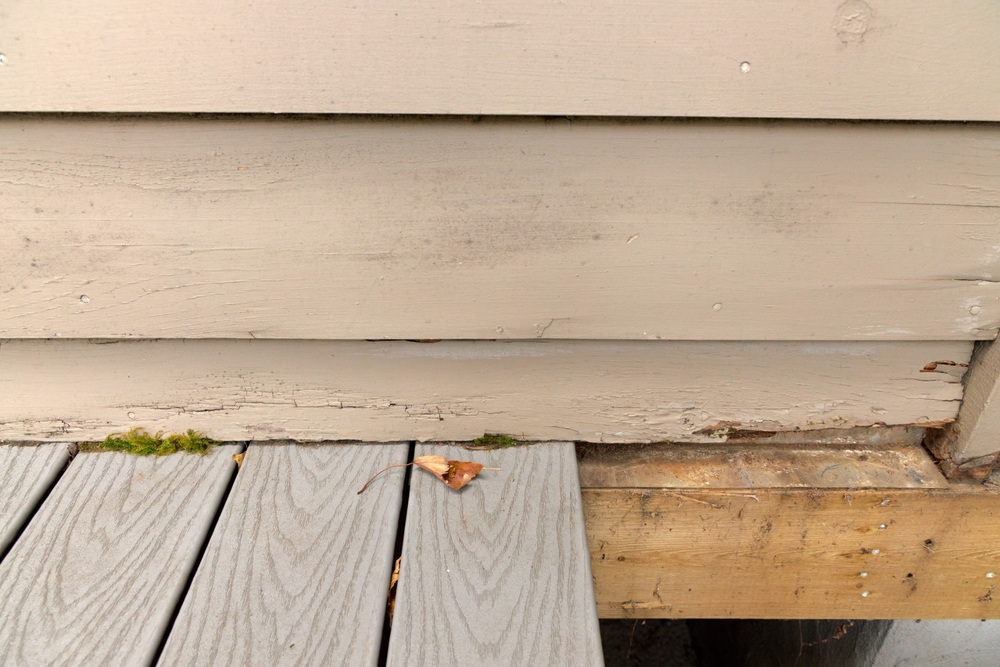
- What to Look For: Mold that seems to originate from cracks or seams, warped or swollen siding panels, and peeling or bubbling paint. A musty smell inside your home is another major red flag for a hidden leak. This situation requires professional siding repair in Sacramento.
The Risks of Ignoring Mold on Your Siding
Leaving mold on your siding is not just a cosmetic issue. It can lead to significant and costly damage and may even affect your family’s health.
1. Siding and Structural Deterioration
Mold feeds on organic materials. For homes with wood siding, this means the mold is literally eating away at your exterior, causing it to rot, soften, and crumble. Even on more resistant materials like fiber cement or vinyl, the dirt and grime that mold feeds on can hold moisture against the surface, leading to staining and premature aging.
The biggest danger is when moisture gets behind the siding. The mold can then attack the wooden sheathing and structural framing of your home. This can lead to widespread wood rot, which compromises the integrity of your walls and can cost tens of thousands of dollars to repair.
2. Health Concerns
Mold releases microscopic spores into the air. When inhaled, these spores can cause a range of health problems, especially for individuals with allergies, asthma, or compromised immune systems.
- Common Symptoms of Mold Exposure:
- Sneezing, coughing, and runny nose
- Itchy, watery eyes
- Skin rashes
- Difficulty breathing and asthma attacks
- Headaches and fatigue
While the mold on your exterior siding is outdoors, spores can easily enter your home through open windows, doors, and HVAC systems. If the mold is caused by a leak, it may also be growing inside your walls, posing a more direct indoor air quality threat.
3. Reduced Curb Appeal and Property Value
A home with visible mold on its exterior is unattractive and looks poorly maintained. This significantly reduces its curb appeal. For potential buyers, mold is a major red flag that signals underlying moisture problems and potential hidden damage. An unresolved mold issue can make your home difficult to sell and can substantially lower its market value.
Professional Siding Mold Removal and Repair: A Step-by-Step Guide
Simply spraying a bleach solution or pressure washing the siding is not a permanent fix. A professional approach to siding mold removal focuses on both cleaning the surface and addressing the root cause of the moisture problem.
Step 1: Safety and Preparation
Safety is the first priority. Professionals will wear personal protective equipment (PPE), including gloves, goggles, and respirators (like an N95 mask), to protect themselves from mold spores and cleaning chemicals. They will also prepare the area by:
- Protecting Landscaping: Covering nearby plants, shrubs, and grass with plastic sheeting to shield them from runoff.
- Wetting Surfaces: Rinsing the siding and surrounding areas with plain water to prevent cleaning solutions from drying too quickly and to protect unpainted surfaces.
Step 2: Thorough Cleaning with the Right Solution
The cleaning method depends on the type of siding and the severity of the mold.
- For Wood and Fiber Cement Siding: Professionals typically use a soft-washing technique rather than high-pressure washing. Soft washing uses a lower-pressure stream to apply a specialized cleaning solution. This solution often contains a mix of a mold-killing agent (like sodium hypochlorite, a component of bleach), surfactants to help it cling to the surface, and other cleaners. This allows the chemicals to do the work of killing the mold at its roots without the risk of damaging the siding or forcing water into cracks.
- For Vinyl Siding: Vinyl is more durable and can sometimes be cleaned with a pressure washer on a low setting. However, care must be taken never to spray upward, as this can force water behind the panels. A solution of water and vinegar or a commercial siding cleaner is often used.
After the cleaning solution has been allowed to sit for the recommended time, the surface is thoroughly rinsed with low-pressure clean water.
Step 3: Investigating the Root Cause of Moisture
Once the siding is clean, the real investigation begins. This is what separates a professional repair from a temporary cleaning. A contractor will:
- Inspect for Leaks: Carefully examine all caulking, flashing, and seals around windows, doors, vents, and corners.
- Check for Damage: Look for any cracks, holes, or loose panels that could be allowing water to get in.
- Assess the System: Evaluate the condition of the gutters, the grading of the landscape around the foundation, and the proximity of sprinklers and vegetation.
- Probe for Hidden Damage: If a leak is suspected, the contractor may need to remove a section of siding to inspect the weather-resistant barrier (WRB) and sheathing underneath for signs of water damage or rot.
Step 4: Repairing the Source of the Problem
This is the most critical phase. The specific repairs will depend on what the investigation uncovers.
- Sealing Gaps: If failed caulk is the culprit, the old caulk will be completely removed, and new, high-quality exterior sealant will be applied.
- Fixing Flaws: Damaged or improperly installed flashing will be repaired or replaced. Gutters will be cleaned and repaired as needed. Trees and shrubs may need to be trimmed back to improve airflow.
- Siding and Structural Repairs: This is where true expertise is required. If any siding panels are cracked or warped, they will be replaced. If the inspection reveals rotted sheathing or framing, those sections must be cut out and replaced by a skilled carpenter. A propersiding installation ensures that the new materials are integrated correctly with the existing water-management system.
Step 5: Preventative Measures and Finishing
After all repairs are made, the final steps are taken to restore the home’s appearance and prevent future mold growth.
- Painting: For wood or fiber cement siding, applying a high-quality paint with a mildewcide additive provides a durable, protective barrier against moisture.
- Protective Coatings: In some cases, a clear, water-repellent sealant can be applied to further protect the siding.
This comprehensive process ensures that the mold is not only removed but that the conditions that allowed it to grow are eliminated.
Trust Hexteriors for Your Sacramento Siding Repair and Mold Removal
Dealing with mold on siding can be daunting, but it’s a battle you can win with the right professional partner. At Hexteriors, we are more than just a cleaning service. We are Sacramento siding repair specialists who understand the complex ways moisture can affect your home’s exterior. Our experienced, in-house crews are trained to look beyond the surface stains to find and fix the root cause of your mold problem.
We use safe, effective cleaning methods to remove existing mold and have the expertise to perform any necessary repairs, from simple caulking to complex structural work. As a James Hardie Elite Preferred Contractor, we adhere to the highest standards of installation and repair, ensuring your home is protected for years to come.
Don’t let mold compromise your home’s health and beauty. If you’ve seen signs of mold on your siding, contact Hexteriors today for a thorough inspection and a free estimate. We’ll provide a lasting solution that restores your peace of mind and the integrity of your home.