Winter can transform a home into a picturesque, snow-covered wonderland. But beneath that beautiful blanket of white, a destructive force may be forming along the edge of your roof: an ice dam. These thick ridges of solid ice can seem harmless, but they are the catalyst for a slow-drip disaster that can cause extensive damage to your roof, gutters, insulation, and, critically, your siding.
An ice dam is more than just a winter nuisance; it’s a clear sign that your home’s thermal envelope is failing. The water that backs up behind these dams can infiltrate your home’s exterior, leading to peeling paint, rotting wood, and compromised structural integrity. For homeowners in areas like Lake Tahoe and other regions that see significant snowfall, understanding how ice dams form and the damage they cause is essential.
This guide will explain the science behind these winter menaces, detail the harm they inflict on your siding and home, and outline the most effective strategies for prevention and resolution. We’ll also cover why the expertise of a professional contractor, like Heritage Exteriors, is crucial for protecting your home from the costly consequences of ice dams. If you’re considering new siding or a checkup, be sure to explore our residential siding replacement services, siding installations in Sacramento, siding repairs, and replacement options.
The Anatomy of an Ice Dam: How They Form
Ice dams result from a specific sequence of events involving heat loss from your home, snow cover on your roof, and freezing outdoor temperatures. It’s a cycle that turns your own home’s warmth against its structure.
Here’s the step-by-step process:
- Heat Escapes into the Attic: The primary culprit is heat loss from your living space into the attic. This happens due to inadequate insulation, unsealed air leaks around light fixtures or vents, or poorly insulated ductwork running through the attic.
- The Roof Deck Warms Up: This escaping heat warms the underside of the roof deck. The temperature of the roof sheathing rises above 32°F (0°C), even when the outdoor air temperature is much colder.
- Snow Melts on the Upper Roof: The layer of snow on the warmer, upper sections of your roof begins to melt from the bottom up. This meltwater flows down the roof surface, underneath the insulating blanket of snow.
- Water Reaches the Cold Eaves: As the water reaches the eaves (the edges of the roof and gutters), it moves past the exterior walls of the house. This part of the roof is not heated from below and remains at the freezing outdoor temperature. The cold surface causes the flowing water to refreeze.
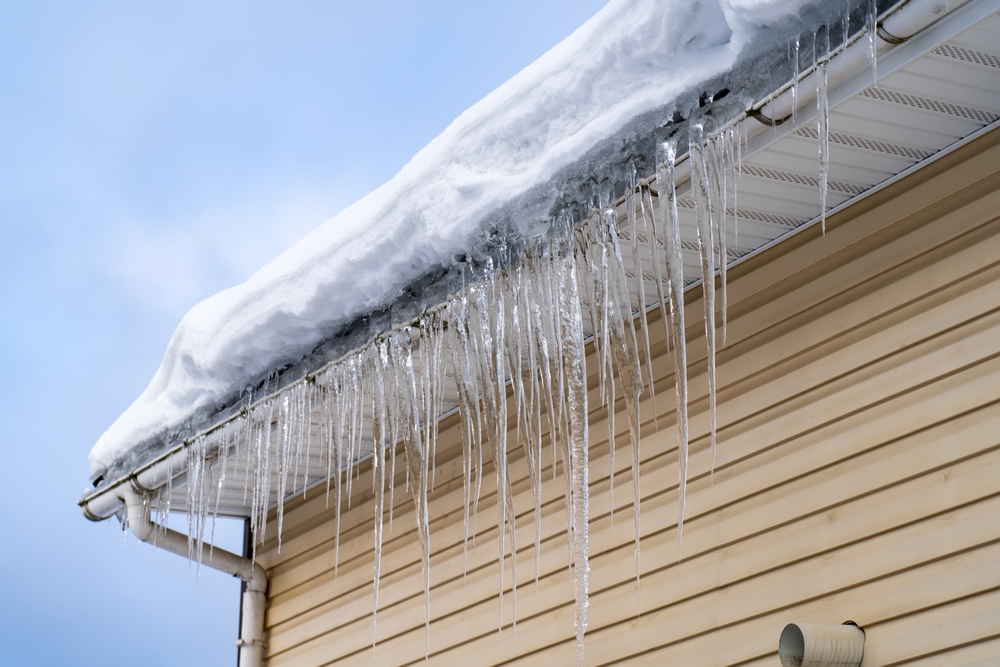
- Ice Accumulates and Forms a Dam: As this process repeats, a thick ridge of ice builds up along the eaves, gutters, and downspouts. This ridge is the “ice dam.”
- A Pool of Water Forms: The ice dam acts like a blockage, preventing any further meltwater from draining off the roof. A pool of water forms behind the dam, submerging the lower portion of your roof.
- Water Infiltrates the Home: Shingles and other roofing materials are designed to shed flowing water, not to be submerged in a pool of standing water. This pooled water can back up under the shingles, penetrate the roof deck, and leak into the attic. From there, it can drip down into exterior walls, soaking insulation and running behind your siding.
The result is a slow-motion water intrusion event that can continue for weeks, causing silent but severe damage.
The Destructive Path of Ice Dam Water Damage
The damage from ice dams is often extensive because it affects multiple systems of your home simultaneously. It starts at the roof but quickly spreads to your siding and the structure within your walls.
Damage to Roofing and Gutters
The most immediate victims are your roof and gutters. The sheer weight of an ice dam can be immense, putting a massive strain on your gutters, potentially causing them to bend, pull away from the fascia, or collapse entirely. The freeze-thaw cycles can also lift and crack shingles, creating permanent entry points for water.
Saturation and Rot in the Walls
Once water gets past the roof and into the exterior wall cavity, it begins its most destructive work.
- Siding Damage: The water runs down the sheathing behind your siding. This constant moisture can cause wood siding to rot, composite siding to delaminate, and vinyl siding to stain with mold and mildew. Paint will bubble and peel as the moisture pushes it from the substrate. In freezing temperatures, this trapped water can turn to ice, expand, and force siding panels to crack or pop off their fasteners. If you’re dealing with any of these issues, our siding repair services can restore your home’s integrity.
- Structural Rot: The wood framing and sheathing inside your walls are highly vulnerable. Saturated wood becomes a breeding ground for rot, which weakens the structural integrity of your home. A persistent ice dam problem can lead to the need for major structural repairs.
- Mold and Mildew: The dark, damp, and unventilated space behind your siding is a perfect environment for mold and mildew. This not only causes further material decay but can also introduce harmful allergens into your home, affecting your family’s health.
Reduced Energy Efficiency and Higher Bills
The damage extends to your home’s performance. When the insulation in your attic and walls becomes saturated, it compresses and loses its R-value, or insulating power. Wet insulation does not effectively resist heat flow. This means you will lose more heat in the winter, forcing your furnace to work harder and leading to a noticeable increase in your energy bills. The goal to improve home insulation is completely defeated by water intrusion from ice dams.
Long-Term Prevention: The Only Real Solution
While homeowners can resort to temporary fixes like raking snow off the roof or using heated cables, these are merely short-term remedies. The only permanent solution to ice dams is to address the root cause: heat loss into the attic. This involves a comprehensive approach to your home’s insulation and ventilation.
1. Sealing Air Leaks
Before adding more insulation, it’s crucial to seal any air leaks between your home’s heated living space and the attic. A professional contractor will identify and seal gaps around chimneys, plumbing vents, recessed lighting, and attic hatches. This step alone can significantly reduce the amount of warm air reaching the underside of your roof.
2. Upgrading Attic Insulation
Most homes, especially older ones, have insufficient attic insulation. The goal is to create a thick, continuous thermal barrier on the attic floor that prevents heat from escaping your living space. A knowledgeable contractor can recommend the appropriate type and R-value of insulation for your climate, ensuring your home meets or exceeds modern energy codes.
3. Improving Attic Ventilation
A well-ventilated attic helps maintain a cold roof deck. Soffit vents (at the eaves) and ridge or gable vents (at the peak) work together to create a continuous flow of cold, outdoor air through the attic. This airflow carries away any heat that does manage to escape, keeping the entire roof surface uniformly cold and preventing snow from melting in the first place.
This three-pronged approach—sealing, insulating, and ventilating—is the most effective strategy for eliminating ice dams for good.
The Role of Siding in an Ice Dam-Resistant Home
While ice dams start at the roof, your siding plays a critical role in how well your home weathers the assault. Siding that is compromised, poorly installed, or made from the wrong material will fare much worse when faced with cascading, ice-cold water.
A residential siding replacement can be a key part of fortifying your home, especially if your current siding is already showing signs of water damage like siding cracks or rot. If you’re considering this step, don’t miss our siding replacement options to find the best fit for durability and style.
Fiber cement siding from Heritage Exteriors, installed by our experts, is an outstanding choice. This durable exterior material is a composite of cement, sand, and cellulose fibers. It does not absorb water, will not rot, and is not susceptible to the freeze-thaw cycles that can destroy wood or vinyl. When paired with a proper weather-resistive barrier and professional siding installation, it creates a formidable shield against water intrusion. This makes it an ideal choice for Lake Tahoe exterior remodeling and other regions prone to harsh winters.
Heritage Exteriors: Your Partner in Winter-Proofing Your Home
Preventing and repairing the damage caused by ice dams requires a contractor with a deep understanding of the entire building envelope—from the roof and attic to the siding and windows. At Heritage Exteriors, our family-owned business is built on this kind of holistic expertise. We refuse to use subcontractors, ensuring that our dedicated, in-house team delivers the highest standard of quality on every project.
James Hardie Elite Preferred Contractor
Our status as a James Hardie Elite Preferred Contractor is a testament to our specialized skill. We are trained and certified by the industry leader to install their products with the precision required to create a truly weatherproof exterior. When we install James Hardie fiber cement siding, you are getting a long-lasting siding system that is also a low maintenance siding and fire-resistant siding solution, perfectly suited to withstand the challenges of winter. For details, see our siding installations in Sacramento.
Installation Masters Certified
The areas around windows are common weak points where water from ice dams can find its way behind siding. Our team is proud to be Installation Masters certified, a credential that recognizes our proficiency in installing weather-resistant windows and doors. We ensure these crucial components are perfectly flashed and sealed, eliminating entry points for water and complementing your siding system.
When to Repair and When to Replace
If ice dams have caused localized damage to your siding, a professional siding repair may be an option. Our siding repair team in Sacramento can assess the damage, replace compromised panels, and ensure the underlying structure is sound.
However, if the damage is widespread or you have recurring ice dam issues, a full residential siding replacement is the smarter investment. This allows you to not only fix the cosmetic damage but also to upgrade to a superior material and properly insulate your walls. With our wide range of siding replacement options, we can help you increase curb appeal and fortify your home for good.
Don’t Let Winter Win
Ice dams are a serious threat to your home’s health and value. They are a clear signal of underlying issues with your home’s thermal performance. Ignoring them can lead to a cascade of expensive repairs, from replacing rotten wood to remediating mold.
Take control this winter by addressing the root causes of heat loss and fortifying your home’s exterior. If you are concerned about ice dams or have seen their destructive effects on your home in the Sacramento, Lake Tahoe, or Bay Area regions, contact the experts at Heritage Exteriors. Our certified, family-run team is committed to providing durable, high-quality solutions that protect your home for decades. Ready to get started? Learn more about our residential siding services or explore your replacement and repair options today.
Schedule a consultation today and let us help you build a stronger, safer, and more efficient home that can stand up to the worst of winter.