There is an undeniable charm to wood siding. Whether it is the rustic appeal of cedar shingles or the clean, traditional lines of clapboard, wood offers an aesthetic warmth that synthetic materials often try—and fail—to duplicate. For many homeowners in California, wood siding is a point of pride, contributing significantly to a home’s curb appeal and value.
However, owning a home with a natural exterior comes with a specific responsibility: vigilance. Unlike vinyl or aluminum, wood is an organic material. It was once alive, and in the right (or wrong) conditions, nature will try to reclaim it. The primary agent of this reclamation is wood siding rot.
Rot is not just a cosmetic blemish; it is a cancer to your home’s structural integrity. It starts silently, often hiding beneath layers of paint or tucked away in corners you rarely check. By the time the damage becomes obvious from the street, the underlying structural issues can be severe and expensive to fix.
The key to preserving your home and your wallet is early detection. Catching rot in its infancy allows for targeted repairs rather than full-scale replacements. This comprehensive guide will walk you through exactly how to inspect your home, the subtle early signs of rot you might be missing, and the maintenance steps necessary to protect your investment.
Understanding the Enemy: What Is Wood Rot?
To effectively fight wood siding rot, you must first understand what it is. Rot is a form of decay caused by fungi. These microscopic organisms feed on the cellulose and lignin that give wood its strength and structure. As the fungi consume the wood fibers, the siding loses its density, strength, and ability to hold nails or repel water.
For rot to take hold, four conditions must be met:
- Food Source: The wood siding itself.
- Oxygen: Present in the air around the home.
- Warmth: California’s climate provides ample warmth for fungi to thrive.
- Moisture: This is the trigger. Fungi cannot grow in dry wood.
Since you cannot eliminate the wood, the air, or the temperature, moisture control becomes your primary defense. When moisture content in wood exceeds 20%, fungi activate and begin to eat.
The Two Main Types of Rot
While there are many scientific classifications, homeowners generally deal with two main categories:
1. Wet Rot: This occurs when there is a high moisture content (around 50%). It is often found near leaking gutters or the base of the wall where splashback occurs. The wood will look dark, feel soft and spongy, and may have a musty smell.
2. Dry Rot (Brown Rot): This is the more insidious villain. Confusingly, “dry rot” still requires moisture to start, but it can survive and spread with less water than wet rot. The fungus transports water from wet areas to dry areas, allowing it to move rapidly through timber. Dry rot causes wood to shrink, turn brown, and crack into cubical pieces (a phenomenon known as “cuboidal cracking”). It turns wood brittle and dry, making it crumble into powder when touched.
Visual Inspection: The Early Signs of Rot
You don’t need to be a structural engineer to spot the early warning signs, but you do need to know where to look. Most homeowners make the mistake of only looking for gaping holes or falling boards. By then, it is too late. Here are the visual cues that appear long before the wall falls down.
1. Discoloration and Dark Spots
One of the very first early signs of rot is a change in color. If you have natural, stained wood, look for areas that appear darker than the surrounding wood. This often indicates water is soaking into the fibers and not drying out.
If your house is painted, look for yellow or brownish stains bleeding through the paint. This is often caused by “tannin bleed,” where water releases natural extractives in the wood which then migrate to the surface. While tannin bleed itself isn’t rot, it is a sign of excessive moisture, which is the precursor to rot.
2. Peeling, Blistering, or Bubbling Paint
Paint is designed to act as a shield, but it also acts as a tell-tale sign of distress. When water gets behind the siding (perhaps from a leak higher up or humidity form inside the house), it saturates the wood. As the sun hits the siding, that water tries to evaporate.
Since the paint film blocks evaporation, the water vapor pushes against the back of the paint, causing it to lose adhesion. If you see paint that is bubbling, blistering, or peeling in sheets, do not just scrape and repaint. You must ask: Why is the wood wet underneath? If the wood under that peeling paint feels soft or looks dark, rot has likely begun.
3. Warped or Cupped Boards
Wood swells when it gets wet and shrinks when it dries. If siding is subjected to constant wetting and drying cycles without proper sealing, the boards will deform.
- Cupping: The edges of the board curl up or down.
- Warping: The board twists or bends along its length.
- Buckling: The siding pulls away from the wall.
Warped boards open up gaps in your exterior armor, allowing even more water to get behind the siding, accelerating the rot cycle.
4. Fungal Growth
This is the most obvious sign. If you see mushroom-like growths (fruiting bodies) sprouting from your siding, the rot is advanced. However, earlier signs include:
- Mycelium: A white, grey, or woolly substance on the wood surface or in cracks.
- Mold/Mildew: Green algae or black mold spots indicate the area is staying wet too long. While surface mold can often be washed off, deep-seated mold usually accompanies rot.
5. Shrinkage and Gaps
Dry rot causes cellulose to break down, which literally reduces the mass of the wood. This leads to shrinkage. If you notice that the gaps between your siding boards are getting wider, or the caulking around windows seems to be pulling away or cracking, the wood itself may be shrinking due to decay.
The Physical Inspection: The “Poke” Test
Visual signs are helpful, but touch confirms the diagnosis. To truly tell if your wood siding is rotting, you need to get hands-on.
The Screwdriver Test
This is the gold standard for DIY rot detection. Take a standard flathead screwdriver or an awl and go to the suspicious areas you identified visually.
- Press Gently: Press the tip of the tool against the wood.
- The Result:
- Healthy Wood: The tool should barely make a mark or perhaps a tiny dent. It should feel solid and resistant.
- Rotting Wood: If the screwdriver sinks into the wood with little resistance—like pushing into hard cheese or a sponge—you have rot. If the wood crumbles or flakes away easily, the structural integrity is gone.
Warning: Be gentle. You don’t want to gouge healthy wood. You are testing for softness, not trying to stab the house.
The Knock Test
Knocking on your siding can also be revealing.
- Healthy Wood: Produces a solid, crisp sound.
- Rotted/Hollow Wood: Produces a dull, thudding sound. This can indicate that the interior of the board has been eaten away by termites or dry rot, leaving only a thin shell of paint holding it together.
High-Risk Zones: Where to Look First
You should inspect your entire home, but wood siding rot rarely strikes randomly. It prefers specific micro-climates around your house where water management fails. Focus your energy on these “hot spots.”
1. The Bottom Courses
The first few rows of siding near the ground are the most vulnerable. This area suffers from:
- Splashback: Rain hits the ground and splashes mud and water back onto the siding.
- Snow: Piles of snow resting against the wood for prolonged periods.
- Vegetation: Grass and bushes touching the siding trap moisture against the wood.
Ideally, wood siding should be at least six inches off the ground. If your siding touches the soil, it is almost certainly rotting or will be soon.
2. Around Windows and Doors
Windows and doors are interruptions in the wall. Every interruption is a potential leak point. Inspect the headers (top) and sills (bottom) of windows.
- Check for missing or damaged flashing (the metal strip that directs water away).
- Look at the caulking. Is it cracked?
- Rot often starts at the corners of window sills where water collects.
3. Corners and Trim
Corner boards (where two walls meet) are difficult to seal perfectly. The vertical seams can open up over time, allowing water to wick behind the boards. Once water is behind the corner board, it attacks the raw “end grain” of the horizontal siding boards, which act like straws sucking up moisture.
4. Under Gutters and Eaves
If your gutters are clogged or leaking, water will overflow and run down the fascia board and onto the siding. Look directly under gutter end caps and joints. If you see peeling paint or dark streaks in these vertical lines, your gutter system is failing your siding.
5. Shade Zones
The North side of your house or areas heavily shaded by trees dry out much slower than the rest of the home. These areas are prone to moss and algae growth, which holds moisture against the wood and encourages rot.
The Invisible Threat: Interior Signs of Siding Rot
Sometimes, the siding looks okay on the outside because the paint is holding it together, but the water has penetrated through and is rotting the wall from the inside out. Don’t ignore clues from inside your home.
1. Musty Smells
A persistent musty or damp earth smell in a room that doesn’t go away with cleaning often indicates mold and rot inside the wall cavity.
2. Peeling Wallpaper or Paint
If the drywall or wallpaper on the inside of an exterior wall is peeling, bubbling, or staining, water has breached the siding, the sheathing, and the insulation to reach your interior walls. This is a sign of advanced failure.
3. Increased Energy Bills
Rotted siding and wet insulation lose their R-value (insulating power). If your heating or cooling bills spike unexpectedly, and you feel drafts near outlets or baseboards on exterior walls, your building envelope may be compromised by rot.
Consequences of Ignoring the Signs
It is human nature to procrastinate on home repairs. You might think, “It’s just a small soft spot; I’ll deal with it next summer.” However, wood siding rot is progressive. It never fixes itself; it only spreads.
Structural Damage
Siding is the skin of your house. Once the skin is compromised, the “bones” (studs, headers, and sill plates) are next. Repairing a few siding boards is a manageable expense. Repairing structural framing requires supporting the house, removing large sections of wall, and extensive carpentry. The cost difference is exponential.
Mold and Health Risks
Moist, rotting wood is the perfect breeding ground for mold spores. As air circulates through your walls, these spores can enter your living space, triggering allergies, asthma, and respiratory issues for your family.
Pest Infestations
Termites, carpenter ants, and wood-boring beetles love soft, rotting wood. It is easier for them to chew through. A rot problem often becomes a pest infestation problem, doubling your repair headaches.
Loss of Value
When you go to sell your home, a qualified home inspector will find the rot. This can lead to deals falling through or massive price reductions. Maintaining your siding is maintaining your equity.
When to Repair vs. When to Replace
So, you’ve done the inspection and found some rot. Now what? Do you need a patch or a whole new exterior?
The “Patchable” Scenario
If the rot is localized—for example, a few inches at the bottom of a corner board or a single cracked clapboard—repair is usually the best option.
- Strategy: The rotted wood must be cut out completely. Professional repairers will cut back to healthy wood, treat the area with a wood hardener or fungicide, and splice in a new piece of wood (a “Dutchman” patch) or replace the single board.
- Professional Help: For seamless repairs that match your home’s profile and prevent water from getting back in, consider professional services like those offered at Hexteriors Siding Repair. They can assess if the damage is truly isolated or the tip of an iceberg.
The “Replacement” Scenario
You should consider full or partial wall replacement if:
- The rot affects more than 20-30% of a specific wall.
- The rot has penetrated the sheathing (the plywood under the siding).
- The siding is old and showing widespread fatigue (cracking, warping) across multiple areas.
- You are tired of the constant maintenance cycle of painting and patching wood.
If you are facing extensive damage, it might be time to upgrade to materials that resist rot better, such as fiber cement, while maintaining the look of wood. You can explore these options underResidential Siding Services.
Siding Maintenance Tips: Prevention is Cheaper than Cure
The best way to deal with rot is to prevent it from starting. A proactive maintenance routine can extend the life of wood siding by decades.
1. Keep it Clean
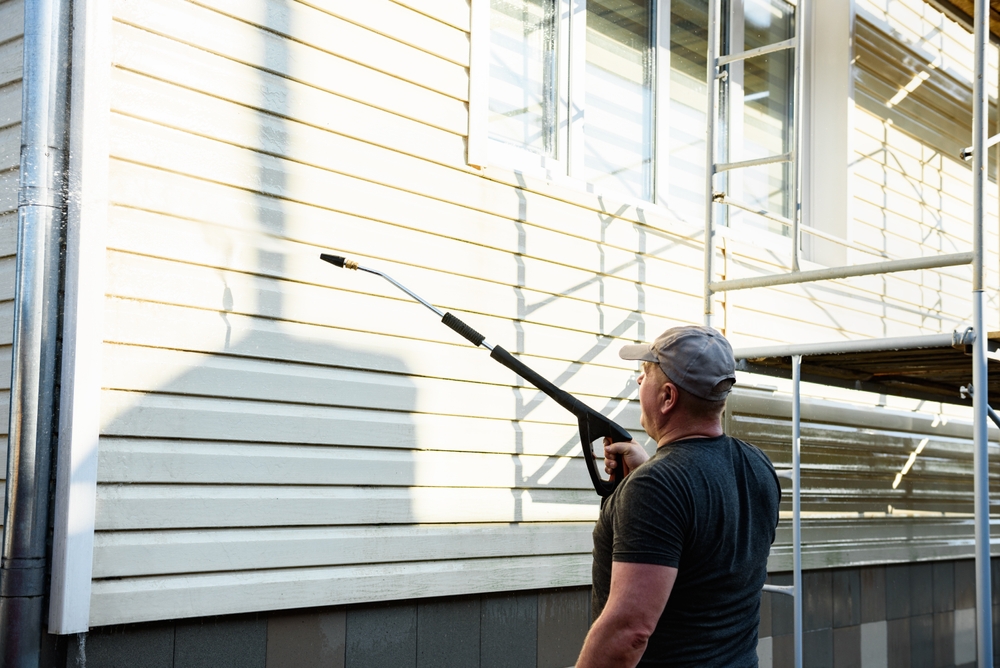
Wash your siding once a year. Use a garden hose and a soft brush with mild detergent. Avoid high-pressure power washing, which can blast water under the siding boards and damage the wood fibers. Cleaning removes the dust and pollen that act as food for mold.
2. Maintain the Finish
Paint and stain are your waterproofing barriers.
- Stain: Re-stain every 3-5 years, depending on sun exposure.
- Paint: Re-paint every 5-7 years.
- Inspect: Don’t wait for the paint to peel. If the color is chalking or fading, it’s getting porous. A fresh coat now saves scraping later.
3. Gutter Management
Keep gutters clean. Ensure downspouts extend at least 4-6 feet away from the foundation so water doesn’t pool near the siding. If gutters are leaking, fix them immediately.
4. Landscape Hygiene
Trim trees and bushes back.
- Keep branches at least 2 feet away from the siding to allow airflow.
- Do not let mulch or soil pile up against the bottom of the siding. Maintain that 6-inch clearance.
5. Caulk Responsibly
Inspect the caulking around windows, doors, and trim annually. If it is cracked or missing, scrape it out and replace it with high-quality exterior-grade sealant. Note: Never caulk the bottom edge of horizontal siding boards. They are designed to “breathe” and let moisture out. Sealing them shut traps water and guarantees rot.
Why Professional Inspection Matters
While the “screwdriver test” is a great tool for homeowners, it has limitations. You cannot see behind the walls, and you might miss the subtle signs of flashing failure that a trained eye would catch.
A professional siding contractor understands the entire building envelope system. They don’t just look at the wood; they look at the roofline, the drainage, the flashing integration, and the ventilation.
If you are unsure about the condition of your wood siding, or if you found a soft spot and worry about what lies beneath, do not guess. The cost of an inspection is a fraction of the cost of structural remediation.
Conclusion
Wood siding is a beautiful asset that requires a partnership between the homeowner and the home. By understanding the science of rot, performing regular visual and physical inspections, and reacting quickly to the early signs of rot, you can keep your home safe and sound.
Remember, wood is resilient. It can last for a century if kept dry. But when the signs of decay appear—the dark spots, the peeling paint, the soft wood—time is of the essence. Don’t let a small maintenance issue turn into a structural crisis.
If you have spotted any of these warning signs and need an expert opinion, or if you are ready to repair or replace aging siding, reach out to the professionals. Visit our Siding Repair page to learn how we can restore your home’s integrity, or explore our full Residential Siding Services for long-term solutions.