There is a specific kind of heartbreak that comes with owning an older home with wood siding. You fell in love with the character, the natural warmth, and the architectural detail that vinyl or stucco simply cannot replicate. But time is a cruel artist. Years of Sacramento sun, winter rains, and shifting temperatures have turned that once-golden cedar or crisp painted clapboard into a patchwork of gray, peeling, and weathered timber.
When you look at your home’s exterior now, you might feel that sinking sensation in your stomach—the one that assumes a massive, bank-breaking renovation is the only solution. You might be bracing yourself for a full tear-off and replacement quote that rivals the price of a luxury car.
Here is the good news: You probably don’t need to replace it.
Wood is incredibly resilient. Unlike synthetic materials that become brittle and crack with age, wood can often be brought back from the brink. With the right techniques, wood siding refinishing can reverse decades of neglect, restoring the luster and protection your home deserves at a fraction of the cost of new siding.
In this detailed guide, we will walk you through the art and science of how to restore wood siding. We will help you distinguish between “character” and “damage,” show you how to execute strategic repairs, and guide you through the refinishing process that will make your neighbors ask when you had new siding installed.
Assessing the Damage: Restoration vs. Replacement
Before you pick up a scraper or a paintbrush, you need to play detective. Not all wood can be saved, but more of it is salvageable than you might think. The first step in repairing aging siding is a thorough audit of your home’s exterior envelope.
The “Is It Too Late?” Checklist
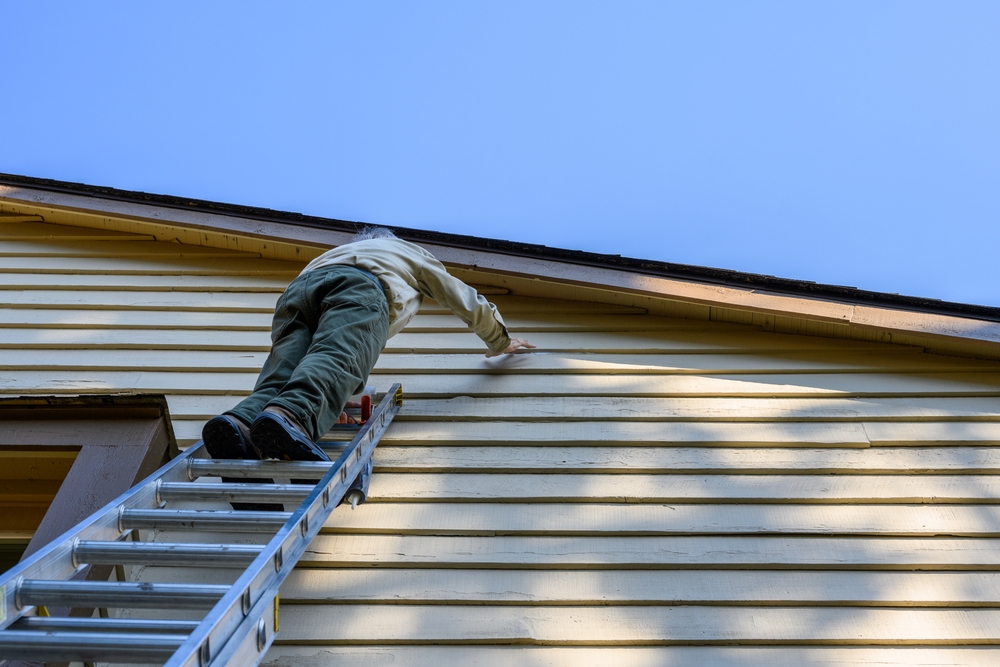
Walk around your home with a flathead screwdriver and a notepad. You are looking for structural failures versus cosmetic flaws.
- Cosmetic (Restorable): Peeling paint, graying wood fibers, surface mold/mildew, small nail holes, hairline cracks, and loose boards.
- Structural (Requires Repair/Replacement): Deep rot (where the screwdriver sinks in), large splits that go through the board, boards that crumble to the touch, or evidence of termite tunnels.
If less than 20-30% of your siding falls into the “Structural” category, you are a prime candidate for restoration. You can surgically replace the bad boards and restore the rest.
Moisture: The Hidden Enemy
Restoration is pointless if the underlying cause of the damage remains. Look for patterns. Is the paint peeling specifically under a window? That suggests a flashing leak. Is the wood rotting near the ground? Your mulch might be too high. Identifying these sources is critical. A successful siding restoration project starts with stopping the water.
Step 1: Deep Cleaning and Surface Preparation
You cannot refinish a dirty surface. Over the years, your siding has accumulated layers of dirt, pollen, oxidized paint (chalking), and biological growth.
The Soft Wash Technique
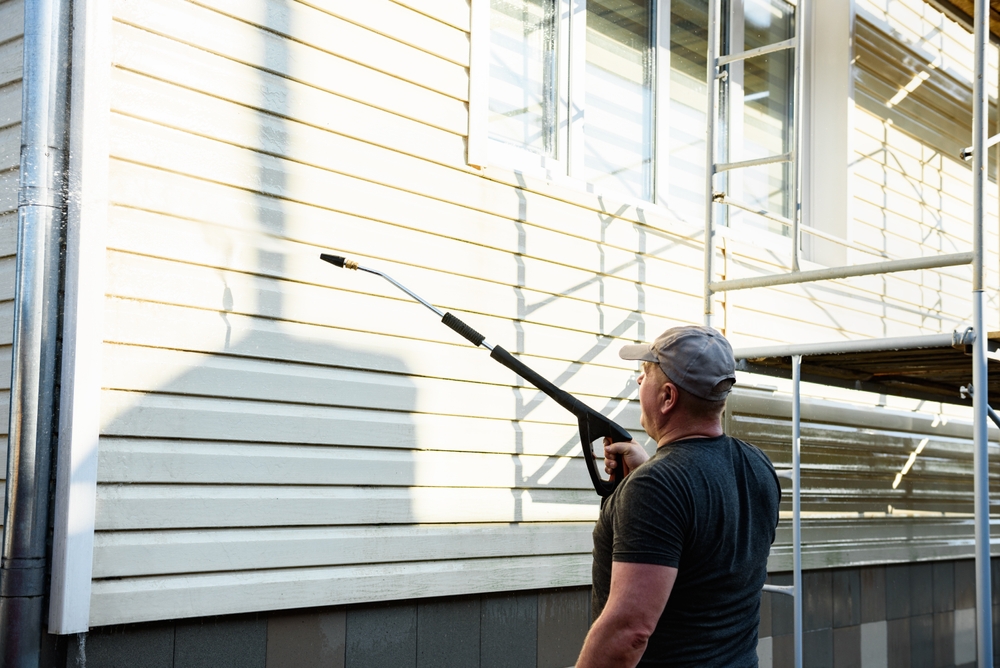
Many homeowners instinctively reach for a high-pressure power washer. Stop. blasting old, fragile wood with 3,000 PSI of water is the fastest way to destroy it. It drives water deep into the wall cavity and gouges the soft wood fibers.
Instead, use a “soft wash” approach:
- The Mix: Create a cleaning solution of warm water, TSP (Tri-Sodium Phosphate) substitute, and a mildewcide. If you have significant mold, a bleach solution (1:4 ratio with water) works well.
- The Scrub: Use a long-handled, soft-bristle brush. Scrub the siding from bottom to top to prevent streaking, then rinse from top to bottom.
- The Rinse: Use a standard garden hose with a spray nozzle. This provides enough volume to rinse the chemicals without the destructive force of a pressure washer.
Removing Old Paint and Stain
This is the most labor-intensive part of wood siding refinishing, but it determines the quality of the final look.
- Scraping: Use a sharp carbide scraper to remove all loose, peeling, and blistering paint. You don’t need to remove all the paint, just the stuff that isn’t sticking.
- Sanding: Once scraped, you need to feather the edges. Sanding smooths the ridge where the old paint meets the bare wood so your new finish looks smooth. For cedar shingles or rough-sawn wood, use a wire brush to remove dead gray fibers and expose fresh wood underneath.
Safety Note: If your home was built before 1978, assume the paint contains lead. Do not sand or scrape without proper containment and respiratory protection. If you suspect lead, it is often safer to hire a professional for this stage.
Step 2: Surgical Repairs
Now that the siding is clean, the true extent of the damage is visible. It is time for the surgical phase of repairing aging siding.
The “Dutchman” Patch
For small areas of rot or damage, you don’t always need to rip out a 12-foot board. A “Dutchman” is a classic carpentry technique where you cut out a rectangular section of the damaged wood and glue in a tightly fitting replacement piece.
- Cut out the rot using an oscillating multi-tool or chisel.
- Cut a replacement piece of the same wood species to fit the hole exactly.
- Glue it in place with waterproof wood glue and secure with pin nails.
- Sand it flush. Once painted, it becomes invisible.
Epoxy Consolidation
For historic trim or intricate details that are hard to replicate, wood epoxy is a miracle worker.
- Harden: Drill small holes into the soft/rotted wood and inject a liquid wood hardener. This resin soaks into the fibers and turns the spongy wood into a rock-hard base.
- Fill: Use a two-part wood epoxy putty to fill the void. Sculpt it to match the profile of the siding.
- Sand: Once cured, epoxy sands and paints just like wood.
Board Replacement
Sometimes a board is too far gone. When replacing individual planks:
- Carefully pry up the board above the damaged one to access the nails.
- Remove the damaged board without cracking the surrounding ones.
- Slide the new board in. Crucial Tip: Prime the back, edges, and cut ends of the new board before installing it. This “back-priming” prevents moisture from entering the new wood from behind, ensuring your repair lasts.
If the damage feels overwhelming or involves structural sheathing behind the siding, it’s time to call in the cavalry. Hexteriors specializes in these types of surgical interventions. Our siding repair in Sacramento services can handle the heavy lifting of rot removal, ensuring your base is solid before you proceed with refinishing.
Step 3: Fastener Maintenance
Aging siding often suffers from “nail pop” or rusting fasteners.
- Rust Stains: If you see streaks of rust running down your siding, the old nails were likely not galvanized. You have two options: sand the nail head to bare metal and prime it with a rust-inhibitive primer, or replace the nail with a stainless steel one.
- Loose Boards: Wood shrinks as it ages. Nails that were tight 20 years ago might be loose now. Do not just hammer the old nail back in; the hole is stripped. Instead, pull the old nail and drive a new, slightly thicker ring-shank nail nearby, or drive a new nail at a slight angle to grab fresh framing.
Step 4: Caulking and Sealing
Water management is the key to longevity. Your siding relies on caulk to seal the gaps where wood meets windows, doors, and corner boards.
- Remove the Old: Never apply new caulk over old, cracked caulk. It won’t stick. Use a utility knife or caulk removal tool to scrape out the old bead.
- Choose the Right Product: Use a high-quality, paintable exterior siliconized acrylic latex caulk or a polyurethane sealant. Avoid pure silicone if you plan to paint, as paint will not stick to it.
- Apply Correctly: Do not caulk the bottom edge of horizontal lap siding. Those boards need to breathe and let moisture escape. Only caulk vertical seams and corners.
Step 5: Priming—The Anchor of Restoration
If you are painting (as opposed to staining), priming is the most important step in siding restoration tips. Old, weathered wood is thirsty. If you apply topcoat paint directly to it, the wood will suck the binders out of the paint, leading to premature peeling.
- Spot Priming: If you only have patches of bare wood, you can spot prime those areas.
- Full Prime: For the best results on aging siding, a full coat of high-quality oil-based or bonding water-based primer is recommended. Oil-based primers are superior at penetrating weathered wood fibers and “locking down” the surface. They also block tannins (especially in cedar and redwood) from bleeding through and staining your paint job.
Step 6: The Finish Coat
This is the victory lap. You are finally ready to apply the color that will define your home for the next decade.
Choosing Paint vs. Stain
- Solid Color Stain: This is often the best choice for repairing aging siding. It looks like flat paint but is thinner. It penetrates the wood texture rather than forming a thick film on top. Because it doesn’t form a film, it won’t peel or blister as easily as paint. It is breathable, allowing older wood to manage moisture changes better.
- Acrylic Latex Paint: If you want a satin or semi-gloss finish, or if the house has many layers of existing paint, stick with 100% acrylic latex paint. Modern acrylics remain flexible, expanding and contracting with the wood without cracking.
Application Techniques
- Spray and Back-Roll: The professional standard. Paint is sprayed onto the wall to get it there quickly, but immediately followed by a roller. The rolling pushes the paint into the wood grain, cracks, and nail holes, ensuring superior adhesion.
- The Weather Window: In Sacramento, timing is everything. Do not paint in direct sunlight when it’s 100°F. The paint will dry too fast (flash dry), preventing it from bonding to the wood. Paint the shady side of the house and follow the sun around.
Specialized Restoration: Reviving Natural Cedar
If your home has natural (unpainted) cedar or redwood siding that has turned silver-gray, restore wood siding takes a different path. You don’t want to cover the grain; you want to reveal it.
- Wood Brightener: After cleaning, apply an oxalic acid-based wood brightener. This chemical neutralizes the tannins and removes the iron stains and gray photodegraded fibers, bringing back the rich red/brown tones of the original wood.
- Clear or Semi-Transparent Stain: Once the wood is brightened and dry, apply a penetrating oil stain. These stains soak deep into the wood to replace the natural oils lost to the sun. Avoid film-forming varnishes, which will peel and look terrible within a year.
Preventing Future Aging
You have done the hard work. Your home looks beautiful. Now, how do you keep it that way? Siding restoration tips don’t end when the paint dries.
- Trim the Greenery: Keep bushes and trees 18 inches off the siding.
- Clean Gutters: Overflowing gutters are the #1 cause of siding rot.
- Yearly Wash: A gentle hose-down once a year removes the dust that holds moisture against the wood.
When to Admit Defeat (and Call a Pro)
While this guide empowers you to tackle restoration, there are limits. If you start scraping and find that the wood is crumbling everywhere, or if you uncover extensive termite damage, restoration might cost more than replacement.
Furthermore, restoration is hard, physical labor. It involves ladders, chemicals, and hours of sanding. If you love the idea of restored siding but hate the idea of spending your summer on scaffolding, professional help is available.
At Hexteriors, we understand the value of vintage wood. We know that sometimes, the greenest and most aesthetic choice is to save what you have. Our team can perform the difficult repairs, the rot replacement, and the precision refinishing needed to bring your home back to life.
If you are unsure if your siding is a candidate for restoration, or if you need help with the critical repair phase, contact us. Check out our siding repair in Sacramento page to see how we can bridge the gap between “old” and “new.”
Your aging wood siding isn’t just “old boards.” It’s the skin of your home, bearing the scars of weather and time. With a little love, some elbow grease, and the right techniques, you can turn those scars into stories, preserving the beauty of your home for years to come.
FAQ: Restoring Aging Wood Siding
Q: Is it cheaper to restore or replace wood siding?
A: Restoration is almost always cheaper—typically costing 25% to 50% of the price of full replacement. However, if more than 30-40% of the boards are rotted, the labor costs of repair can start to approach the cost of new siding.
Q: How long does a siding restoration last?
A: A properly executed restoration with high-quality paint or stain can last 7-15 years, depending on the exposure and the quality of prep work. Solid stains typically last 5-7 years, while high-quality acrylic paints can last 10+ years.
Q: Can I restore wood siding that has been painted with lead paint?
A: Yes, but you must use lead-safe work practices. This means no dry sanding, using HEPA vacuums, and laying down plastic to catch all chips. For extensive lead paint removal, hiring an EPA-certified renovation firm is highly recommended.
Q: Why does my paint keep peeling in the same spot?
A: Localized peeling is almost always a moisture issue. There is likely a leak behind the siding, a lack of a vapor barrier, or interior humidity escaping through the wall. You must solve the moisture source before repainting, or it will just peel again.
Q: Can I paint over rot to seal it?
A: No. Paint is not a structural repair. Painting over rot will trap moisture inside, accelerating the decay and causing the rot to spread faster. You must remove or stabilize the rot before painting.