Wood siding is a classic choice for homeowners who value timeless beauty, natural warmth, and architectural character. Whether it’s cedar shakes, clapboard, or vertical panels, wood offers an aesthetic that synthetic materials often try to mimic but rarely duplicate perfectly. However, that beauty comes with a responsibility: maintenance. Unlike vinyl or fiber cement, wood is a living material that reacts to its environment. It expands, contracts, absorbs moisture, and dries out. Without proper care, your stunning exterior can quickly succumb to fading, rot, and water damage.
For homeowners in the Sacramento area, the challenge is twofold. We face blistering summer heat that can dry out and fade wood, followed by wet seasons that test your siding’s ability to repel water. Neglecting wood siding maintenance isn’t just about curb appeal; it’s about protecting the structural integrity of your home.
In this comprehensive guide, we will walk you through everything you need to know to protect wood siding from the elements. From routine cleaning to spotting the early signs of rot, these actionable siding care tips will help you extend the life of your home’s exterior and avoid costly repairs down the road.
Understanding the Vulnerabilities of Wood Siding
Before diving into maintenance routines, it is crucial to understand what you are fighting against. Wood is an organic material, meaning it is susceptible to biological and environmental degradation.
The Threat of UV Radiation (Fading)
The sun is one of the biggest enemies of wood siding. UV rays break down the lignin in wood cells—the natural glue that holds wood fibers together. As lignin degrades, the wood surface turns gray and fibers detach, leading to a rough, weathered texture. This process, often called photodegradation, not only ruins the look of your paint or stain but also makes the wood more porous and susceptible to moisture.
The Danger of Moisture (Rot and Warp)
Water is the ultimate nemesis. When wood absorbs water, it swells. When it dries, it shrinks. This constant cycle of expansion and contraction causes paint to crack and peel, exposing raw wood to even more moisture. If the moisture content in the wood remains high (usually above 20%) for an extended period, it creates the perfect breeding ground for fungi, leading to wood rot.
Insect Infestations
Soft, moisture-damaged wood is a dinner bell for pests like termites, carpenter ants, and wood-boring beetles. These insects can hollow out your siding from the inside, often causing significant structural damage before you even notice they are there.
Routine Cleaning: The First Line of Defense
Regular cleaning is the simplest yet most effective way to protect wood siding. Dirt, pollen, dust, and mildew can accumulate on the surface, trapping moisture against the wood and accelerating decay.
How Often Should You Clean?
Ideally, you should clean your wood siding once a year. In Sacramento, a good time to do this is in the spring or early autumn, when temperatures are mild. If you live in a heavily wooded area or a particularly dusty region, you might need to clean it twice a year.
The Gentle Cleaning Approach
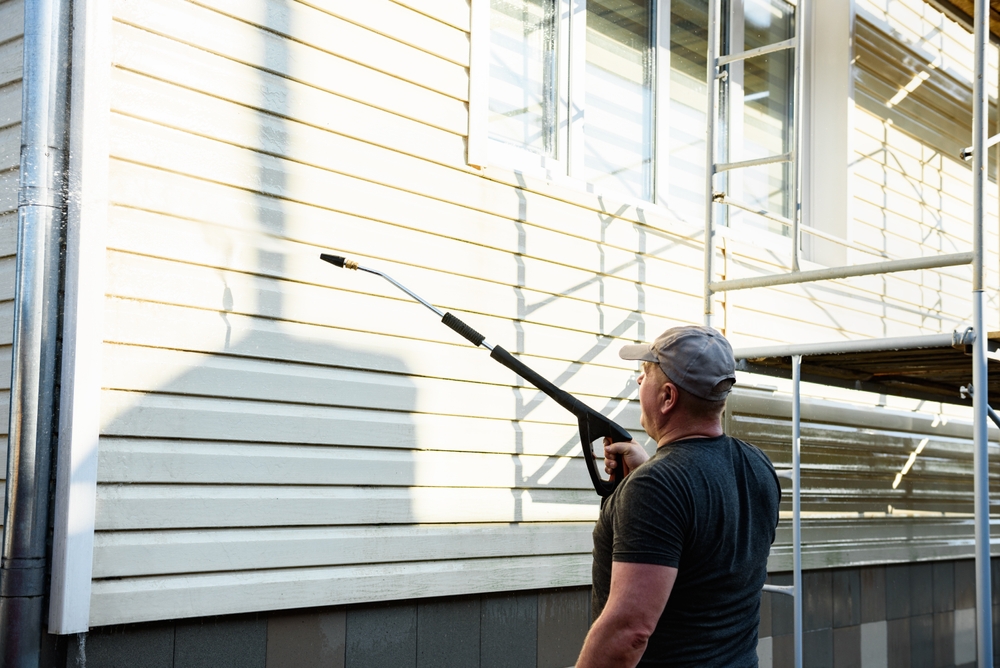
While power washing is popular for its speed, it can be dangerous for wood siding. High-pressure water can gouge the wood, strip away paint, and force water deep behind the planks, leading to hidden mold and rot issues.
Instead, opt for a “soft wash” method:
- Prepare the Area: Cover nearby shrubs and garden beds with plastic sheeting to protect them from cleaning solutions. Close all windows and doors.
- Mix Your Solution: A mixture of warm water and mild detergent (like dish soap) usually works well. For mildew (black or green spots), add a small amount of bleach or a specialized mildewcide cleaner. Tri-sodium phosphate (TSP) is a heavy-duty cleaner often used by pros, but handle it with care.
- Scrub Gently: Use a soft-bristle brush or a sponge mop on a long handle. Start from the bottom and work your way up to prevent streaking, then rinse from the top down.
- Rinse Thoroughly: Use a garden hose with a spray nozzle to rinse the siding. Keep the stream pointing downward to avoid driving water up under the lap of the siding.
By keeping the surface clean, you allow the wood to breathe and dry out properly after rain, which is essential to prevent wood rot.
Inspecting for Damage: What to Look For
You can’t fix what you don’t know is broken. A proactive inspection routine is vital for wood siding maintenance. Twice a year, walk around your home’s perimeter and look closely at the siding.
The “Pick Test” for Rot
Visual inspection isn’t always enough, especially for dry rot, which can hide beneath a layer of paint. Use a screwdriver or an awl to gently press against the wood, paying special attention to:
- The bottom edges of siding boards.
- Corners where two boards meet.
- Areas around windows and doors.
- Spots where siding meets the roofline or gutters.
If the tool sinks easily into the wood or the wood feels spongy, you have rot. Soft wood indicates that the structural integrity is compromised. If you find significant damage, professional intervention is usually required. Services likesiding repair in Sacramento can help assess whether a section needs to be patched or fully replaced.
Checking Caulking and Seals
Caulk acts as a flexible seal that keeps water out of joints and gaps. Over time, silicone and latex caulk can dry out, crack, or pull away from the siding.
- Inspect joints: Look at the vertical seams between siding boards, and particularly around window and door frames.
- Re-caulk promptly: If you see cracks or gaps, scrape out the old caulk and apply a fresh bead of high-quality, paintable exterior caulk. This small step is incredibly effective at keeping water from seeping behind your siding.
Paint and Stain Condition
Peeling, cracking, or blistering paint is a distress signal. It means the protective barrier has failed, and moisture is getting in.
- Blisters: Often caused by moisture trapped inside the wood trying to escape, pushing the paint outward.
- Alligatoring: A pattern of cracks resembling reptile skin, indicating the paint is old and brittle.
- Chalking: A powdery residue on the surface, which is a sign of UV degradation.
Sealing and Refinishing: The Ultimate Shield
The most critical aspect of wood siding maintenance is keeping the finish intact. Whether your home is painted or stained, that coating is the primary barrier against sun and rain.
Painting vs. Staining
- Paint: Provides a thicker film and offers the best protection against UV rays and moisture. However, it sits on top of the wood, so when the wood expands and contracts, paint can crack. High-quality acrylic latex paints are flexible and allow the wood to “breathe” better than oil-based paints.
- Stain: Penetrates the wood fibers. Transparent or semi-transparent stains show the grain but offer less UV protection and need recoating every 3-5 years. Solid color stains look like paint but act like a stain, offering excellent protection without peeling as easily as paint.
When to Repaint or Restain
Don’t wait until the paint is falling off in sheets.
- Paint: Generally lasts 5-10 years depending on the quality and exposure. Plan to repaint when you see the finish begin to dull or develop hairline cracks.
- Stain: Needs attention more frequently. A simple “splash test” can help: splash water on the siding. If it beads up, the seal is good. If it soaks in and darkens the wood, it’s time to recoat.
The Refinishing Process
- Surface Prep: This is 90% of the job. Scrape away loose paint, sand rough edges to “feather” them smooth, and clean the surface thoroughly.
- Prime: Always spot-prime bare wood. If changing colors or if the siding is very weathered, a full coat of high-quality oil-based primer is recommended to block tannins (natural wood oils that can bleed through paint) and ensure adhesion.
- Apply Finish: Apply two coats of premium exterior paint or stain. Quality matters here; cheap paint has fewer solids and binders, meaning it will fade and fail faster.
Managing Moisture Sources
Sometimes, wood siding maintenance involves looking at things other than the siding itself. Your home is a system, and managing how water flows around it is key to prevent wood rot.
Gutter Maintenance
Clogged or leaking gutters are a leading cause of siding rot. When gutters overflow, water cascades down the side of the house, splashing back onto the siding. This constant saturation is more than most wood can handle.
- Clean gutters at least twice a year.
- Ensure downspouts extend at least 4-6 feet away from the foundation to prevent splash-back.
Landscaping Clearance
Bushes, trees, and shrubs should never touch your siding. Plants hold moisture (dew and rain) against the wood and block airflow/sunlight that helps the siding dry.
- Trim vegetation: Keep all plants trimmed back at least 18-24 inches from the siding.
- Mulch management: Ensure soil and mulch do not touch the bottom of the siding. There should be a clearance of at least 6 inches between the ground and the first course of siding to prevent moisture wicking and termite access.
Sprinkler Adjustment
It sounds obvious, but many homeowners don’t notice that their lawn sprinklers are spraying directly onto the house until the damage is done. Adjust heads so they water the grass, not your wood siding. Repeated soaking from sprinklers creates localized hard-water deposits and persistent damp spots that lead to rot.
Addressing Specific Wood Siding Problems
Even with the best care, issues can arise. Here is how to handle common problems before they escalate.
Dealing with Mildew and Mold
If you spot green algae or black mold spots, don’t just paint over them—the fungus will eat through the new paint.
- Kill it first: Use a fungicidal wash or a bleach solution (1 part bleach to 3 parts water). Let it sit for 15 minutes, scrub, and rinse.
- Improve airflow: If mold returns in the same spot, consider trimming nearby trees to increase sunlight and air circulation to that wall.
Fixing Warped Boards
Wood boards can warp or cup due to uneven drying or improper installation.
- Minor warping: Can sometimes be corrected by driving long, galvanized screws through the warped area into the stud to pull it flat. Predrill holes to avoid splitting the wood.
- Severe warping: If a board is badly twisted, it likely needs replacement. Leaving it creates gaps where water can enter.
Repairing Small Rot Spots
If you catch rot early (spots smaller than a silver dollar), you might not need to replace the whole board.
- Excavate: Dig out all the soft, rotted wood until you hit solid timber.
- Harden: Apply a wood hardener to the remaining cavity to seal and strengthen the fibers.
- Fill: Use a high-quality two-part wood epoxy filler. Overfill the hole slightly, let it cure, then sand it flush with the siding profile.
- Finish: Prime and paint the patch to match.
For larger areas of rot, relying on patches is risky. It is usually safer to replace the affected boards entirely to ensure the underlying moisture barrier isn’t compromised. If you are unsure about the extent of the damage, consult a professional. Hexteriors offers expert siding repair in Sacramento to handle complex rot removal and board replacement seamlessly.
The Importance of Vapor Barriers
While you can’t see it, what lies behind your wood siding is just as important as the wood itself. A vapor barrier (or house wrap) allows moisture from inside the house to escape while preventing outside water from getting to the framing.
If you are constantly battling peeling paint on older siding, it might be due to a lack of a proper vapor barrier or adequate ventilation behind the siding. Old homes often have siding nailed directly to the studs or sheathing without an air gap. This traps moisture. While installing a vapor barrier requires removing siding, knowing this potential cause can help you decide if simple maintenance is enough or if a larger renovation is needed.
When to Call a Professional
DIY wood siding maintenance is great for cleaning and minor touch-ups, but some situations require expert hands.
- ** extensive Rot:** If rot has spread across multiple boards or feels deep (reaching the sheathing or studs), you have a structural issue.
- High-Level Work: Second or third-story repairs are dangerous without proper scaffolding and safety gear.
- Lead Paint: Homes built before 1978 often have lead-based paint. Sanding or scraping this poses a severe health risk. Professionals have the training and equipment to handle lead containment safely.
- Water Intrusion: If you see water stains on your interior drywall, the leak in your siding is serious and needs immediate professional diagnosis.
Long-Term Protection Strategy: A Maintenance Calendar
To make siding care tips actionable, break them down into a seasonal schedule.
Spring:
- Perform a gentle soft wash to remove winter grime.
- Inspect for damage after winter storms.
- Trim back shrubs that have grown during the rainy season.
Summer:
- Check for insect activity (bees, ants, termites).
- Inspect paint/stain condition. This is the best season for painting projects due to the dry weather.
- Check sprinklers to ensure they aren’t hitting the house.
Autumn:
- Clean gutters and downspouts thoroughly once leaves fall.
- Check caulking around windows and doors before the rainy season begins.
- Touch up any peeled paint to seal the wood for winter.
Winter:
- Monitor drainage during heavy rains. Ensure downspouts are moving water away effectively.
- Look for ice dams (in colder areas) which can force water under siding.
Conclusion: Preserving the Charm of Your Home
Maintaining wood siding is undoubtedly a labor of love, but the reward is a home that radiates warmth, quality, and timeless appeal. By staying vigilant with cleaning, sealing, and inspections, you can prevent the “big three”—fading, rot, and water damage—from taking hold.
Remember, wood is resilient. With the right care, it can last for decades, weathering the Sacramento heat and rain with grace. However, when maintenance becomes overwhelming or damage goes beyond a simple fix, don’t hesitate to reach out for help. Whether you need a small repair or a full assessment of your exterior’s health, professional guidance ensures your home remains protected.
For homeowners facing significant wear or those who simply want a professional eye on their property, Hexteriors is here to help. Explore our services for siding repair in Sacramento to keep your wood siding looking its best for years to come.
Your home protects you; return the favor by protecting its exterior. A little effort today saves a massive headache tomorrow.
FAQ: Wood Siding Maintenance
Q: Can I use a pressure washer on wood siding?
A: It is generally not recommended. High pressure can force water behind the planks and damage the soft wood fibers. A garden hose and a soft brush are safer and effective for routine cleaning.
Q: How do I know if my wood siding needs to be replaced?
A: If you have widespread rot, warped boards that can’t be flattened, or if the maintenance costs (constant painting and patching) are exceeding the value of the siding, replacement might be more cost-effective.
Q: What is the best paint for wood siding?
A: 100% acrylic latex paint is usually the best choice. It is flexible, breathable, and holds its color well, making it ideal for wood that expands and contracts with the weather.
Q: How can I stop woodpeckers from damaging my siding?
A: Woodpeckers often peck at siding to find insects or to create nesting holes. Eliminating insect infestations is the first step. You can also use visual deterrents like reflective tape or plastic owls to scare them away.
Q: Is cedar siding maintenance different from pine?
A: Yes. Cedar naturally resists rot better than pine, but it still requires sealing. Pine is softer and more prone to rot, so it requires more diligent painting and sealing to stay protected.