For California homeowners, “fire season” is no longer just a season—it’s a year-round reality. With changing climate patterns leading to hotter, drier summers and unpredictable winds, the threat of wildfires has become a critical consideration for property maintenance and renovation. While we often think of roofs as the primary defense against airborne embers, your home’s siding plays an equally vital role in its survivability.
Your siding is the vertical shield of your home. In a wildfire event, it faces two distinct threats: direct flame contact and radiant heat. The material you choose to clad your home in can mean the difference between a structure that withstands the heat and one that succumbs to it.
In this extensive guide, we will explore the science of how different siding materials react to fire, the impact of California’s intensifying fire seasons on home maintenance, and actionable steps you can take to harden your home against this growing threat. Whether you are looking to retrofit an existing home or are planning a new build, understanding these dynamics is essential for safety and longevity.
The New Normal: Understanding California’s Fire Threat
Before dissecting materials, it is crucial to understand the environment we are building in. The “Wildland-Urban Interface” (WUI) describes areas where human development meets undeveloped wildland. In California, millions of homes exist in these zones.
However, even homes in suburban neighborhoods are not immune. Embers can travel miles ahead of a fire front, landing in gutters, vents, or at the base of walls. When these embers ignite dry vegetation or mulch near the foundation, the flames can quickly climb the exterior walls. This is where your siding choice becomes the critical second line of defense.
Radiant Heat vs. Direct Flame
Understanding the difference between these two threats helps in evaluating materials:
- Direct Flame Contact: This occurs when the fire actually touches the siding. This usually happens if plants, fences, or debris near the house catch fire.
- Radiant Heat: This is intense heat generated by a nearby fire (like a burning neighbor’s house or a large tree). Even without touching the flames, the heat can be intense enough to melt vinyl, crack glass, or ignite combustible materials.
Evaluating Siding Materials: Performance Under Fire
Not all siding is created equal. The California Building Code, particularly Chapter 7A, sets strict standards for exterior materials in high fire severity zones. Here is how the most common siding options stack up.
1. Fiber Cement Siding: The Top Contender for Safety
When it comes to fire resistance, fiber cement (such as James Hardie siding) is widely considered the gold standard for residential exteriors.
- Composition: Made from a blend of cement, sand, and cellulose fibers, this material is non-combustible.
- Fire Performance: It will not ignite when exposed to direct flame. It is also dimensionally stable, meaning it won’t warp or melt under high radiant heat. Because it doesn’t contribute fuel to the fire, it can slow the spread of flames, giving firefighters more time to save the home.
- Insurance Benefits: Many insurance companies recognize the superior protection of fiber cement and may offer lower premiums for homes clad in this material, especially in fire-prone regions.
If you are considering upgrading to this fire-resistant option, you can explore various styles on our siding options page.
2. Wood Siding: Beautiful but Vulnerable
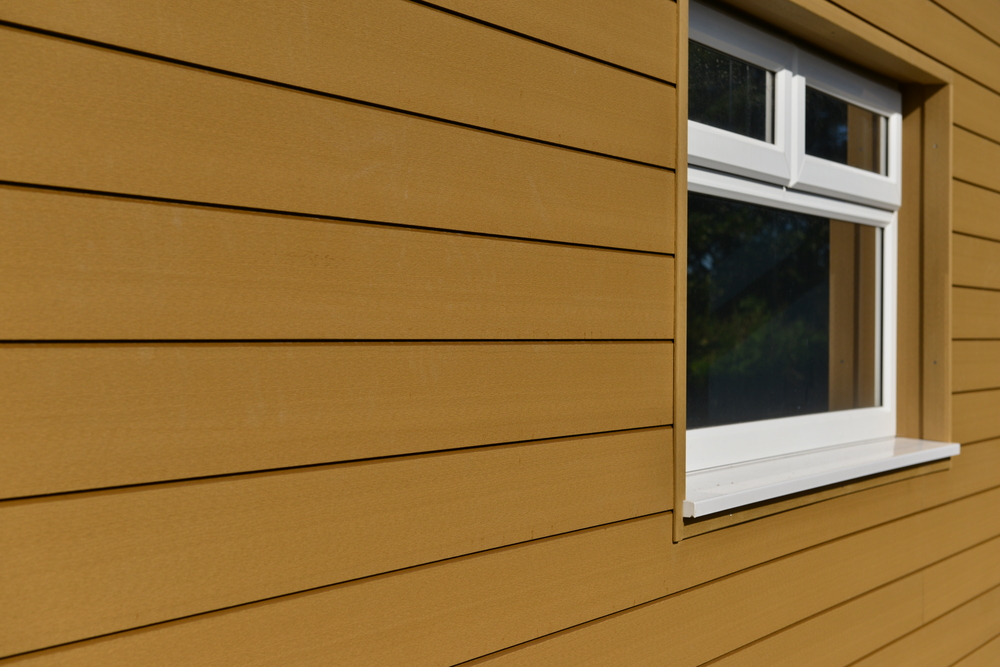
Wood siding—including cedar, redwood, and pine—offers timeless beauty but presents significant risks during fire season.
- Combustibility: Wood is organic fuel. Without specialized treatment, untreated wood siding can ignite easily from embers or radiant heat. Once ignited, the flames can travel up the wall and into the eaves or attic vents, compromising the entire structure.
- Treatment Options: Fire-retardant treatments are available for wood siding. These chemicals can slow ignition and flame spread, but they are not permanent. They require regular re-application and maintenance to remain effective, adding to the long-term cost and effort.
- The “Sacrificial Layer” Risk: In many older homes, wood siding is installed over old tar paper, which is also highly flammable. If the wood siding ignites, the heat can transfer to the layers beneath, accelerating the fire’s entry into the wall cavity.
3. Vinyl Siding: The Melting Point Factor
Vinyl is a popular, cost-effective choice for many homeowners, but it behaves very differently than wood or cement in a fire.
- Melting vs. Burning: Modern vinyl is often treated with fire retardants so that it is difficult to ignite. However, its Achilles’ heel is heat. Vinyl has a relatively low melting point. When exposed to the intense radiant heat of a nearby fire, vinyl can soften, sag, and eventually melt off the wall completely.
- Exposure Risks: When vinyl melts and falls away, it exposes the underlying sheathing and insulation. If these underlying materials are not fire-resistant, the home becomes incredibly vulnerable to embers.
- Installation Matters: If you choose vinyl in a fire-prone area, it is critical to use it over a fire-resistant sheathing (like gypsum board) to provide a backup layer of protection if the siding fails.
4. Metal Siding: Durable but Conductive
Steel or aluminum siding is non-combustible, similar to fiber cement. It won’t ignite. However, metal is a conductor. It can transfer heat through the wall assembly to the studs and insulation inside. While safer than wood, it requires careful consideration of the insulation layers beneath to prevent heat transfer.
5. Stucco: A Strong Traditional Barrier
Traditional three-coat stucco is naturally fire-resistant. It acts as a concrete shell around the home. However, its effectiveness depends entirely on its integrity. Cracks or holes in the stucco (often found near the foundation or windows) can allow embers to enter the wall cavity.
Home Hardening: Actionable Tips for Fire Season
Upgrading your siding is a major project, but “home hardening” involves a holistic approach. Even the best siding can be compromised by poor maintenance or weak points in the building envelope. Here are actionable steps every California homeowner should take.
Zone 0: The First 5 Feet
The area immediately surrounding your home (0-5 feet from the walls) is the most critical zone for survival.
- Remove Flammables: Do not store firewood, lumber, or combustible outdoor furniture against your siding.
- Rethink Mulch: Replace wood bark mulch near the foundation with gravel, stone, or pavers. Burning mulch can generate enough heat to ignite wood siding or melt vinyl, allowing flames to climb.
- Clear Debris: Keep the base of the wall clear of dead leaves and pine needles. This debris acts as kindling for embers.
Siding Maintenance and Repair
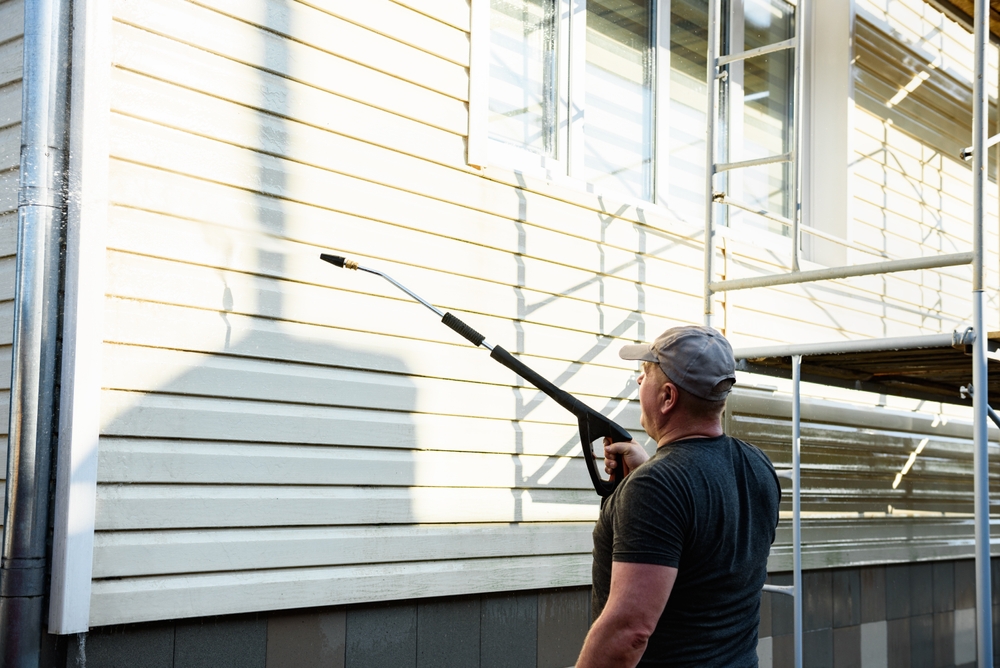
Even non-combustible siding needs maintenance to perform effectively. Gaps, cracks, and rot are entry points for fire.
- Seal the Gaps: Inspect your siding annually for gaps where different materials meet (e.g., where siding meets trim, brick, or the foundation). Embers are tiny and can drift into cracks as small as 1/8th of an inch. Use high-quality, fire-resistant caulk to seal these vulnerabilities.
- Check for Dry Rot: If you have wood siding or trim, check regularly for dry rot. Rotted wood ignites at a much lower temperature than healthy wood. It essentially acts like a sponge for fire. If you find soft spots, they need to be addressed immediately.
- Repair Loose Boards: Loose siding can allow embers to get behind the cladding. Once fire is inside the wall, it is extremely difficult to extinguish.
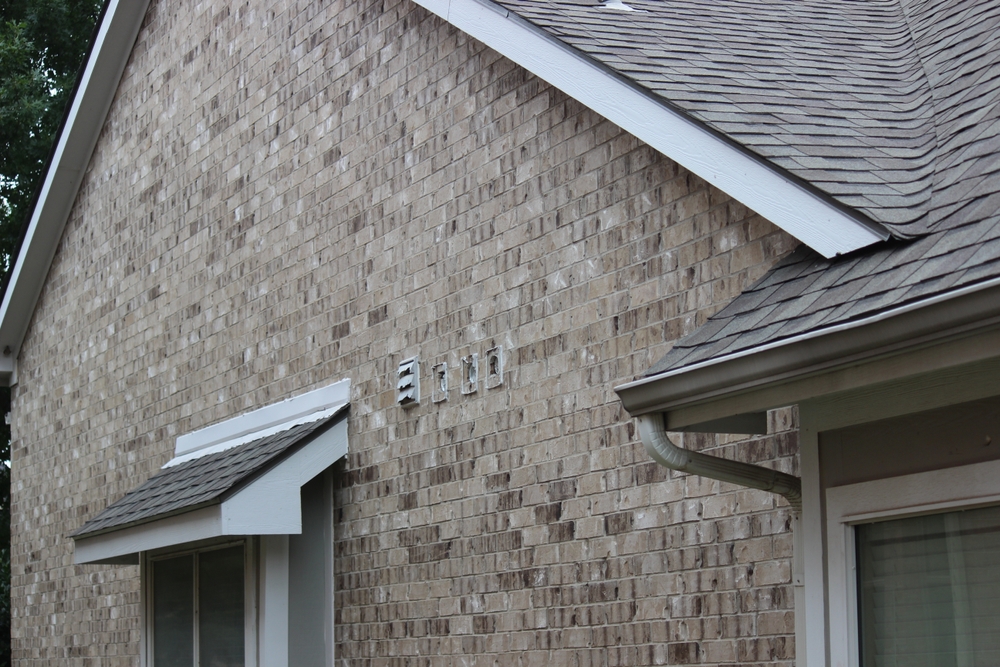
- Vent Protection: While not siding per se, attic and foundation vents are often installed into the siding. Ensure all vents are covered with 1/8-inch (or finer) metal mesh to prevent embers from being sucked into the home.
If you suspect your current exterior has vulnerabilities, such as rot or loose panels, professional repair is essential before fire season peaks. Learn more about how we handle these issues on our siding repair page.
The Role of Siding in Wildfire Insurance
As fire risks rise, so do insurance challenges. Many California homeowners are facing non-renewals or skyrocketing premiums.
Insurance carriers are increasingly using satellite imagery and on-site inspections to evaluate a home’s “fire score.” Your siding material is a major factor in this calculation.
- Hardening Discounts: Under the “Safer from Wildfires” framework created by the California Department of Insurance, homeowners can sometimes qualify for discounts if they retrofit their homes with fire-resistant materials.
- Documentation: If you upgrade from wood or vinyl to fiber cement, document the process thoroughly. Keep contracts, material specifications, and photos. You can submit this evidence to your insurer to potentially lower your risk profile and premium.
Emergency Preparedness: When Fire Season Hits
When a Red Flag Warning is issued, your focus shifts from renovation to immediate safety. However, the condition of your siding still matters.
- Close All Windows: This prevents embers from entering, but also reduces the draft that could pull fire towards the house.
- Turn on Outside Lights: If you have to evacuate at night, this helps firefighters see your home through the smoke.
- Shut Off Gas: If you have a propane tank or natural gas line, shut it off at the source to prevent secondary explosions near your siding.
- Move Furniture: Pull flammable patio furniture away from the walls. In high heat, a burning chair can generate enough radiant heat to compromise windows or siding.
Making the Decision to Retrofit
If you are living in an older home with wood shake siding or aging vinyl, the thought of a full replacement can be daunting. However, it is important to view this not just as a cosmetic update, but as a safety retrofit.
Consider a phased approach if a full replacement isn’t in the budget:
- Prioritize Danger Zones: Start by replacing siding on the side of the house that faces heavy vegetation or the prevailing wind direction.
- Focus on the Base: Replace the bottom 2-3 feet of wall cladding with a non-combustible material (like a stone veneer or fiber cement skirt) to prevent ground fires from climbing up the wall.
- Address the Garage: Garages are often less insulated and more vulnerable. Hardening the garage exterior can prevent fire from entering this large, open space.
Conclusion: Proactive Protection
Fire season in Northern California is a formidable challenge, but it is not an insurmountable one. By understanding the physics of fire—how embers travel, how radiant heat melts plastics, and how dry rot accelerates ignition—we can make smarter choices about our homes.
Your siding is more than just curb appeal; it is a shield. Choosing fire-resistant materials like fiber cement, maintaining a defensible space, and diligently repairing gaps and rot can dramatically improve the odds of your home surviving a wildfire.
Whether you need a comprehensive assessment of your current siding’s condition or are ready to upgrade to a hardened, fire-resistant exterior, professional expertise is vital. Do not wait for the smoke to appear on the horizon.
For assistance with inspections, repairs, or full upgrades, visit our siding repair page or explore the best fire-resistant options available today. Investing in your exterior now is investing in your peace of mind for the future.
FAQ: Siding and Fire Safety
Q: Can I paint my wood siding with fire-retardant paint?
A: Yes, there are intumescent paints available that expand when exposed to heat, creating an insulating char layer. However, these are not a permanent solution. They must be reapplied according to the manufacturer’s schedule (often every 5-10 years) and do not offer the same level of protection as replacing the wood with a non-combustible material.
Q: Does “fire-resistant” mean “fireproof”?
A: No material is 100% fireproof given enough heat and time. “Fire-resistant” means the material resists ignition and slows the spread of fire. Fiber cement, for example, will eventually become brittle under extreme, prolonged heat, but it will not burst into flames like wood or melt like vinyl.
Q: How do I know if my vinyl siding is heat damaged?
A: Look for waviness, warping, or discoloration. Sometimes, radiant heat from a BBQ grill or a neighbor’s window reflection can cause localized melting. If you see this texture change, the siding’s integrity is compromised and it should be replaced.
Q: What is a “Class A” fire rating?
A: Building materials are rated Class A, B, or C based on their flame spread index. Class A offers the highest resistance to fire spread. Brick, stone, and fiber cement are generally Class A materials. Most untreated wood is Class C.
Q: Will changing my siding increase my home value?
A: Absolutely. Beyond the aesthetic improvement, a home with fire-resistant siding (especially fiber cement) is highly desirable in California’s real estate market. Potential buyers are increasingly aware of fire risks and insurance costs, making a hardened home a premium asset.