A severe storm can be a nerve-wracking experience. As high winds howl and hail pounds against your house, your first concern is for your family’s safety. But once the storm passes, the focus shifts to your home itself. Your siding bears the brunt of the storm’s fury, acting as the primary shield for your property. A post-storm inspection might reveal a range of issues, from small dents and cracks to entire panels that have been torn away. This isn’t just cosmetic damage; it’s a breach in your home’s protective armor.
Ignoring storm-damaged siding is a gamble no homeowner should take. Even minor-looking damage can create pathways for water to infiltrate your walls, leading to catastrophic issues like structural rot, mold contamination, and pest infestations. In Northern California, where weather can range from intense winter storms to severe thunderstorms, ensuring your siding is intact is crucial for your home’s long-term health. Knowing how to spot damage and understanding the necessary repairs can save you from immense stress and expense down the line.
This guide will walk you through the common types of storm damage your siding can sustain from hail, wind, and debris. We’ll explore how different siding materials are affected and detail the professional repair process required to restore your home’s security and appearance. Quick action and expert repairs are key to turning a potentially major disaster into a manageable fix.
The First Step After the Storm: A Thorough Siding Inspection
After a significant weather event, it’s essential to conduct a careful and systematic inspection of your home’s exterior as soon as it’s safe to do so. Some damage is obvious, but other types can be subtle and easily missed by an untrained eye.
How to Inspect Your Siding for Storm Damage
- Wait for Good Lighting: Don’t inspect your siding in the dark or during lingering rain. Wait for a clear, sunny day. The right light can reveal dents, cracks, and chips that are otherwise hard to see. Viewing the siding from different angles can also help highlight texture changes caused by impacts.
- Walk the Entire Perimeter: Start at one corner of your house and walk the full perimeter, looking at the siding from top to bottom. Repeat the process, walking in the opposite direction, as changing the angle of light can reveal new details.
- Look for Obvious Damage: Keep an eye out for the most apparent signs of trouble:
- Completely missing siding panels.
- Panels that are hanging loose or flapping.
- Large cracks, holes, or punctures.
- Visibly warped or bent panels.
- Check for Subtle Damage: This is where a keen eye is needed. Look closely for:
- Dents and Dings: Small, circular impact marks, often from hail.
- Chips and Gouges: Areas where the surface of the siding has been scraped or broken away by debris.
- Hairline Cracks: These often appear around nail heads or at the edges of panels.
- Don’t Forget Other Components: Damage is rarely isolated to the siding panels alone. Also inspect your corner trim, window and door trim, fascia, soffits, and gutters for any signs of impact or detachment.
Document everything you find. Take clear photos of any damage from both a wide and a close-up perspective. This documentation will be invaluable if you need to file an insurance claim.
Understanding the Types of Storm Damage to Siding
Storms unleash a variety of forces, each of which can harm your siding in a unique way. The two primary culprits are wind and hail.
Hail Damage to Siding
Hail can range from pea-sized pellets to golf balls or larger, and it can be incredibly destructive. The damage it causes depends on the size and density of the hailstones, the wind speed, and your siding material.
- Impact Marks and Dents: This is the classic sign of hail damage to siding. On vinyl and aluminum siding, hail will leave distinct circular dents and dings. On fiber cement and wood siding, it may cause chips, cracks, or circular fractures in the paint and surface layer.
- Cracks and Punctures: Larger hailstones or hail driven by high winds can hit with enough force to crack or even puncture siding. This is especially true for older, more brittle vinyl siding. These breaches completely compromise the siding’s ability to block water.
- Chipping and Gouging: On wood and fiber cement siding, hail can chip away the surface and paint, exposing the more vulnerable core material underneath to moisture.
Wind Damage to Siding
High winds attack siding by creating both positive and negative pressure. Wind blowing against a wall creates positive pressure, while wind flowing around corners and over the roof creates negative pressure (suction), which tries to pull the siding away from the house.
- Loose or Rattling Panels: The first sign of wind stress is often noise. The suction force can lift panels, causing them to rattle or chatter. This indicates the fasteners are loosening.
- Lifted or Detached Panels: As the wind grows stronger, it can get underneath a loose panel, breaking the nail hem or pulling the fasteners out entirely. This often starts at the corners or the top of the walls, where wind forces are strongest. Once one panel is gone, the neighboring panels are much more vulnerable.
- Warping and Bending: The constant force of the wind can cause panels to bend or warp out of shape, creating permanent distortion and gaps.
Debris Damage
During a storm, wind can turn small objects into high-speed projectiles. Tree branches, loose lawn furniture, and other debris can cause significant damage upon impact, resulting in deep gouges, large cracks, or punctures.
How Different Siding Materials Withstand Storm Damage
Your siding material plays a huge role in how it holds up to severe weather. Each type has its own set of vulnerabilities.
Vinyl Siding
Vinyl is a popular and affordable option, but it has distinct weaknesses when it comes to storms.
- Vulnerabilities: Vinyl is relatively soft and can be easily dented by hail. It can become brittle with age and UV exposure, making it susceptible to cracking or shattering from hail impacts, especially in colder weather. Because it is installed in interlocking panels, a failure in one panel (like a broken nail hem from wind) can lead to a chain reaction of detachment.
- Signs of Damage: Dents, cracks, chips, and holes are common. Look for panels that have “unzipped” from each other or are completely missing after a windstorm.
Wood Siding
Wood offers a classic look but requires consistent maintenance to remain storm-ready.
- Vulnerabilities: Wood can be dented, chipped, or split by hail and flying debris. If the paint or sealant is not in perfect condition, the impact can expose the raw wood, which will then absorb water. This can lead to rot, warping, and splitting. Strong winds can also stress the fasteners, causing boards to loosen.
- Signs of Damage: Splintering, deep gouges, cracks, and split boards. Peeling paint after a storm is a sign that water has gotten into the wood. Timely storm-damaged siding repair is critical for wood to prevent rot.
Fiber Cement Siding (James Hardie)
Fiber cement is one of the most durable siding materials on the market, specifically engineered to resist impact and high winds.
- Vulnerabilities: While highly resistant, fiber cement is not indestructible. Very large hail or sharp, high-velocity debris can still cause chips, cracks, or even holes. However, unlike vinyl, it will not dent, and unlike wood, it will not rot. The most common failure point during a storm is often related to the fasteners or trim if the wind is strong enough to cause detachment.
- Signs of Damage: Look for localized cracks, chips, or shattered corners on panels. Because this material is so robust, any damage warrants an immediate call to Sacramento siding experts, as it indicates the storm was exceptionally severe. A quality siding installation is key to its wind resistance.
Aluminum Siding
Though less common today, aluminum siding is still present on many homes.
- Vulnerabilities: Aluminum’s biggest weakness is its susceptibility to denting. Hail of almost any size can leave dents, quickly giving the siding a pockmarked appearance. It is also prone to scratching and fading.
- Signs of Damage: Dents are the most common sign. The finish can also be scratched or scraped off by debris.
The Critical Need for Professional Siding Repair After a Storm
After a storm, some homeowners might be tempted to perform a quick DIY fix or hire a general handyman. This is often a mistake. Repairing storm-damaged siding correctly requires specialized knowledge to ensure the home’s water-management system is properly restored.
Why DIY or Handyman Fixes Fall Short
- They Don’t Address Hidden Damage: A handyman might replace a cracked panel but fail to notice that the sheathing behind it is wet and needs to be replaced. This traps moisture and leads to rot.
- Improper Installation: Siding repair has specific rules. Panels must be fastened correctly to allow for expansion, and new panels must be properly integrated with the weather-resistant barrier and flashing. Mistakes here can cause future leaks.
- Material Matching: Professionals have access to supply houses and can often find an exact match for your existing siding, ensuring a seamless repair.
The Professional Repair Process
A reputable siding contractor will follow a comprehensive process to ensure a lasting repair.
Step 1: Detailed Assessment and Insurance Support
A professional will perform a thorough inspection, documenting all damage with photos and detailed notes. They can provide a clear, itemized estimate that you can submit to your insurance company. Many experienced contractors are accustomed to working with insurance adjusters and can help ensure all damage is accounted for in your claim.
Step 2: Removal of All Damaged Components
The repair starts by carefully removing all compromised materials.
- Any siding panels that are cracked, punctured, or severely dented will be taken off.
- The weather-resistant barrier (WRB) underneath will be inspected. If it has been torn or punctured, it will be repaired according to manufacturer specifications.
- The underlying sheathing will be checked for any signs of water damage or rot.
Step 3: Structural Repairs (If Necessary)
This is the most critical step. If the sheathing is soft, swollen, or moldy, it must be cut out and replaced with new, solid material. If the rot extends to the wall framing, those sections will also need to be replaced by a skilled carpenter to restore the home’s structural integrity. This is a step that is almost always missed in a non-professional repair.
Step 4: Expert Siding Installation
Once the underlying wall is sound, the new siding is installed.
- Matching: A professional will install new siding that matches the color, texture, and exposure of your existing siding.
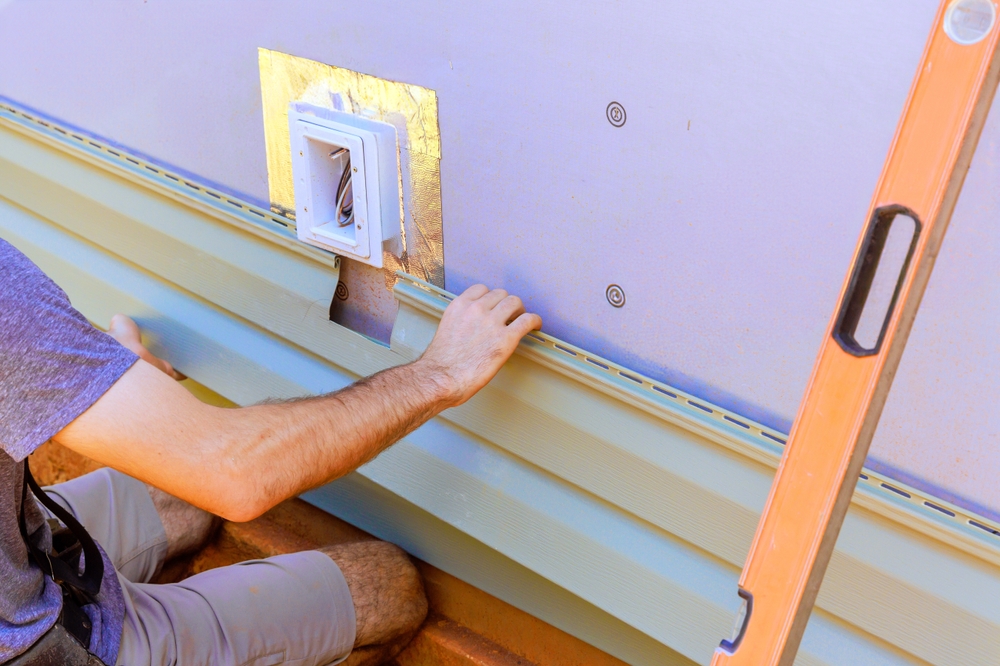
- Correct Fastening: They will use the proper fasteners and nailing techniques to ensure the new panels are secure but can still move freely to accommodate temperature changes.
- Integration: The new panels will be properly locked in with the surrounding panels, and all trim and flashing will be correctly re-installed to ensure a watertight seal.
This meticulous process, from assessment to final installation, is why professional storm-damaged siding repair is the only way to guarantee your home is fully protected.
Trust Hexteriors to Restore Your Home After a Storm
A storm can leave your home battered and vulnerable, and the repair process can feel overwhelming. At Hexteriors, we are Sacramento siding experts who specialize in assessing and repairing all types of storm damage. Our experienced, in-house crews are trained to identify both obvious and hidden damage and to perform the necessary repairs to the highest industry standards.
We understand the urgency of securing your home after a storm. We provide fast, thorough inspections and detailed estimates to help you with your insurance claim. From replacing a few panels damaged by hail to repairing large sections torn off by wind, we have the skills and experience to handle the job. We work with vinyl, wood, and are an Elite Preferred Contractor for James Hardie fiber cement siding, ensuring we can restore the integrity of your specific exterior.
Don’t let storm damage compromise the safety and value of your property. If your home has been hit by a storm, contact Hexteriors today for a comprehensive inspection and a free estimate for your siding repair in Sacramento. Let us give you peace of mind by making your home whole again.