In Sacramento, our homes endure a unique annual torture test. We face blistering, sun-scorched summers where temperatures routinely triple digits, followed by a “wet season” that can dump inches of rain in a matter of days. This cycle of extreme heat and sudden saturation puts immense stress on your home’s exterior envelope.
For many homeowners, the realization that their siding is damaged often comes too late—usually during the first heavy storm of the year when a watermark appears on the drywall. But weatherproofing isn’t just about reacting to leaks; it’s about preserving the structural integrity of your biggest investment.
Whether you are dealing with cracked stucco, warped wood, or brittle vinyl, this guide will walk you through the essential steps of identifying vulnerabilities, executing repairs, and weatherproofing your siding to withstand the Sacramento climate.
Understanding the “Weatherproofing” Concept
Weatherproofing is more than just slapping a fresh coat of paint on your house. It is a comprehensive system of defenses designed to shed water, resist wind, and block UV radiation. When we talk about weatherproofing damaged siding, we aren’t just fixing the cosmetic flaw; we are re-establishing the barrier that keeps the outside world from getting in.
In the construction industry, we often refer to the “Building Envelope.” This includes your roof, windows, doors, and most importantly, your siding. When one part of this envelope fails, the efficiency and safety of the entire home are compromised. In the Sacramento Valley, where the sun breaks down sealants and the rain tests every joint, a small gap in weatherproofing can lead to thousands of dollars in dry rot damage.
Step 1: The Inspection – Finding the Weak Points
You cannot fix what you cannot see. Before you buy a single tube of caulk, you need to conduct a forensic inspection of your home’s exterior. This is best done twice a year: once in late spring (after the rains) and once in early autumn (before the rains return).
The “Bottom-Up” Check
Start at the foundation. Siding damage often begins at the bottom because of splash-back from rain and sprinklers.
- Clearance: Check the gap between your siding and the soil. There should be at least 6 inches of clearance. If dirt is touching your wood or fiber cement siding, it acts as a wick, pulling moisture up into the wall.
- Rot Detection: Take a screwdriver and gently probe the bottom edge of your siding boards. If the wood feels soft, spongy, or crumbles, the weatherproofing has already failed, and rot has set in.
The Window and Door Perimeter
The most common point of failure is where the siding meets another material.
- Caulk Failure: Look closely at the caulk lines around window frames and door trim. In Sacramento, UV rays turn flexible caulk into hard, brittle lines that crack and pull away. Even a hairline crack can admit gallons of water over a season.
- Flashing Integrity: Look above your windows. Is there a metal strip (flashing) directing water away from the wall? If it’s missing, rusted, or bent, water is likely running behind your siding.
The Field Check
Finally, look at the main walls (“the field”).
- Cracks in Stucco: Stucco homes are prone to settling cracks. Hairline cracks are usually fine, but anything wide enough to slide a credit card into is a breach that needs sealing.
- Warped Boards: Look down the length of your wall. If you see wood or vinyl planks bowing, cupping, or pulling away from the studs, the weather seal is broken. Wind-driven rain can easily blow up and under these warped boards.
Step 2: Immediate Triage for Damaged Areas
If you find damage, you need to stop the bleeding. Depending on the severity, you might need a temporary patch or a permanent repair.
Sealing Cracks and Gaps
For minor cracks in wood or fiber cement, or gaps around trim, a high-quality sealant is your best friend.
- Material Choice: Do not use cheap latex caulk. For Sacramento’s climate, you need a high-performance polyurethane or 100% silicone sealant. These materials remain flexible, allowing them to expand and contract with the temperature swings of the valley without cracking.
- Technique: Clean the area thoroughly. Remove old, loose caulk with a putty knife. Apply the new bead smoothly, ensuring it spans the gap completely. Tool it (smooth it out) with a finger or caulk tool to ensure it adheres to both sides of the joint.
Patching Stucco
For cracks in stucco, the repair depends on the width.
- Small Cracks: Use a high-grade elastomeric masonry paint or patch. This material stretches, covering the crack while allowing for minor movement.
- Large Cracks: You will need a stucco patch compound. Clean out loose debris from the crack, apply the patch, and texture it to match the surrounding wall. Important: If the crack is moving or growing, this is a structural issue, not just a siding issue.
Securing Loose Boards
If you have vinyl or wood siding that is loose but not rotten, you may be able to re-secure it.
- Vinyl: Vinyl siding “hangs” on nails; it isn’t nailed tight. If a panel has unlocked, you can use a “zip tool” (available at hardware stores) to hook the bottom lip back onto the panel below it.
- Wood: If a wood board has pulled loose, it’s usually because the nail has rusted or the wood has warped. Use galvanized or stainless steel ring-shank siding nails to re-secure it. Pre-drill the hole to avoid splitting the dry wood.
Step 3: Addressing Rot – The “Cut and Replace” Strategy
Weatherproofing over rot is a waste of time and money. You are essentially trapping the moisture inside, which accelerates the decay. If your inspection revealed soft, rotten wood, you must remove it.
The Surgical Approach
You don’t always have to re-side the whole house. Targeted Siding Repair in Sacramento often involves surgically removing just the damaged boards.
- Mark the Cut: Identify where the rot ends and solid wood begins. Mark a cut line at least 6 inches past the visible rot to ensure you get it all.
- Cut Carefully: Using an oscillating tool or circular saw set to the depth of the siding, cut out the bad section. Be extremely careful not to cut into the building paper or sheathing underneath.
- Inspect Behind: Once the bad siding is off, look at the moisture barrier (tar paper or house wrap). If it’s torn or brittle, patch it with new house wrap and tape the seams with flashing tape. This is the real weatherproofing layer.
- Install New Board: Measure and cut a replacement board. Prime all six sides (front, back, edges, and ends) before installing. This “back-priming” is crucial for preventing future rot.
Step 4: The Power of Paint and Stain
Once repairs are made, the final layer of your weatherproofing system is the coating. In Sacramento, paint isn’t just color; it’s SPF 50 for your house.
The Sun Defense
The UV index in the Sacramento Valley destroys binders in paint. When paint chalks (leaves a powder on your hand when you rub it), it is no longer weatherproofing your siding.
- Acrylic Latex: For most siding types, a high-quality 100% acrylic latex paint is the gold standard. It breathes (letting moisture vapor out) while shedding liquid water. It also retains color better than oil-based paints in our sun.
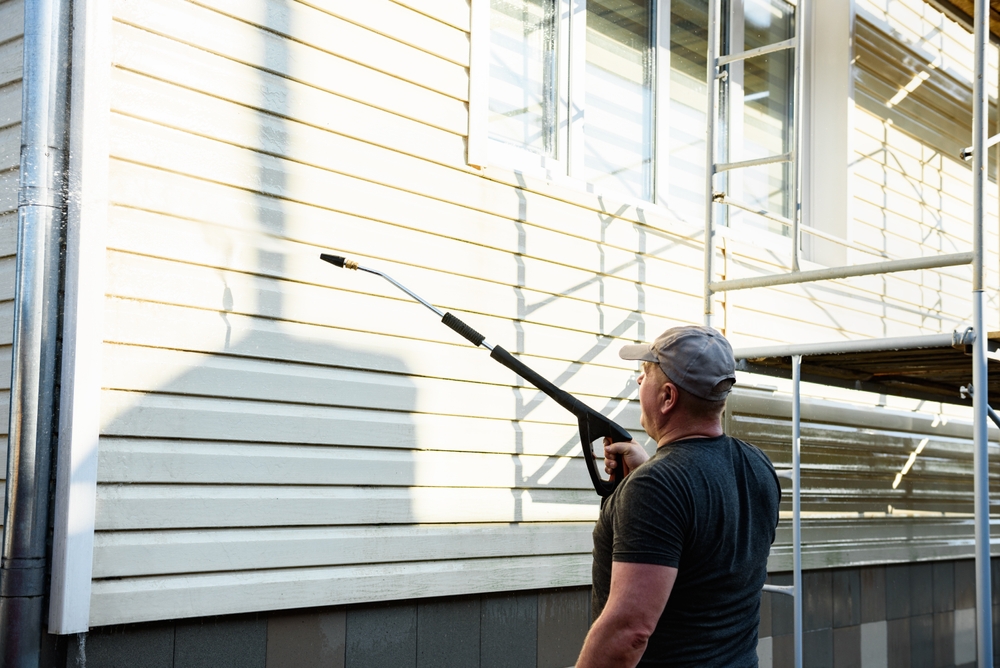
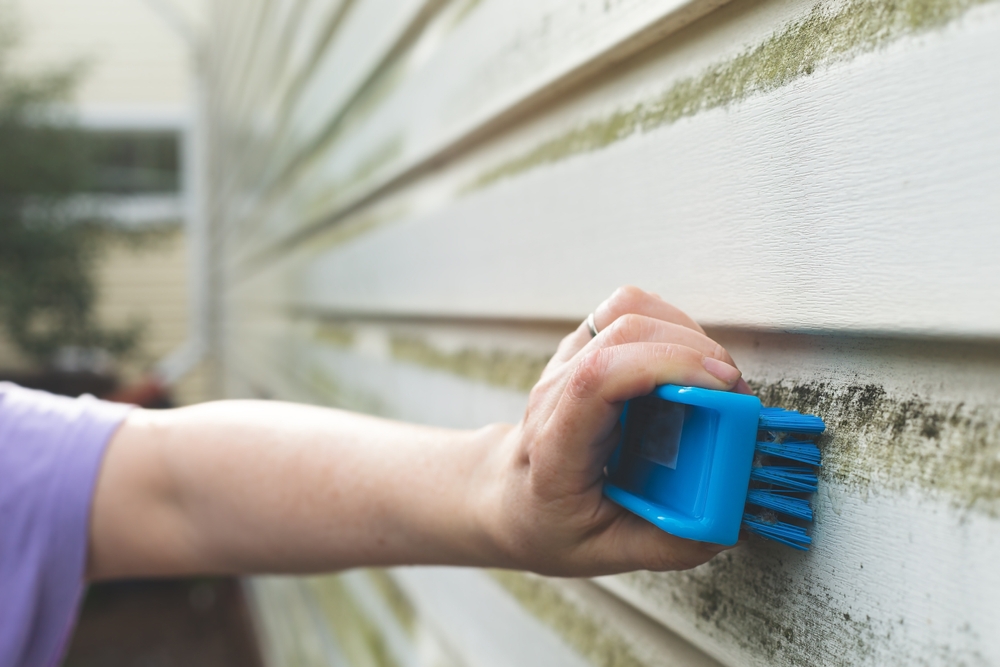
- Preparation: The best paint in the world will fail if applied over dirt or chalk. Power wash your home (gently!) or hand scrub it with TSP (Trisodium Phosphate) substitute before painting.
Staining Wood Siding
If you have natural cedar or redwood siding, stain is your barrier.
- Penetrating Oils: These soak into the wood fibers, repelling water from the inside out. They need to be reapplied more often (every 3-5 years) but don’t peel like film-forming stains.
- Solid Body Stain: This acts more like thin paint. It offers better UV protection but hides the grain.
Step 5: Improving Water Management
Weatherproofing is also about managing where the water goes before it hits your siding.
Gutters and Downspouts
Your roof sheds thousands of gallons of water during a storm. If your gutters are clogged with pine needles or oak leaves (a common Sacramento plague), that water overflows directly onto your siding.
- Clean Regularly: Clean gutters at least twice a year.
- Extensions: Ensure downspouts discharge water at least 4 feet away from the foundation. Splash-back is a major cause of siding rot.
- Kick-Out Flashing: This is a small piece of metal installed where a gutter terminates into a side wall. Without it, water pours behind the siding. If you don’t have these, hire a pro to install them immediately.
Landscaping Adjustments
- Trim Back: Keep bushes and trees trimmed at least 18 inches away from your siding. Plants trap humidity against the wall and prevent the siding from drying out after a rain.
- Sprinkler Check: Turn on your sprinklers and watch them. Are any heads spraying your house? Constant wetting from sprinklers mimics a daily rainstorm, and no siding is designed to withstand that. Adjust heads to spray away from the home.
Step 6: Knowing When to Upgrade
Sometimes, weatherproofing is a losing battle. If your siding is old, brittle, and failing in multiple locations, patching becomes a “whack-a-mole” game that drains your wallet.
In Sacramento, many homeowners are moving away from high-maintenance wood and brittle vinyl toward materials engineered for our specific climate. James Hardie Siding (fiber cement) is the top choice for weatherproofing upgrades in the region.
Why Fiber Cement Wins in the Valley
- Dimensionally Stable: Unlike wood, it doesn’t expand and contract violently with our temperature swings, so paint doesn’t crack.
- Rot Proof: It cannot rot. It is immune to the fungi that eat wood.
- Fire Resistant: It is non-combustible, offering a significant safety upgrade for homes in wildfire-prone areas.
Replacing your siding is a significant investment, but it solves the weatherproofing issue permanently, rather than seasonally.
Preventative Maintenance Calendar
To keep your weatherproofing intact, follow this simple Sacramento homeowner calendar:
- October: Clean gutters before the first rain. Inspect caulking around windows. Check roof flashings.
- January: During a break in the rain, walk around the house. Look for areas that aren’t drying out or where gutters are overflowing.
- April: Clean gutters after the last oak drop. Wash the siding with a garden hose to remove dirt and pollen. Check for new cracks or pest damage.
- July: Inspect paint for fading or peeling. The heat is highest now, so look for warping in vinyl siding.
Conclusion: A Dry Home is a Healthy Home
Weatherproofing your damaged siding is not just a chore; it is an act of stewardship. By keeping moisture out of your walls, you prevent mold, protect your structural framing, and maintain the energy efficiency of your home.
The Sacramento climate is unforgiving to neglected exteriors. The sun will find the weak paint, and the rain will find the crack in the caulk. But with proactive inspection, timely repairs, and the right materials, you can win the battle against the elements.
Don’t wait for the leak to tell you there’s a problem. Take a walk around your home today. If you see signs of failure—soft wood, cracks, or gaps—take action. And if the damage is beyond a simple patch, remember that professional help is available to restore your home’s armor.
Is your siding showing signs of weather damage? Whether you need a simple repair or a full weatherproofing upgrade, the experts at Hexteriors are here to help. Contact us today for a comprehensive evaluation.